

Key Takeaways
- Cosmetic and surface-level repairs are generally safe for most homeowners to handle themselves.
- Electrical, gas, structural, and main-line plumbing work typically requires a licensed professional and often a permit.
- The risk of a botched DIY repair often exceeds the cost of hiring a tradesperson from the start.
- Local building codes determine what work requires permits and inspections — always verify before starting.
- Skill level, tool access, and the cost of failure are the three key factors when weighing any repair decision.
Our Verdict
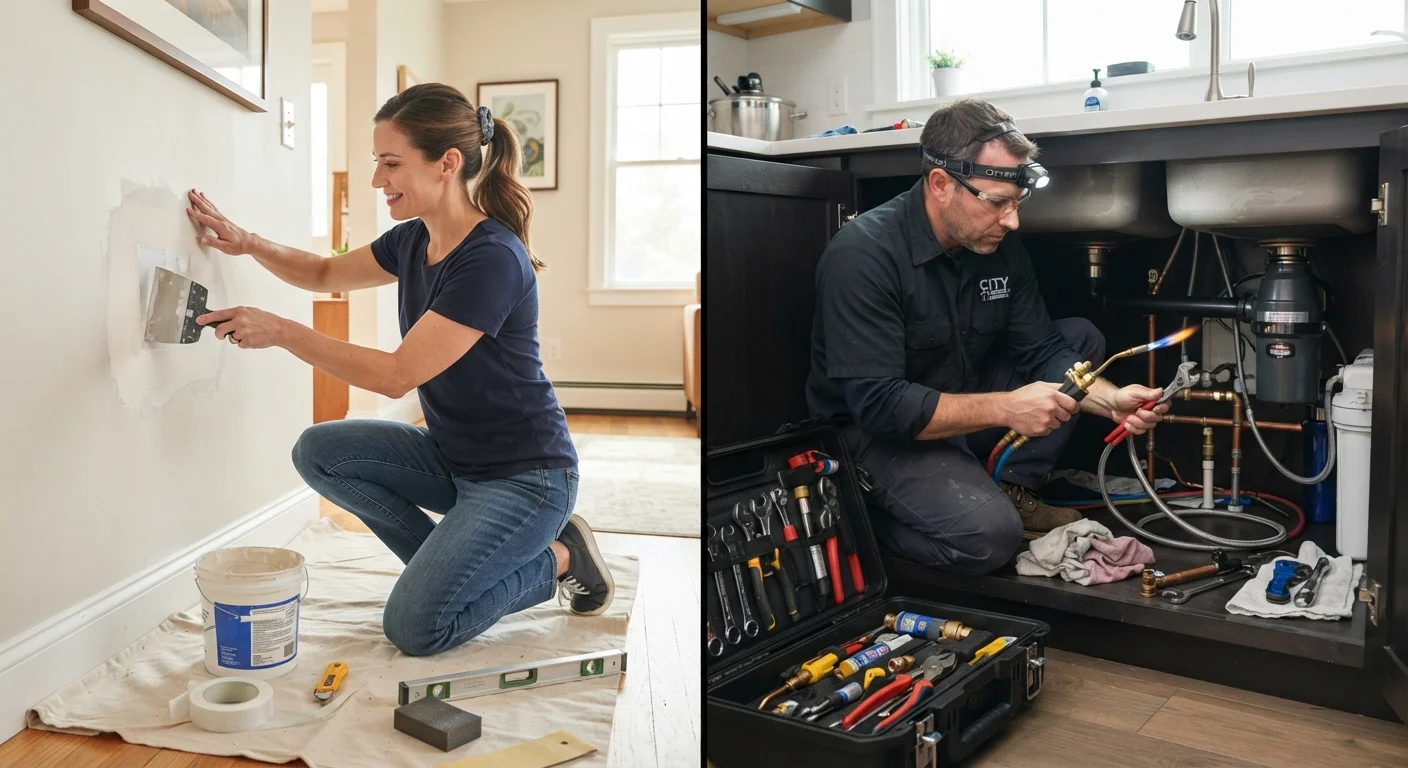
Most homeowners can confidently handle surface-level, cosmetic, and low-risk repairs with basic tools and careful preparation. However, work involving electrical systems beyond simple fixture swaps, gas lines, structural elements, or main plumbing connections carries significant safety and legal implications that generally require a licensed tradesperson. The dividing line isn't just about skill — it's about liability, code compliance, and what happens when something goes wrong.
| Best for | Recommended |
|---|---|
| Homeowners comfortable with basic tools and simple repairs | DIY |
| Work involving electrical circuits, gas, or structural components | Licensed Tradesperson |
| Budget-conscious homeowners tackling cosmetic or surface issues | DIY |
| Any repair requiring local permits or code inspections | Licensed Tradesperson |
How to Think About the DIY Decision
Before picking up a tool or picking up the phone, every repair decision comes down to three questions: What's the realistic cost if this goes wrong? Does this work require a permit or licensed contractor under local code? And do I genuinely have the tools and skill to do this safely?
The answers vary by task — and sometimes by location. For a deeper look at how this logic applies season by season, see our guide to seasonal upkeep decisions. The framework below focuses on everyday repairs, categorized by risk level.
A useful mental model: if a mistake would damage only the surface (a wall, a floor, a fixture), DIY is usually reasonable. If a mistake could damage a system — plumbing, wiring, structure — or pose a safety risk to your household, it's worth calling a professional.
Start With a Honest Skill Assessment
Before any repair, look up a step-by-step walkthrough of the full task — not just the first step. If any stage involves something you've never done, unfamiliar tools, or work inside a wall or panel, factor that in before committing. It's also worth checking your local municipality's website for permit requirements, which are often searchable by project type.
Repairs Most Homeowners Can Handle
These tasks share a common profile: they don't touch regulated systems, the consequences of a small mistake are limited and reversible, and they require only basic tools.
- Patching drywall — Small holes from nails or minor dings are manageable with a patch kit and some practice with joint compound.
- Caulking windows, tubs, and doors — Removing old caulk and applying a fresh bead is one of the highest-value, lowest-risk maintenance tasks you can do.
- Replacing interior door hardware — Swapping knobs, hinges, or deadbolts generally needs only a screwdriver and some patience.
- Fixing a running toilet — Flappers, fill valves, and flush handles are inexpensive and designed to be replaced by non-specialists.
- Painting interior walls — With proper prep (cleaning, priming, taping), this is accessible to most homeowners.
- Replacing light fixtures or ceiling fans — Swapping a fixture at an existing box, with the breaker off and wires confirmed dead with a tester, is generally manageable. Anything beyond that warrants caution.
For a practical overview of the hand tools that make these jobs easier, see our tool reference guide.
| Repair Type | DIY | Licensed Tradesperson | |
|---|---|---|---|
| Drywall patching | Yes — low risk, reversible | Not typically needed | |
| Toilet flapper / fill valve | Yes — designed for homeowners | Not typically needed | |
| Light fixture swap (existing box) | Yes — with breaker off and tester | Not required in most areas | |
| Adding a new electrical circuit | No — permit and code risk | Required in most jurisdictions | |
| Gas line repair or extension | No — serious safety risk | Always required | |
| Load-bearing wall modification | No — structural risk | Required; permit likely needed | |
| Drain unclogging | Yes — basic tools sufficient | Only if DIY attempts fail | |
| Water heater replacement | Generally not recommended | Recommended; permit often required |
Where DIY Becomes Genuinely Risky
Some repairs look simple on the surface but carry consequences that are hard to reverse — or legally require a licensed hand. These are the categories where homeowners most often underestimate the complexity.
Electrical Work Beyond Basic Swaps
Replacing a light switch on an existing circuit is very different from adding a new circuit, upgrading a panel, or troubleshooting persistent tripping breakers. The latter involves arc flash risk, code compliance, and in most jurisdictions, a permit. Our article on safe electrical DIY limits explains the boundary in detail.
Anything Involving Gas Lines
Gas appliance connections, line extensions, or repairs to gas piping are regulated work in virtually every U.S. jurisdiction. Even a small leak can create an explosion or carbon monoxide risk. This is a firm professional-only zone.
Structural Repairs
Removing or modifying a wall, sistering joists, or repairing foundation cracks involves load-bearing considerations that require structural knowledge and, in most areas, a permit and inspection. An incorrect repair can compromise the entire building envelope.
Main Plumbing Connections
Replacing a faucet or unclogging a drain is DIY-appropriate. Work that connects to the main supply line, drain-waste-vent system, or water heater typically requires a licensed plumber and may need a permit. For common mistakes around leaks specifically, see what homeowners get wrong when a pipe starts leaking.
The Hidden Cost of Getting It Wrong
DIY gone wrong isn't just an inconvenience — it can cost significantly more than the original professional quote. Unpermitted electrical work can void homeowner's insurance coverage or create issues at resale. A botched plumbing repair that leaks inside a wall can lead to mold remediation costs that dwarf the original fix. Structural modifications without engineering review can require complete rework.
The most common DIY mistakes often involve exactly these categories — tasks that seemed manageable but had hidden complexity. Similarly, budget-friendly repairs are those where the margin for error is wide and the tools are accessible.
Unpermitted Work Can Create Serious Problems
Completing regulated work without a permit — even successfully — can create issues when you sell your home, file an insurance claim, or if something later fails. Many jurisdictions require disclosure of unpermitted work at resale. When in doubt, call your local building department before starting; the consultation is usually free.
When hiring a tradesperson, verify licensure and insurance through your state's contractor licensing board. Ask for a written estimate, and confirm whether a permit is required before work begins — the contractor should typically handle permit applications for regulated work.