

Key Takeaways
- Many seasonal upkeep tasks are safely DIY-friendly, but some carry real safety or code risks that require a licensed professional.
- The decision to DIY or hire should weigh skill level, required permits, and the consequences of getting it wrong.
- Electrical, gas, structural, and roofing work typically fall outside safe DIY territory for most homeowners.
- Staying ahead of seasonal maintenance — whether DIY or pro — consistently costs less than emergency repairs.
- When in doubt, get a professional assessment before attempting any unfamiliar system or repair.
Our Verdict
DIY seasonal upkeep is a smart, cost-effective choice for low-risk tasks like gutter cleaning, caulking, filter changes, and weatherstripping. For anything involving electrical systems, gas lines, roofing, or structural components, hiring a licensed professional is the safer and often legally required path. The line between the two isn't about confidence — it's about consequence.
| Best for | Recommended |
|---|---|
| Homeowners with basic tools and comfort with ladders and simple repairs | DIY Seasonal Upkeep |
| Tasks involving electrical panels, gas appliances, or load-bearing structures | Hiring a Licensed Professional |
| Work that requires a permit or local code compliance | Hiring a Licensed Professional |
| Routine preventive tasks on a tight budget | DIY Seasonal Upkeep |
Why the DIY vs. Pro Question Matters Each Season
Every season brings a predictable list of home maintenance tasks — inspecting the roof after winter, servicing the HVAC before summer, sealing drafts before temperatures drop. For a full picture of what each quarter demands, see our seasonal maintenance overview.
The real question isn't whether to maintain your home — it's who should handle each task. Getting that wrong in either direction costs you: DIYing something you're not equipped for can cause injury, code violations, or damage that's expensive to undo. Hiring a pro for tasks you could safely handle yourself drains money that could go toward larger projects.
The framework is simple: match the task's risk level and complexity to your actual skill set, tools, and the legal requirements in your area.
Tasks Most Homeowners Can Safely Handle
A meaningful portion of seasonal upkeep falls well within reach for someone with basic tools, a steady hand, and a willingness to follow instructions carefully. These tasks involve low voltage or no utilities, require no permits in most jurisdictions, and have limited consequences if done imperfectly.
- Replacing HVAC filters — A filter swap takes minutes and requires no tools. Most systems use standard sizes clearly marked on the existing filter.
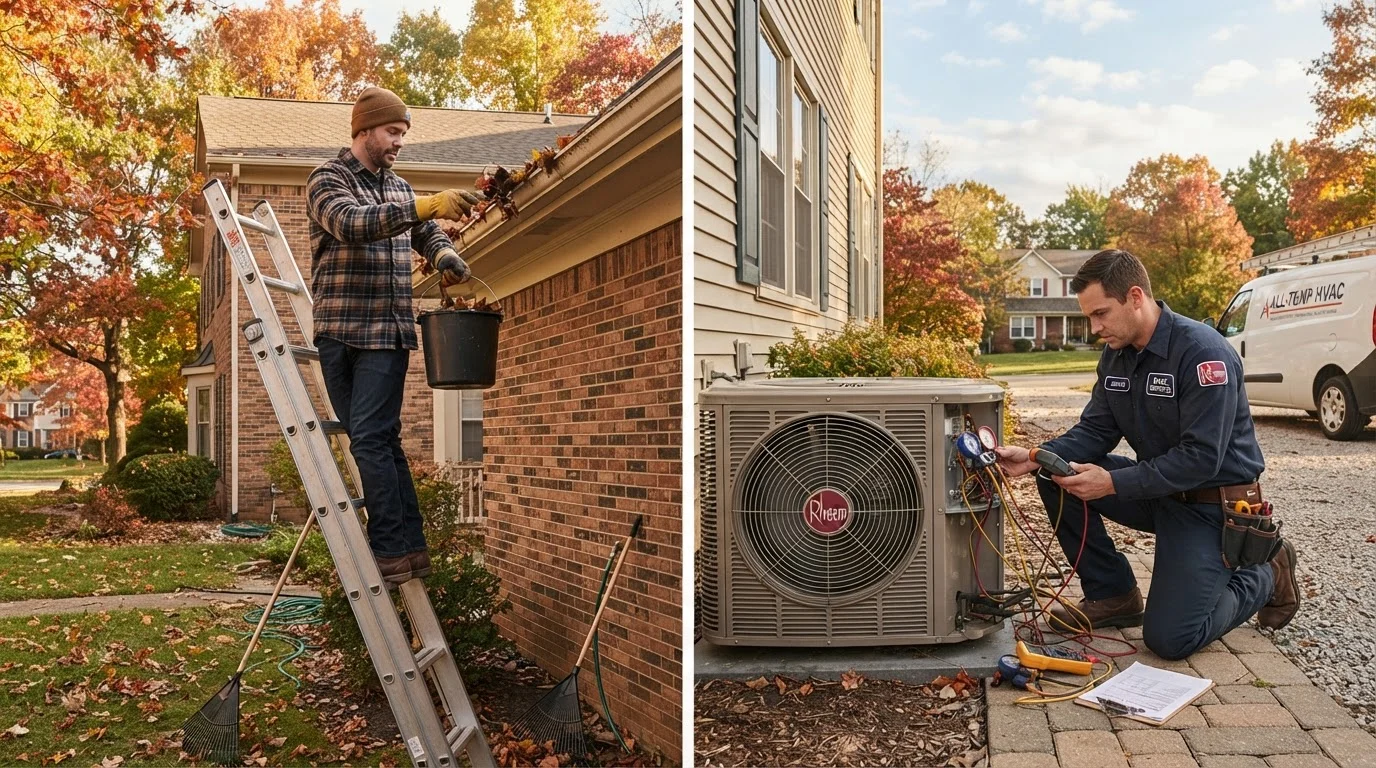
- Cleaning gutters and downspouts — Doable with a ladder, gloves, and a garden hose. Work with a spotter present and never lean a ladder against a gutter itself.
- Caulking windows and doors — Sealing gaps with exterior-grade caulk is low-skill and high-impact for energy efficiency.
- Installing or replacing weatherstripping — Peel-and-stick or compression weatherstripping around doors is straightforward and requires no specialized knowledge.
- Testing smoke and CO detectors — Monthly button-press tests and annual battery replacement are non-negotiable and entirely DIY.
- Cleaning dryer vents — A lint brush kit and vacuum handle most runs; long or complex duct paths may warrant professional cleaning.
- Inspecting and cleaning window AC units — Washing filters and checking seals are safe annual tasks before cooling season.
For guidance on pacing these tasks without burning out your schedule or budget, the article on managing maintenance on a tight schedule offers practical strategies.
Build a Simple Seasonal Checklist
At the start of each season, write down every maintenance task you're aware of and mark each one as DIY-ready or needs-a-pro. Scheduling pro visits in advance — especially for HVAC tune-ups before peak season — often means shorter wait times and sometimes lower service rates. Keep a running log of completed work; it's useful for warranty claims and future home sales.
Where the Risk Line Falls: Know Before You Start
Some tasks look simple on a surface level but involve hidden hazards — pressurized systems, live circuits, structural loads, or regulated work that requires a permit and licensed inspection. Attempting these without proper training doesn't just risk injury; it can void homeowner's insurance, create code violations, or make future sales complicated.
| Task | DIY-Friendly | Hire a Pro | |
|---|---|---|---|
| HVAC filter replacement | Yes — simple, no tools needed | Not necessary | |
| Gutter cleaning | Yes — with proper ladder safety | Consider for steep or high rooflines | |
| Furnace/boiler servicing | No — involves gas and combustion | Yes — annual tune-up recommended | |
| Electrical panel inspection | No — serious shock and fire risk | Yes — licensed electrician required | |
| Roof inspection (walking on roof) | Low-slope only, with caution | Yes for steep or damaged roofs | |
| Caulking and weatherstripping | Yes — low-skill, high-impact | Not necessary for standard gaps | |
| Chimney inspection and cleaning | Visual check only | Yes — CSIA-certified sweep for cleaning | |
| Structural crack assessment | Surface cosmetic cracks only | Yes — engineer or inspector for wide cracks |
For a deeper comparison of where DIY repair ends and professional work begins across a wider range of household fixes, see DIY repairs vs. calling a tradesperson.
Don't Let Confidence Override Safety
Online tutorials make many complex tasks look straightforward, but they rarely capture the variability of real homes — older wiring, non-standard gas connections, or compromised structural members. If you start a task and encounter something unexpected (unusual wiring colors, corroded pipes, soft framing), stop and consult a licensed professional before continuing. The cost of a consultation is far less than the cost of a serious mistake.
How to Evaluate Any Task Before You Commit
When a new seasonal task appears on your list and you're unsure where it falls, work through these questions before picking up a tool or calling a contractor:
- Does this involve gas, electricity, or structural components? If yes, default to a licensed professional unless you have verified training in that area.
- Is a permit required? Check your local municipality's building department website. Permitted work done without a permit creates legal exposure and can complicate home sales. Many jurisdictions list permit requirements online for free.
- What's the worst-case outcome of a mistake? A failed caulk bead is cosmetic. A misconnected gas line is life-threatening. Scale your caution accordingly.
- Do I have the right tools? Improvising with wrong tools introduces risk even on simple tasks. If you'd need to purchase specialized equipment you'll rarely use again, a pro may be more economical.
- Has this been done before on my home? Reviewing past inspection reports or asking a home inspector can reveal whether a system has known quirks that change the risk profile.
Understanding what preventive maintenance costs compared to reactive repairs can also help frame decisions — staying ahead of wear is almost always more affordable than addressing failures after they occur. For homeowners new to this process, the first-time homeowner's seasonal maintenance guide is a practical starting point.