
Preventive Maintenance vs. Reactive Repairs: What the Difference Costs Over Time

Key Takeaways
- Preventive maintenance typically costs far less over time than emergency repairs for the same home systems.
- Reactive repairs often carry premium pricing for urgent labor, materials, and collateral damage remediation.
- Small, scheduled tasks — like cleaning gutters or replacing filters — prevent the cascading failures that become expensive.
- Neither approach eliminates all repairs; some failures are unavoidable regardless of upkeep habits.
- A seasonal checklist is one of the most practical tools for keeping preventive maintenance manageable.
Option A
Preventive Maintenance
The proactive, scheduled approach to home care.
Best for: Homeowners who want predictable costs, fewer emergencies, and longer-lasting home systems.
Option B
Reactive Repairs
The fix-it-when-it-breaks approach most households default to.
Best for: Situations where a failure is genuinely unpredictable and planning ahead wasn't feasible.
If you want to minimize total spending on your home over many years
Preventive Maintenance
Consistent upkeep stops small problems from escalating into costly failures, keeping long-term costs more predictable and generally lower.
If your budget is currently stretched very thin and you must prioritize
Preventive Maintenance
Even partial preventive efforts — tackling the highest-risk items first — reduce the likelihood of the most expensive emergencies.
If a failure occurs suddenly with no prior warning signs
Reactive Repairs
Some failures, like storm damage or sudden appliance failure, are unavoidable; reactive repair is the only appropriate response in those cases.
If you're buying an older home with deferred maintenance
Preventive Maintenance
Catching up on overdue tasks early limits compounding damage; see what deferred neglect actually costs in our companion article.
How Each Approach Works in Practice
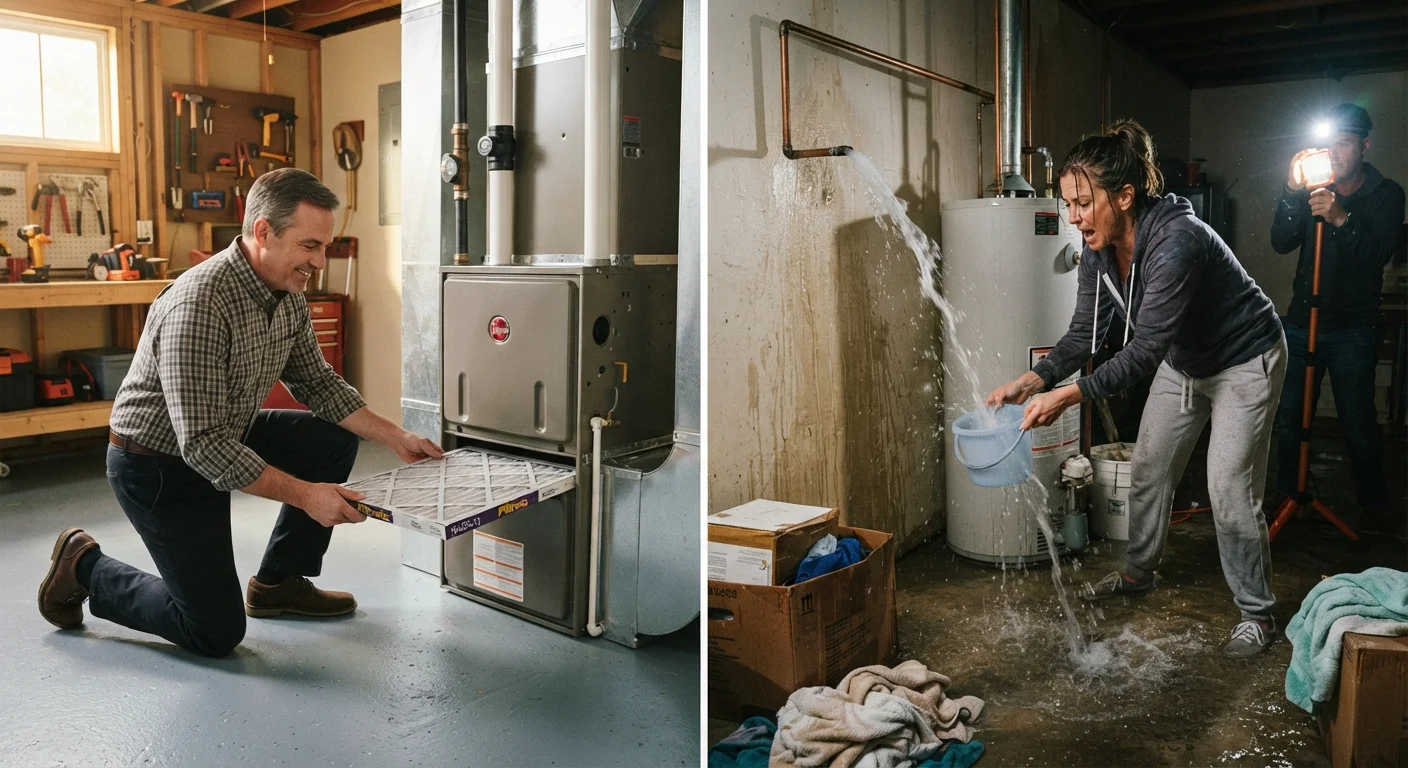
Preventive maintenance means performing scheduled, routine tasks on your home's systems and structure before problems develop. Cleaning gutters each fall, flushing the water heater annually, caulking windows before winter, inspecting the roof after storms — these are deliberate acts timed to prevent deterioration rather than respond to it.
Reactive repairs happen after something has already failed or visibly degraded. A burst pipe, a furnace that stops working mid-January, a roof that begins leaking — these events force an immediate response under pressure, often at the worst possible time.
Most homeowners use a mix of both, but the ratio matters enormously for long-term costs. For a broader picture of how each season introduces its own maintenance demands, see our year-at-a-glance seasonal overview.
| Criterion | Preventive Maintenance | Reactive Repairs |
|---|---|---|
| Timing | Scheduled, planned ahead | Unplanned, after failure |
| Labor cost | Standard, non-urgent rates | Often premium or emergency rates |
| Collateral damage risk | Low — caught early | High — damage spreads over time |
| Budget predictability | High — costs are foreseeable | Low — expenses arrive unexpectedly |
| Stress level | Low — controlled pace | High — urgent, disruptive |
| Long-term total cost | Generally lower | Generally higher |
| Flexibility | Tasks can be timed and prioritized | No flexibility — must act immediately |
Why Reactive Repairs Tend to Cost More
Emergency labor commands a premium. A plumber dispatched on a Sunday night, an HVAC technician called out during a cold snap, or a roofer needed after a storm — all charge more than scheduled, non-urgent work. That cost difference alone can make the same repair two to three times more expensive than it would have been under planned conditions.
But the deeper cost driver is collateral damage. A slow roof leak, left undetected, doesn't just damage shingles — it can rot decking, soak insulation, and invite mold into wall cavities. What begins as a $300 flashing repair can become a $6,000 remediation project. The same pattern plays out with plumbing, HVAC, and foundation issues.
1%–4%
Annual home value recommended for upkeep
A commonly cited rule of thumb among home improvement professionals suggests budgeting 1–4% of a home's value each year for maintenance, depending on the home's age and condition.
3–10x
Cost multiplier for emergency vs. planned repairs
Home repair industry estimates frequently indicate that emergency or after-failure repairs can cost several times more than the same work performed as a planned, non-urgent task.
35%
Of homeowners report skipping seasonal maintenance regularly
Surveys of US homeowners conducted by home services platforms have found a significant share of households report routinely delaying or skipping scheduled maintenance tasks.
For a detailed look at how neglect compounds over years, our article on what deferred maintenance actually does to a home walks through the most vulnerable areas.
What Preventive Maintenance Actually Costs
Preventive maintenance isn't free, and it's worth being honest about that. Annual tasks like HVAC servicing, gutter cleaning, chimney inspection, and weatherstripping replacement add up in time and sometimes money. However, those costs are generally modest, schedulable, and — importantly — foreseeable.
A well-maintained home lets you budget deliberately. You know the furnace filter needs replacing every three months; you can plan for it. Emergency repairs, by contrast, arrive unannounced and demand immediate spending regardless of your financial situation at the time.
If budget and time feel like barriers to keeping up, our guide on staying on top of maintenance when resources are tight offers practical strategies for prioritizing the tasks that matter most.
When Reactive Repairs Are Unavoidable
Even the most diligent preventive maintenance routine cannot prevent every failure. Severe weather events, manufacturing defects, and systems simply reaching the end of their designed lifespan can all cause unexpected breakdowns. Having an emergency repair fund — separate from your planned maintenance budget — helps absorb these events without financial disruption. A general guideline is to keep three to six months of estimated repair costs accessible, though the right amount depends on your home's age, condition, and your personal financial situation.
Where to Start: Applying a Preventive Mindset
The most effective starting point is identifying which home systems carry the highest failure cost and the clearest preventive path. Roofing, plumbing, HVAC, and water intrusion points (gutters, flashing, window seals) are typically at the top of that list. Regular visual inspections — even informal walkarounds each season — catch early warning signs before they compound.
Once you know which tasks matter most, a simple seasonal checklist turns intention into habit. For guidance on navigating decisions about which tasks to do yourself versus when to call a professional, see our comparison of DIY upkeep versus hiring a pro.
Neither approach eliminates all surprises. Some repairs — storm damage, aging systems reaching end-of-life — happen regardless of how diligently you maintain a home. The goal of preventive maintenance isn't perfection; it's making the unexpected failures fewer, smaller, and easier to absorb when they do arrive.