

Key Takeaways
- Deferred maintenance rarely stays minor — most neglected issues grow more expensive the longer they sit.
- Moisture is the most destructive force in a home when maintenance lapses; it enables rot, mold, and structural damage.
- The home's exterior envelope — roof, gutters, siding, and windows — is where most cascading damage begins.
- HVAC, plumbing, and electrical systems degrade faster without routine servicing, shortening their usable lifespan.
- A consistent seasonal checklist is the most reliable way to catch problems before they compound.
- Most deferred maintenance consequences are preventable with modest time and effort invested each season.
Deferred Maintenance
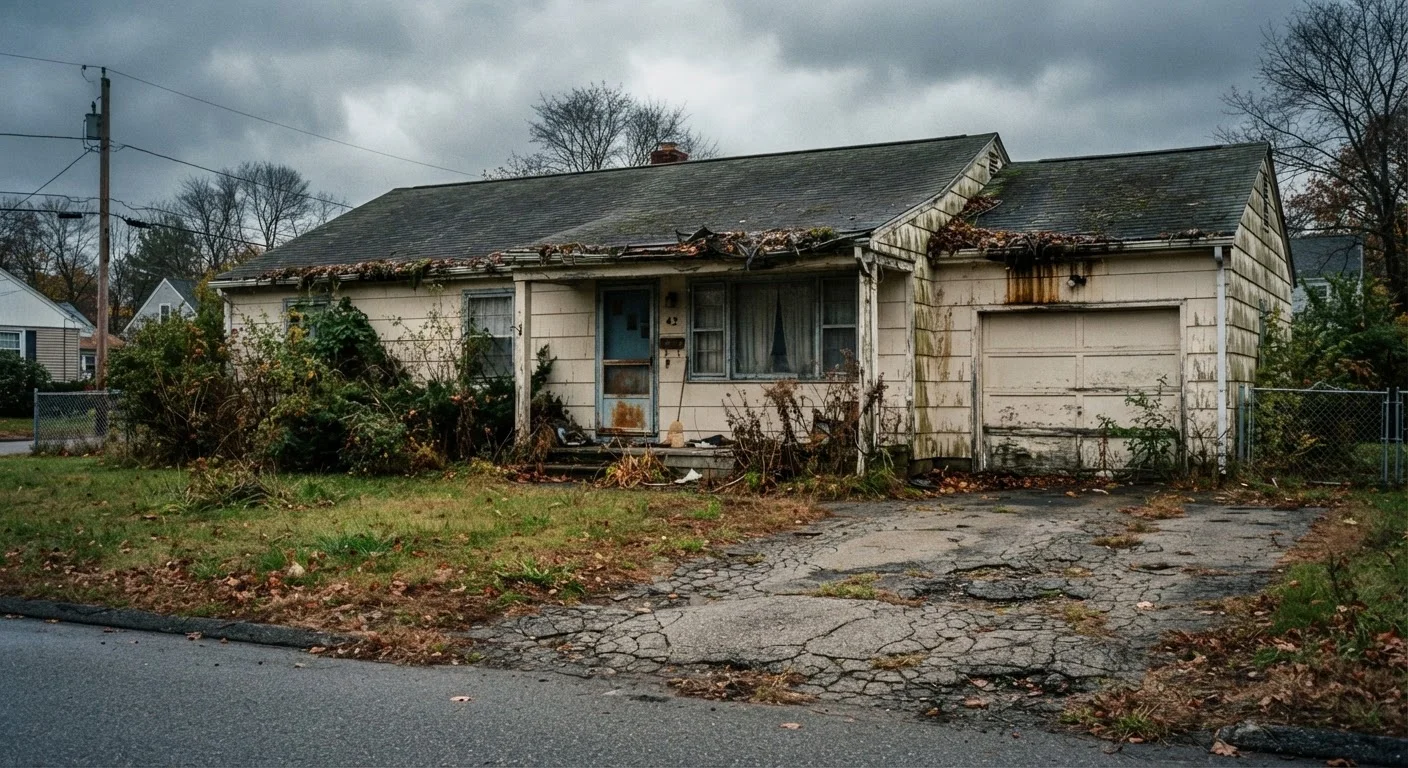
Deferred maintenance refers to upkeep tasks that are postponed — whether due to cost, time, or oversight — beyond the point when they should reasonably be completed. These are jobs like cleaning gutters, sealing gaps, servicing HVAC filters, or repainting wood trim. What starts as a small delay often becomes a much larger and more expensive problem as the underlying issue continues to worsen without intervention.
In real estate and property management, deferred maintenance is formally tracked as a liability that reduces a building's current value and increases its long-term capital repair costs.
Why Neglect Compounds Rather Than Stays Static
A home is a system of interconnected parts, and that interconnection is exactly what makes deferred maintenance so costly over time. When one component fails — a cracked caulk joint, a loose shingle, a slow-draining gutter — adjacent materials are exposed to conditions they weren't designed to handle alone. Moisture seeps in. Temperatures fluctuate unchecked. Wood fibers expand and contract without protection.
The result is not a single, contained repair. It's a chain reaction. A caulk line that costs a few dollars to reapply today may allow water to reach wall framing. That framing swells, shifts, and eventually invites mold. What began as a 30-minute weekend task can become a multi-trade repair job within two or three seasons.
This compounding dynamic is why the cost gap between preventive maintenance and reactive repairs widens so reliably over time. Every deferred task essentially shifts the work to a future version of you — except by then, the work is harder and more expensive.
1:4+
Ratio of preventive to reactive repair costs
Home maintenance professionals commonly observe that deferred repairs can cost several times more than the original preventive task would have.
~40%
Of home energy loss attributed to air infiltration
According to the U.S. Department of Energy, gaps around windows, doors, and building seams account for a significant share of household energy waste.
15–25 years
Typical HVAC lifespan with proper maintenance
Industry guidance from HVAC associations suggests that serviced systems consistently outlast neglected ones by years, affecting replacement timing and costs.
The Exterior Envelope: Where Most Damage Starts
The roof, gutters, siding, windows, and doors form what builders call the building envelope — the protective shell that keeps the outdoors out. This is where deferred maintenance typically causes the most visible and costly harm.
Roofing: Missing or curling shingles allow water infiltration that damages decking, insulation, and ceiling drywall. A single storm season without attention can accelerate deterioration significantly.
Gutters and downspouts: Clogged gutters overflow against fascia boards and siding, saturating wood and directing water toward the foundation. Over multiple seasons, this can cause fascia rot, siding failure, and basement moisture problems. Warm-weather tasks like gutter inspection are easy to skip but carry outsized consequences.
Siding and trim: Unpainted or unprimed wood trim absorbs moisture and begins to rot from the inside out. By the time surface damage is obvious, replacement is often the only option.
Windows and doors: Failed weatherstripping and deteriorated caulk allow air infiltration, raising energy costs and enabling moisture entry around frames.
Home Systems That Degrade Without Routine Servicing
Beyond the exterior, a home's core mechanical systems depend on periodic attention to function safely and efficiently. Skipping routine servicing doesn't just reduce performance — it shortens service life and raises failure risk.
HVAC systems: Dirty filters force heating and cooling equipment to work harder, increasing energy consumption and wear. Unmaintained systems are more likely to fail during peak seasonal demand — often at the worst possible time. Neglected ductwork can also degrade indoor air quality. See our guide to home systems maintenance for a full overview of what to inspect each season.
Plumbing: Small leaks under sinks or around supply lines, left unaddressed, can saturate cabinet floors and subfloor materials. Water heaters without annual sediment flushing lose efficiency and can fail prematurely.
Electrical: Outlets, panels, and fixtures don't require frequent homeowner intervention, but visible damage — scorch marks, tripped breakers, flickering lights — should never be ignored. Electrical issues that go unaddressed are a fire safety concern and require a licensed electrician.
Prioritize by Risk, Not by Visibility
When catching up on deferred maintenance, it's tempting to fix what looks worst first. Instead, prioritize by consequence: anything involving active moisture intrusion, structural integrity, or safety systems should come before cosmetic repairs. A water stain on the ceiling matters more than peeling paint on the fence.
Building a Habit That Prevents Accumulation
The most effective response to deferred maintenance isn't a single intensive catch-up session — it's building a seasonal rhythm that prevents the backlog from forming in the first place. A consistent schedule lets you identify problems when they're still minor and address them at low cost.
Seasonal maintenance broken down by quarter gives most homeowners a manageable framework: exterior checks in spring and fall, HVAC service before summer and winter, and smaller interior tasks filled in between. If time or budget makes a full schedule difficult, prioritizing the highest-risk items first is a practical starting point.
For homeowners who have already accumulated some deferred maintenance, addressing repairs systematically by urgency — starting with anything involving moisture, safety, or structural integrity — is the sensible approach. Cosmetic repairs follow once the foundational issues are stabilized.
A home maintained consistently over years is not just in better physical condition — it's less stressful to own, safer to live in, and better positioned for any future transaction. The investment of regular attention is modest compared to the alternative.