

Key Takeaways
- Each season brings distinct stress points — weather changes drive most home wear and damage.
- Proactive maintenance costs far less than reactive emergency repairs.
- A quarterly rhythm makes upkeep manageable and easy to remember.
- Most seasonal tasks are DIY-friendly; only hazardous or regulated work needs a licensed professional.
- Skipping tasks compounds over time — neglect rarely stays contained to one system.
Seasonal Home Maintenance
Seasonal home maintenance is the practice of inspecting, servicing, and preparing your home's systems and surfaces in sync with the changing seasons. Rather than waiting for something to break, you work through a set of timely tasks each quarter to prevent small issues from growing into expensive repairs. Think of it as routine health care for your house — regular check-ups instead of emergency room visits.
Most building codes and manufacturer warranties assume routine maintenance is performed; neglecting it can sometimes void warranty coverage on systems such as HVAC units and roofing materials.
Why Your Home Needs a Seasonal Rhythm
Your home is constantly reacting to its environment. Temperature swings cause materials to expand and contract, rain and snow test every seal and surface, and heat stresses mechanical systems. None of this is random — it follows the seasons, which means your upkeep can follow the same predictable pattern.
A seasonal maintenance rhythm works because it matches the timing of stress. You aren't guessing when to check the roof or flush the water heater; the calendar tells you. This is the core idea behind seasonal maintenance: predictable care at predictable intervals, rather than reactive fixes after something fails.
If you're new to owning a home, see our introduction to seasonal upkeep for a beginner-friendly overview of where to begin.
Tie Tasks to Familiar Calendar Events
A practical memory trick: link seasonal tasks to events you already mark on the calendar. Change HVAC filters when you adjust clocks for daylight saving time. Clean gutters after Thanksgiving when trees are bare. Test smoke detectors when you change smoke alarm batteries on your birthday. Small anchors make habits stick.
What Changes Each Quarter
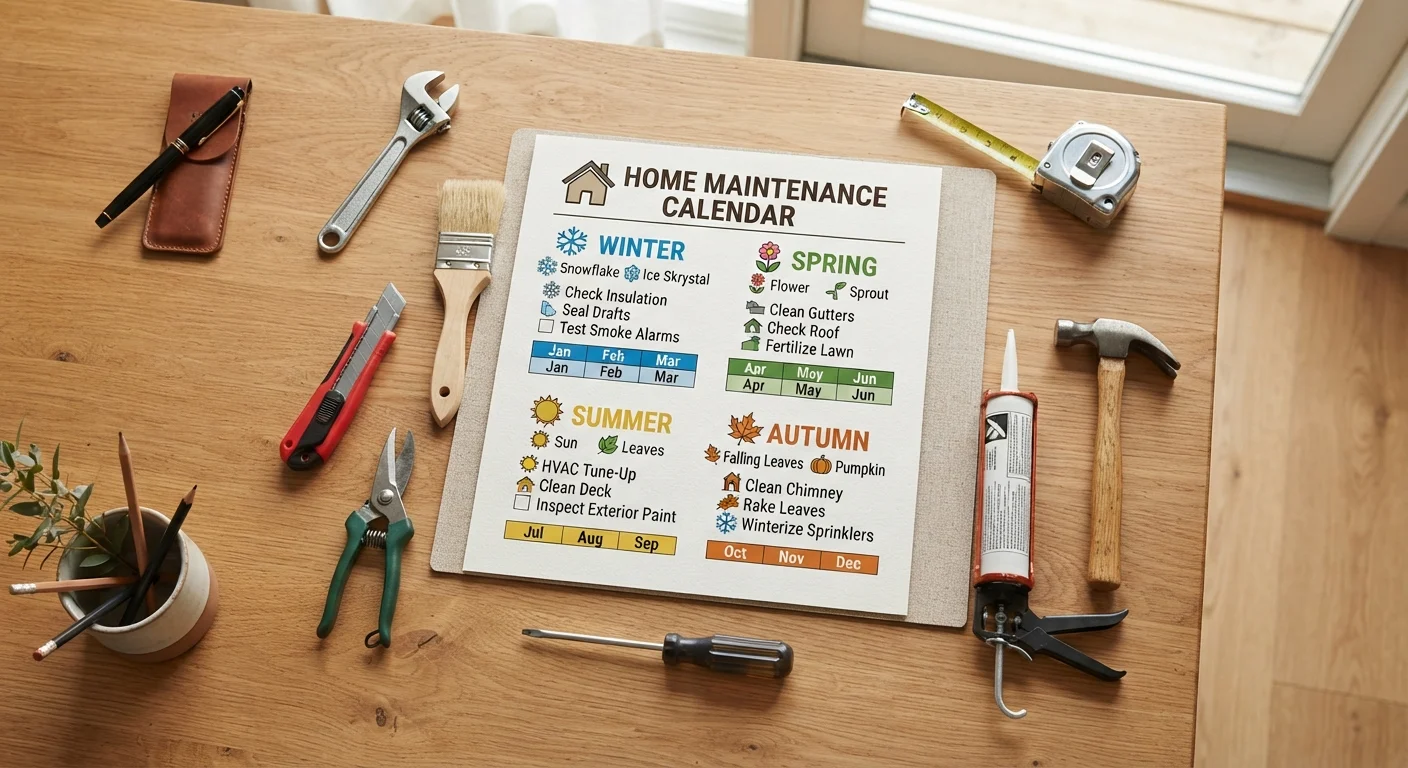
Breaking the year into four quarters makes upkeep concrete and manageable.
- Spring: Inspect for winter damage — check the roof, gutters, foundation, and exterior caulking. Test smoke and carbon monoxide detectors, service the air conditioner before hot weather arrives, and clear debris from drainage paths.
- Summer: Focus on the exterior — touch up paint, check window screens, trim vegetation away from the house, and inspect decks and patios for loose boards or fasteners. This is also a good time to flush the water heater of sediment.
- Fall: This is arguably the most critical season. Clean gutters after leaves drop, inspect and clean the chimney if you use a fireplace, seal gaps around windows and doors, and have the heating system serviced before you need it.
- Winter: Monitor for ice dams on the roof, protect exposed pipes from freezing, and check attic insulation levels. Keep an eye on humidity levels indoors, which can cause condensation damage when it's cold outside.
For a detailed breakdown by month, our seasonal task reference provides a concise checklist format you can print and post.
1% per year
Recommended annual maintenance budget
A commonly cited rule of thumb suggests setting aside roughly 1% of your home's value annually for maintenance and repairs, though costs vary by home age and condition.
Up to 4x
Cost multiplier for ignored repairs
Home improvement industry guidance consistently notes that delaying maintenance can multiply repair costs severalfold, particularly for water-related damage and HVAC issues.
The Systems That Need Year-Round Attention
Some home systems don't respect quarterly boundaries — they need consistent attention across all seasons. HVAC, plumbing, and electrical systems fall into this category. Filter changes, leak checks, and visual inspections of circuit breakers and panels should be part of an ongoing habit, not just a once-a-year event.
Our whole-house systems schedule provides a month-by-month framework for keeping these critical systems in check throughout the year.
Pay attention to early warning signs. Flickering lights, slow drains, or a furnace that cycles on and off too frequently are often symptoms of something developing beneath the surface. Understanding what your home's systems are telling you can help you act before a small fault becomes a major repair bill.
What Happens When Maintenance Is Skipped
Deferred maintenance rarely stays in one place. A small roof leak left unaddressed through winter can saturate insulation and promote mold growth by spring. A clogged dryer vent, ignored across seasons, becomes a fire hazard. Neglect compounds — each skipped task makes the next problem slightly more likely and more costly.
This compounding effect is one reason a routine pays off so clearly. The case for a structured maintenance routine isn't just about preventing inconvenience — it's about protecting the long-term value and safety of your home.
When repairs do become necessary, our Repairs & Fixes hub covers DIY solutions for the most common household issues.