

Key Takeaways
- Flickering lights often signal loose wiring or an overloaded circuit, not just a failing bulb.
- Slow drains throughout the house point to a main line issue, not individual clogs.
- An HVAC system that short-cycles is usually working too hard due to a dirty filter or refrigerant problem.
- Musty odors near vents or walls can indicate hidden moisture or mold growth in ductwork.
- Banging pipes and water hammer are signs of pressure problems that worsen without attention.
- Early symptom recognition lets homeowners act before minor issues become expensive system failures.
Why Your Home Is Always Talking
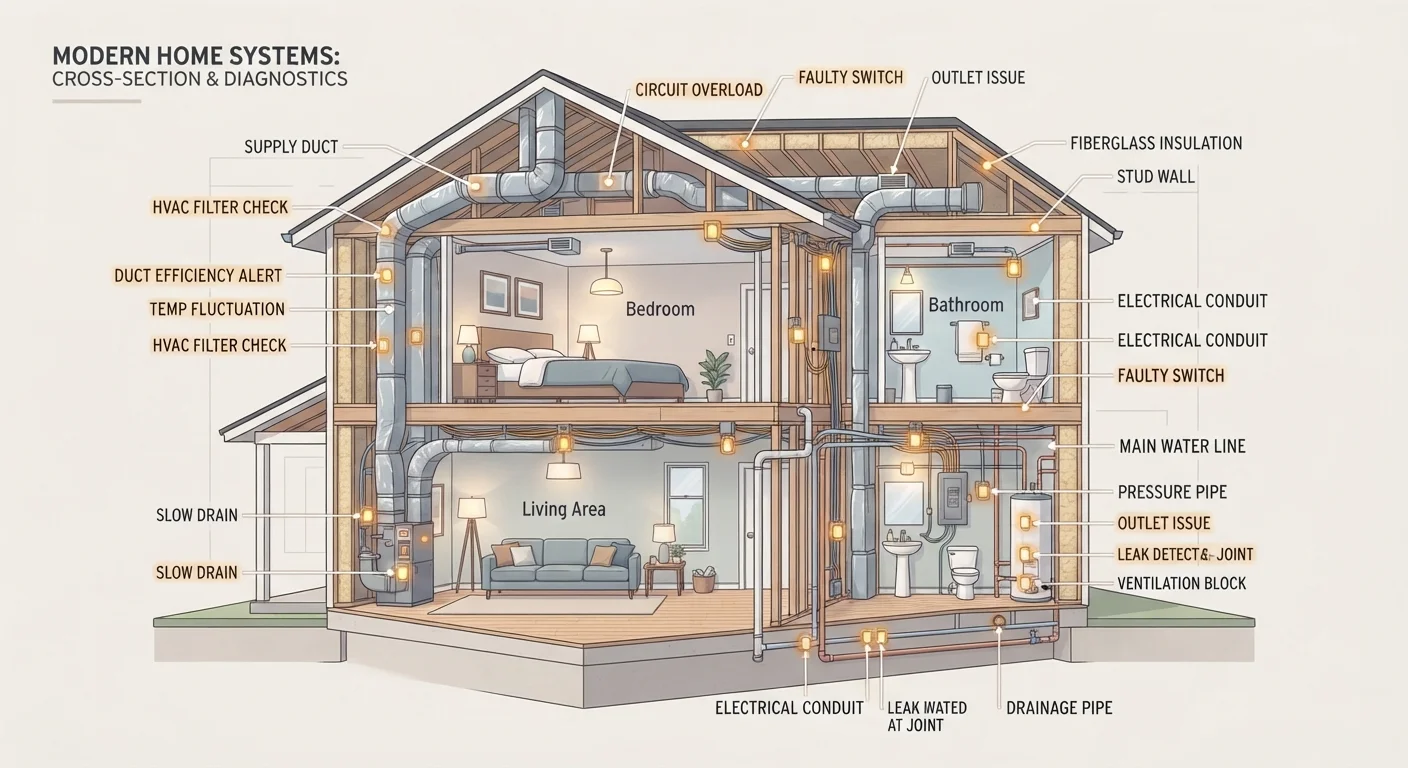
Every home has three core systems — electrical, plumbing, and HVAC — and all three communicate through symptoms long before a full breakdown occurs. The challenge for most homeowners isn't the repairs themselves; it's knowing which symptom belongs to which system and how urgent the message is.
Think of these warning signs the way you'd think about a dashboard light on your car. Just as common dashboard warning lights signal problems worth understanding, your home's quirks follow the same logic — something changed, and the system is registering it. The seven signs below cover the most common cross-system symptoms, what they typically point to, and when you can monitor versus when you need a professional.
When to Call a Professional Immediately
Some symptoms require professional attention right away: the smell of rotten eggs (possible gas leak — leave the home and call your utility provider), sparking outlets or a burning smell near electrical fixtures, sewage odors inside the home, or any sign of active water intrusion near electrical components. Do not attempt to investigate or repair these situations yourself.
Seven Symptoms You Shouldn't Ignore
Flickering or dimming lights
A single bulb that flickers usually just needs replacing. But when lights dim across a room — especially when a large appliance like a refrigerator or dryer kicks on — that points to a shared circuit that's being overloaded or a loose neutral connection at the panel. Persistent flickering across multiple rooms can indicate a failing main connection and warrants an electrician's inspection. To understand what's happening at your panel level, see how your electrical panel works.
Lights dimming when appliances start usually means a shared circuit is being overloaded.
Breakers that trip repeatedly
A breaker trips once because of a momentary overload — that's normal. A breaker that trips repeatedly on the same circuit is telling you the load on that circuit consistently exceeds its rated capacity, or there's a wiring fault. Resetting without investigating the cause is a short-term fix that can mask a growing hazard. Understanding the difference between a tripped breaker and a blown fuse helps you interpret exactly what you're dealing with before taking next steps.
A repeatedly tripping breaker is a circuit under chronic stress, not a minor inconvenience.
Slow drains in multiple fixtures
One slow drain is almost always a localized clog — hair, grease, or soap buildup near the drain opening. When two or more fixtures drain slowly at the same time, the blockage is deeper, typically in the main drain line or a shared branch. If toilets gurgle when you run a sink, that's a strong confirmation of a venting or main-line issue. These symptoms can escalate to sewage backup if left unaddressed, so a plumber's drain camera inspection is often the right next step.
Multiple slow drains at once point to a shared line problem, not individual fixture clogs.
Banging or knocking pipes
A loud bang when you shut off a faucet quickly is called water hammer — it happens when fast-moving water is abruptly stopped and creates a pressure shockwave. Occasional water hammer is common, but frequent occurrences can stress pipe joints and fittings over time. A plumber can install a water hammer arrestor or adjust your home's pressure-reducing valve if incoming water pressure is running too high. Normal residential water pressure is generally between 40 and 80 psi; anything consistently above that range warrants attention.
Banging pipes signal pressure shockwaves that can stress fittings and joints over time.
HVAC that short-cycles
Short-cycling means your heating or cooling system turns on, runs briefly, then shuts off before reaching the set temperature — only to restart again minutes later. The most common causes are a clogged air filter restricting airflow, a refrigerant issue causing the system to overheat, or a unit that's oversized for the space. Start with the simplest fix: check and replace the air filter. If that doesn't resolve it, a licensed HVAC technician should inspect refrigerant levels and thermostat calibration. Persistent short-cycling puts extra wear on the compressor, shortening the system's overall lifespan. Unexplained energy bill increases often accompany this problem — understanding what drives winter energy bill spikes can give you useful context.
Short-cycling accelerates compressor wear — start with a filter check before assuming a major repair.
Musty odors from vents or walls
A musty smell when your HVAC runs often means moisture has accumulated in the ductwork, drip pan, or air handler, creating conditions where mold or mildew can develop. If the odor comes from a specific wall rather than the vents, it may indicate a slow plumbing leak inside the wall cavity. Either scenario warrants investigation rather than masking with air fresheners. Check the condensate drain line on your AC unit for blockages first — this is a common and DIY-accessible cause. Wall moisture requires a professional to locate and repair the source before remediation.
Musty smells from vents or walls signal hidden moisture — investigate the source, don't mask the odor.
Doors and windows that suddenly stick
Humidity causes wood to swell seasonally, so some sticking in summer is normal. But a door or window that suddenly won't close properly when the season hasn't changed can indicate foundation settling, framing movement, or significant moisture intrusion. A room-by-room door diagnosis can help you distinguish a simple adjustment from a sign of something structural. Similarly, new diagonal cracks appearing near door and window corners often accompany this — understanding what wall cracks mean helps you evaluate severity.
Sudden sticking doors out of season may point to foundation movement, not just humidity.
Keep a Simple Home Symptom Log
When you notice a new symptom — a sound, smell, or behavior — jot down the date, which room, and what you were doing when it appeared. Even a notes app entry works. This log helps you identify whether a problem is worsening over time and gives a technician useful diagnostic context when they arrive.
Putting It Together: From Symptom to Action
Most of these warning signs share a common thread: they start small, stay manageable for a while, and then accelerate. A slow drain ignored for months becomes a sewage backup. A tripped breaker reset repeatedly without investigation becomes a fire hazard. The difference between a minor fix and a major repair is almost always timing.
Pairing this symptom awareness with a regular maintenance schedule makes the biggest difference. Our year-round home systems maintenance schedule gives you a month-by-month framework so routine checks don't slip through the cracks. And if you want to understand how seasonal changes put different stresses on each system, seasonal maintenance explained walks through what to expect each quarter.
For work that involves your electrical panel, gas lines, structural elements, or main plumbing stack, always consult a licensed professional and verify whether a permit is required. Our guide on when permits and inspections apply can help clarify those boundaries before you start any project.