

| Red light color | Urgent — stop or act immediately |
| Amber/yellow light color | Attention needed soon |
| Flashing check engine light | More serious than solid — reduce speed, see mechanic same day |
| OBD-II scanner | Reads diagnostic codes behind the check engine light |
| Startup light cycle | Normal — lights illuminate briefly then turn off |
What Warning Lights Are Actually Doing
Your dashboard is wired into your car's onboard diagnostic system, which constantly monitors sensors throughout the vehicle. When something falls outside normal parameters — engine temperature too high, oil pressure too low, a wheel losing traction — the system flags it with an icon. These lights aren't random; each one corresponds to a specific system or condition.
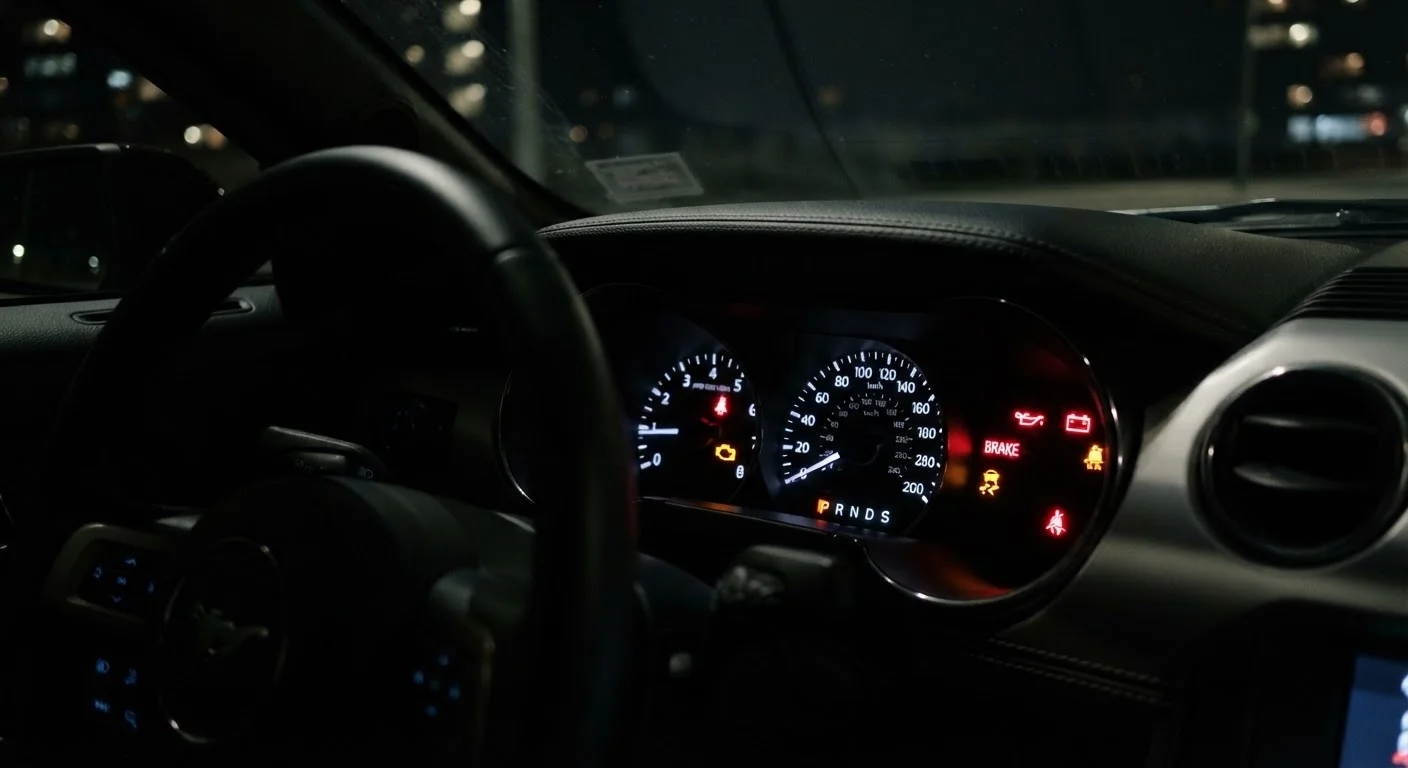
Colors matter. Red lights are urgent and typically mean stop driving or act immediately. Yellow or amber lights signal something needs attention soon but usually isn't an emergency right now. Blue and green lights are informational — they tell you something is active, like your high beams or cruise control.
| Red light color | Urgent — stop or act immediately |
| Amber/yellow light color | Attention needed soon |
| Flashing check engine light | More serious than solid — reduce speed, see mechanic same day |
| OBD-II scanner | Reads diagnostic codes behind the check engine light |
| Startup light cycle | Normal — lights illuminate briefly then turn off |
Your owner's manual contains the definitive list of warning lights for your specific vehicle. If you want help navigating it, see our guide to reading your owner's manual without getting lost.
The Lights That Need Immediate Attention
These red indicators mean you should pull over safely and stop driving as soon as you can:
- Engine Temperature (thermometer icon): Your engine is overheating. Continuing to drive can cause serious, expensive damage. Pull over, turn off the engine, and let it cool before opening the hood. Check coolant levels only when the engine is cold.
- Oil Pressure (oil can icon): Oil pressure has dropped dangerously low. This is not the same as needing an oil change — it means oil isn't circulating properly right now. Driving further can seize your engine. Stop the car.
- Battery (battery icon): Your charging system isn't working. The car may be running on battery reserve alone. Get to a mechanic promptly — the car may stall without warning.
- Brake System (exclamation mark in circle or "BRAKE"): Could indicate low brake fluid, a hydraulic issue, or the parking brake is engaged. If the parking brake is off and this light is on, treat it seriously. Your braking ability may be compromised. Our article on brake warning signs covers what else to watch for.
OBD-II
On-Board Diagnostics, version 2 — a standardized system in most vehicles built after 1996 that monitors engine and emissions performance. It stores diagnostic trouble codes that mechanics or handheld scanners can read.
Oil pressure
The force with which oil circulates through your engine to lubricate moving parts. Low oil pressure means metal parts aren't being protected and can seize within minutes.
Traction control
A safety system that detects wheel spin and reduces engine power or applies braking to help the car maintain grip on slippery roads.
Charging system
The combination of the alternator and battery that keeps your car's electrical systems powered while the engine runs. A failure means the battery drains and the car can stall.
Amber Lights: Act Soon, Not Necessarily Right Now
These lights don't require you to pull over immediately, but they shouldn't be ignored for long:
- Check Engine (engine outline icon): One of the most common and misunderstood lights. It can mean anything from a loose gas cap to a misfiring cylinder. A solid check engine light usually allows continued driving, but get it scanned at a shop. A flashing check engine light is more serious — reduce speed and have it checked that day.
- Tire Pressure (exclamation point inside a horseshoe shape): One or more tires are below the recommended pressure. Driving on underinflated tires affects handling and fuel economy. Check and inflate tires when it's safe to do so.
- Traction Control / Stability (car with squiggly lines): If this light flashes briefly, it's doing its job — helping you maintain control on a slippery surface. If it stays on, the system may be disabled or faulty.
- Low Fuel (fuel pump icon): You're running low. How far you can go varies by vehicle, but don't assume you have 50 miles — fill up soon.
Many of these lights tie directly into your car's fluid systems. Our guide to your car's fluids explains what coolant, brake fluid, and others actually do and when to check them.
A Few Things Worth Knowing
When you start your car, most warning lights briefly illuminate and then go off — this is a normal self-check. If a light stays on after startup, that's when it's meaningful.
Some lights can be triggered by minor issues. A loose gas cap, for example, can trigger the check engine light on many vehicles — simply tightening or replacing the cap and driving a few cycles may clear it. That said, don't assume every light has a simple fix. If you're unsure, an OBD-II scanner (available at most auto parts stores and some libraries) can pull the specific diagnostic code, giving you or a mechanic a clear starting point.
Finally, if multiple lights come on at the same time, that often signals an electrical issue or a loss of vehicle power rather than several simultaneous problems. Pull over safely and call for roadside assistance.
This article is for general informational purposes. Warning light meanings can vary by make, model, and year. Always consult your owner's manual or a qualified mechanic for guidance specific to your vehicle.