

Key Takeaways
- Squealing usually signals worn brake pads that need replacement soon.
- Grinding means metal-on-metal contact — stop driving and have it inspected immediately.
- A spongy or low brake pedal often points to a brake fluid or air-in-line issue.
- Pulling to one side during braking may indicate uneven pad wear or a stuck caliper.
- Brake warning lights should never be ignored — they signal something the system detected on its own.
- Most brake problems caught early are far less expensive to fix than those left unaddressed.
Brake Warning Signs
Brake warning signs are noises, physical sensations, or visual indicators that your vehicle's braking system may need attention. They include sounds like squealing or grinding, feelings like a spongy pedal or pulling to one side, and dashboard warning lights. Recognizing these signals early can prevent unsafe driving conditions and more costly repairs.
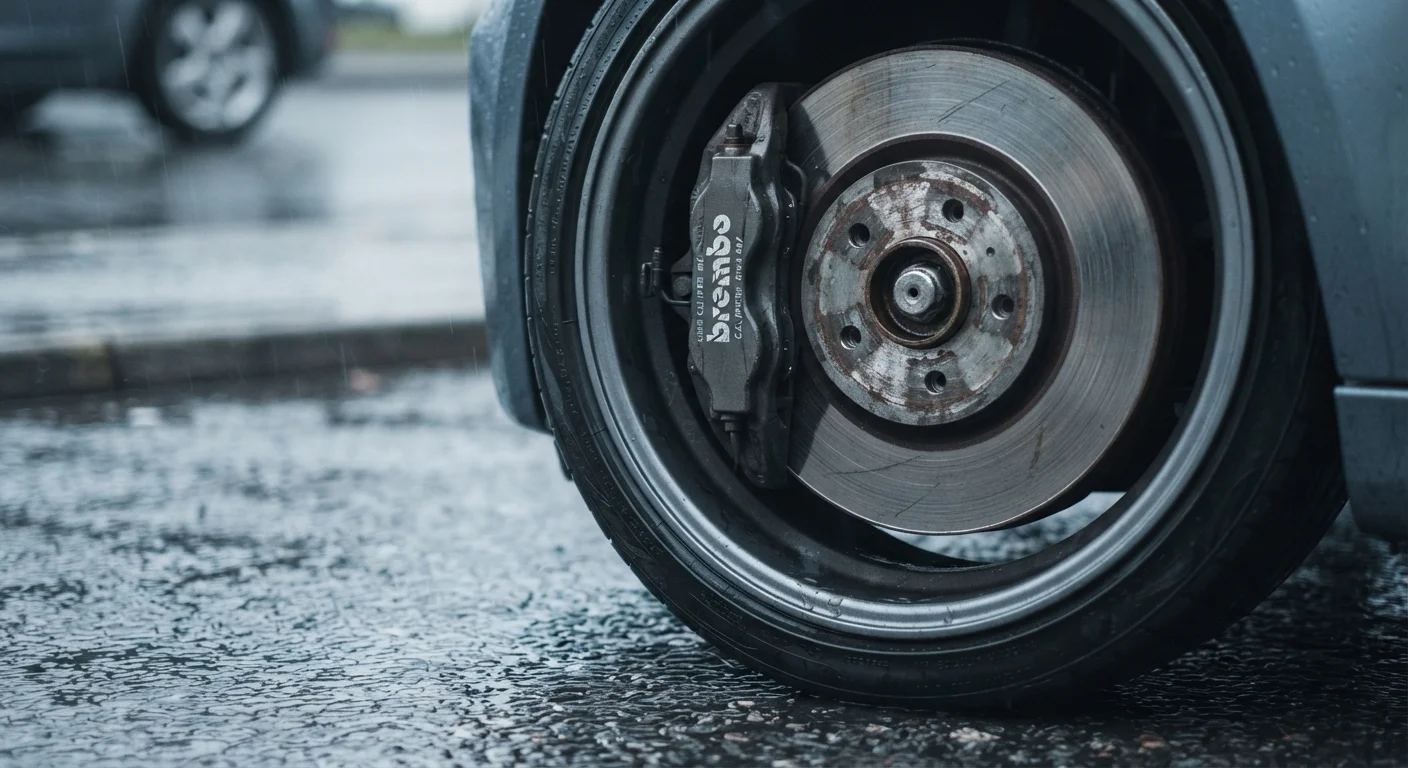
Modern disc brake systems use wear indicators — small metal tabs that contact the rotor and produce a high-pitched squeal when pads reach minimum thickness, serving as a built-in audible alert.
Why Your Brakes Try to Talk to You
Brakes don't fail silently. By design, they give off warning signals — sounds, feelings through the pedal, and dashboard indicators — well before they stop working. The challenge for most drivers is knowing which signals to take seriously and which are just quirks of normal operation.
Understanding what your brakes are communicating doesn't require mechanical expertise. It just requires paying attention. Just like dashboard warning lights tell you something the car detected on its own, brake sensations are the system doing the same thing mechanically.
~22%
Brake-related crashes involving vehicle defects
According to NHTSA research on pre-crash vehicle factors, brake problems are among the most commonly cited mechanical contributors to crashes.
30K–70K miles
Typical brake pad lifespan range
Actual pad life varies significantly based on driving style, vehicle type, and pad material — city driving with frequent stops wears pads faster than highway use.
2–3 years
Recommended brake fluid change interval
Many manufacturers suggest replacing brake fluid every two to three years regardless of mileage, as it absorbs moisture over time and can degrade braking performance.
Common Sounds and What They Mean
Squealing or High-Pitched Screeching
This is the most common brake noise, and in most cases it's intentional. Brake pads contain small metal wear indicators that scrape against the rotor when the pad material gets thin. The resulting squeal is a built-in alert: time to get the pads replaced. Occasional light squealing in wet or dusty conditions is generally normal and clears up quickly. Persistent squealing every time you brake is a different matter.
Grinding
A grinding noise during braking — often felt through the pedal as well — means the pad material is gone and metal components are contacting the rotor directly. This is beyond a wear-indicator warning. It can damage the rotor (an expensive part to replace) and seriously compromise stopping ability. If you hear grinding, have the vehicle inspected as soon as possible and avoid aggressive driving in the meantime.
Clicking or Rattling
Brakes that click or rattle when you press or release the pedal may indicate loose hardware — brake pads or calipers that aren't properly secured. It can also point to a worn anti-rattle clip. Usually not as urgent as grinding, but it's worth a look during your next service.
Sensations Through the Pedal and Steering Wheel
Spongy or Low Pedal
A brake pedal that feels soft underfoot, sinks too close to the floor, or requires more pressure than usual is signaling a hydraulic issue. Air in the brake lines or low/degraded brake fluid reduces the pressure that transmits your foot's force to the brakes. Your car's brake fluid is a critical part of this system — it should be checked periodically and replaced according to your manufacturer's schedule.
Vibration or Pulsing
If the pedal pulses or the steering wheel shudders when you brake, the most common cause is a warped or uneven rotor. Rotors can warp from excessive heat — often from hard, repeated braking — or simply from wear over time. The vibration is the brake pad making uneven contact with the rotor surface.
Pulling to One Side
A car that drifts left or right during braking usually has uneven braking force between wheels. Possible causes include a stuck caliper, uneven pad wear, or a collapsed brake hose restricting fluid flow to one side. This affects vehicle control and needs professional attention.
When to See a Mechanic — and When It's Urgent
Some brake symptoms call for a scheduled inspection at your next convenient opportunity. Others mean you should limit driving right away. Here's a simple way to think about urgency:
- Schedule soon: Intermittent squealing, clicking sounds, slight pedal softness that's new but not severe.
- Don't ignore: Persistent squealing every time you brake, a brake warning light that stays on while driving.
- Act promptly: Grinding, a very spongy or nearly-to-the-floor pedal, noticeable pulling during braking, or a burning smell after driving.
Brake problems caught early are generally much less expensive to address. A pad replacement is routine. A rotor replacement because worn pads were ignored is a different conversation. When in doubt, have a qualified mechanic take a look — brake inspections are typically quick and often included in routine service.
This article is for general informational purposes only. For any concerns about your vehicle's braking performance, consult a qualified mechanic. Do not attempt brake system repairs without proper training and tools.