

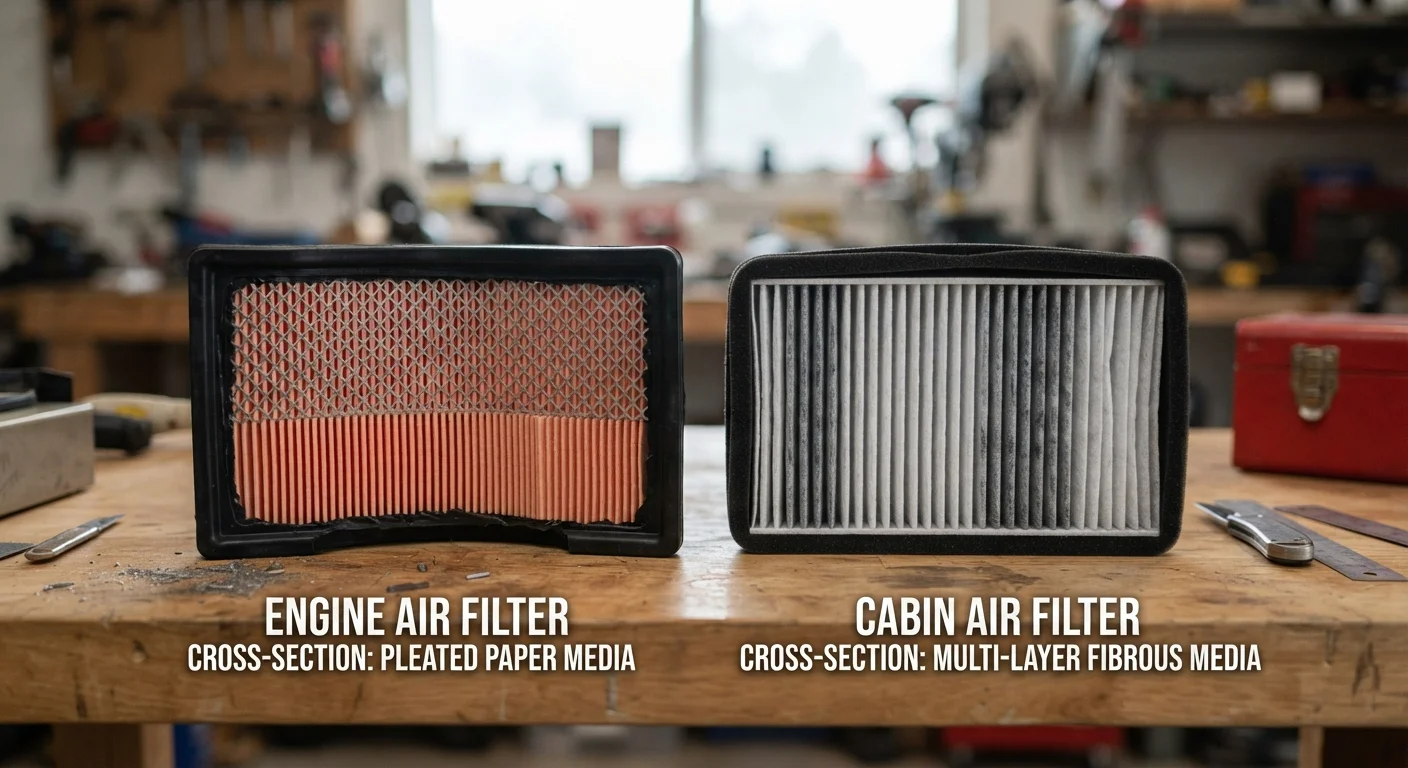
Key Takeaways
- The engine air filter protects the engine; the cabin air filter protects the people inside the car.
- Both filters need regular replacement, but on different schedules and for different reasons.
- A clogged engine air filter can reduce fuel efficiency and performance; a clogged cabin filter reduces airflow and air quality.
- Neither filter is interchangeable — they are different sizes, shapes, and materials designed for specific jobs.
- Most drivers can visually inspect both filters themselves, though replacement intervals vary by vehicle and driving conditions.
Option A
Engine Air Filter
The engine's first line of defense against the outside world.
Best for: Protecting your engine by keeping dust, dirt, and debris out of the combustion process.
Option B
Cabin Air Filter
The air quality guardian for everyone inside the car.
Best for: Filtering the air that flows through your car's heating, ventilation, and air conditioning system into the passenger compartment.
If you notice sluggish acceleration or dropping fuel economy
Engine Air Filter
A dirty engine air filter restricts airflow to the engine, which can hurt performance and efficiency. This is the first filter worth checking.
If your car's vents smell musty or airflow from the dashboard feels weak
Cabin Air Filter
Reduced vent airflow and stale odors are classic signs of a clogged cabin filter. Replacing it usually resolves both issues quickly.
If you drive frequently on dusty, unpaved roads
Engine Air Filter
High-dust environments load up the engine air filter much faster than normal. More frequent checks and earlier replacement are warranted.
If you or your passengers have allergies or respiratory sensitivities
Cabin Air Filter
A fresh cabin filter traps pollen, dust, and fine particles more effectively, which can meaningfully improve the air quality inside the vehicle.
What Each Filter Actually Does
Your car uses two separate air filters, and they have no overlap in function. Understanding the difference means you'll know what to check when something feels off — and you won't pay to replace the wrong one.
The engine air filter sits in the engine bay, usually inside a plastic housing connected to the intake system. Its job is to screen out airborne particles — dust, insects, pollen, grit — before they enter the engine's combustion chamber. Engines need a precise mix of clean air and fuel to run properly. Contaminated intake air accelerates wear on internal components and can affect how efficiently the engine burns fuel.
The cabin air filter is located inside the car, typically behind the glove box or under the dashboard. It cleans the air that your heating and air conditioning system pushes into the passenger compartment. Think of it as the equivalent of the filter in a home HVAC unit — it catches dust, pollen, mold spores, and in some cases fine particulates, before that air reaches you and your passengers. Just like home air quality filters, a neglected cabin filter can reduce airflow and allow pollutants through. For more on how home air filtration compares, see how air purifier ratings work.
| Criterion | Engine Air Filter | Cabin Air Filter |
|---|---|---|
| Primary purpose | Protects the engine from debris | Cleans air entering the cabin |
| Location | Engine bay, intake housing | Behind glove box or under dash |
| Typical replacement interval | 15,000–30,000 miles | 12,000–15,000 miles |
| Key warning signs | Reduced power, worse fuel economy | Weak airflow, musty smell |
| Who it protects | The engine's internal components | Driver and passengers |
| Interchangeable? | No — vehicle specific | No — vehicle specific |
Replacement Schedules and Warning Signs
Both filters wear out over time, but they don't follow the same timeline and they fail in different ways.
Engine air filter: A common general guideline is replacement every 15,000 to 30,000 miles, though your owner's manual is the most reliable reference. Driving in dusty or rural conditions accelerates loading. Signs it may be due for a change include noticeably reduced acceleration, a drop in fuel economy, or a dark, visibly dirty filter element on inspection.
Cabin air filter: Many manufacturers suggest replacing it every 12,000 to 15,000 miles, or roughly once a year. Symptoms of a clogged cabin filter include weak airflow from your vents even at high fan settings, unusual musty or stale smells when the HVAC is running, and increased dust settling on interior surfaces. Allergy sufferers may notice symptoms worsening inside the car before any mechanical sign appears.
Check Your Owner's Manual First
Replacement intervals listed online are general guidelines, not universal rules. Your vehicle's owner's manual lists the manufacturer's recommended schedule for your specific engine and HVAC system. Driving conditions — heavy traffic, dusty roads, extreme temperatures — can shorten those intervals noticeably. When in doubt, a quick visual inspection of both filters is always a reasonable starting point.
Both filters are usually accessible for a visual check without tools. A filter that looks gray, matted, or visibly clogged is overdue. When in doubt, consult your vehicle's owner's manual or a qualified mechanic — replacement intervals vary significantly between makes and models.
Cost, Complexity, and What to Expect
Replacing either filter is among the more straightforward maintenance tasks on most vehicles, though the difficulty varies by make and model. Some cabin filters require removing the glove box assembly, while others are accessible in minutes. Engine air filter housings are typically clipped or screwed shut and located in an easy-to-reach part of the engine bay.
Filter costs vary widely depending on vehicle type and filter grade, but neither is typically expensive relative to other maintenance items. Labor charges at a shop are usually modest for both jobs. Some drivers handle these replacements themselves after consulting their owner's manual or a vehicle-specific guide — just make sure the replacement filter matches the exact specifications for your vehicle.
Keeping up with both filters is part of a broader maintenance rhythm that keeps costs predictable. The same logic applies to home systems: routine filter changes prevent bigger problems down the line, as outlined in this seasonal HVAC maintenance guide for homeowners.
If you're ever unsure whether a filter genuinely needs changing or whether a performance issue is filter-related, a qualified mechanic can inspect both and give you an honest read without unnecessary upselling.