

Key Takeaways
- Change your HVAC air filter every one to three months depending on filter type and household conditions.
- Each season brings specific maintenance tasks — from coil cleaning in spring to heat exchanger checks in fall.
- Thermostat calibration and airflow checks are low-cost steps that noticeably improve system efficiency.
- Some tasks require a licensed HVAC technician — knowing which ones prevents safety risks and avoids voiding warranties.
Why a Quarterly HVAC Schedule Makes Sense
Your heating and cooling system works harder than almost any other appliance in your home, cycling on and off thousands of times each year. Without a consistent maintenance rhythm, small issues — a clogged filter, a dirty coil, a slightly off thermostat — quietly compound into expensive failures. A quarterly approach aligns upkeep with the actual demands placed on your system as seasons shift.
For a broader view of how HVAC fits into your overall home care plan, see Your Home's Year at a Glance: Seasonal Maintenance Explained. If you encounter unfamiliar terms while doing your checks, HVAC Terminology Every Homeowner Should Know offers plain-language definitions for everything from BTUs to SEER ratings.
Season-by-Season Task Breakdown
Spring (Pre-Cooling Season)
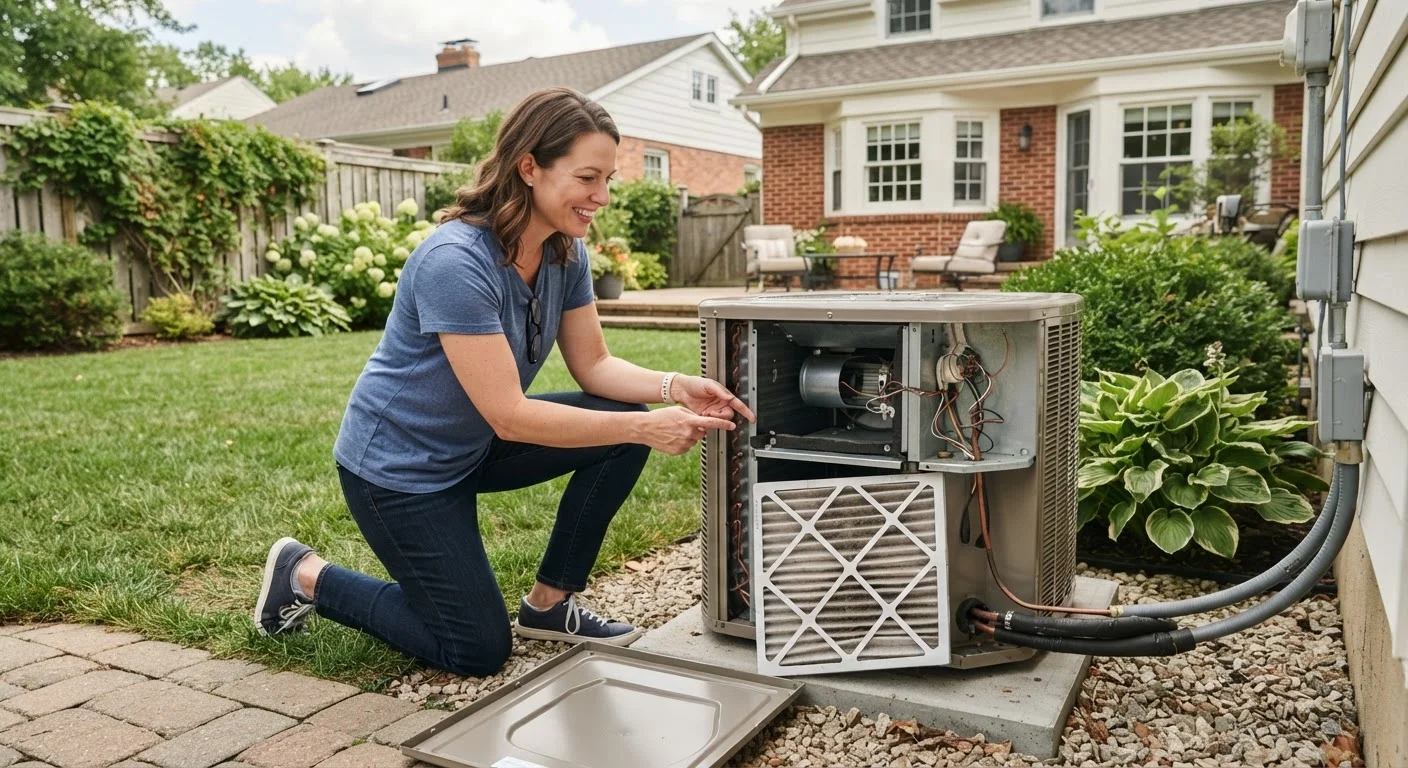
Before temperatures climb, inspect the outdoor condenser unit. Clear away debris — leaves, mulch, or overgrown plants — from around the cabinet, leaving at least two feet of clearance on all sides. Check that the unit sits level on its pad, as settling can strain the refrigerant lines. Clean or replace the air filter, and test the air conditioning system on a mild day before you actually need it. If you notice the system cycling on and off rapidly (called short-cycling) or not cooling adequately, have a licensed technician inspect it before peak summer demand.
Summer (Active Cooling)
During heavy use, check your filter monthly. Inspect the condensate drain line — a small PVC pipe that carries humidity removed from indoor air — for clogs or algae buildup, which can cause water damage or system shutdowns. Keep supply and return vents unobstructed by furniture or curtains. If your home has window or wall units, clean the evaporator coils per the manufacturer's guidance.
Fall (Pre-Heating Season)
This is the most critical maintenance window for forced-air heating systems. Replace the air filter, test the heating function, and listen for unusual noises. If you have a gas furnace, the heat exchanger — the component that separates combustion gases from your breathable air — should be inspected by a licensed professional annually. A cracked heat exchanger is a safety hazard. Do not skip this check. Carbon monoxide detectors should also be tested and batteries replaced each fall.
Winter (Active Heating)
Monitor filter condition monthly. Ensure that outdoor heat pump units (if applicable) are not blocked by snow or ice — most units are designed to handle winter weather, but ice buildup on the coil beyond the normal defrost cycle warrants a service call. Check registers to confirm airflow is reaching all rooms evenly. If you notice cold spots or hear the system running excessively, a technician can assess whether duct leaks or balance issues are the cause.
Thermostat Calibration and Airflow Checks
A thermostat that reads even two or three degrees off from actual room temperature causes your system to run longer than necessary. To check calibration, tape a reliable thermometer next to the thermostat and compare readings after 15 minutes. If they differ significantly, consult your thermostat's manual for a recalibration procedure — many programmable and smart thermostats include built-in calibration offsets. This one small adjustment can reduce unnecessary runtime without any hardware cost.
Airflow balance is equally worth checking. Walk through your home and hold your hand near each supply register — airflow should feel consistent across rooms. Rooms that are consistently too hot or cold may point to closed dampers in the ductwork, leaky duct connections, or an undersized return air path. Some duct issues can be addressed with mastic sealant or metal-backed tape (not standard duct tape, which degrades); major duct repairs typically require a professional. For a month-by-month view of related tasks, the Quick Reference: Seasonal Home Maintenance Tasks by Month is a useful companion resource.
When to Call a Professional
Several HVAC tasks fall outside safe DIY territory and should always be handled by a licensed HVAC technician: refrigerant handling, heat exchanger inspection, gas line connections, and electrical component replacement. Attempting these without proper training, tools, or licensing can create safety hazards and may also void your equipment warranty.
A professional tune-up — typically done once a year in the fall for heating systems and once in the spring for cooling systems — includes checks that go beyond what a homeowner can reliably perform. This includes measuring refrigerant charge, testing electrical connections, verifying gas pressure, and cleaning internal components like the evaporator coil and blower assembly. These inspections also give a technician the opportunity to spot wear that, if caught early, prevents mid-season failures. For a broader system-level maintenance schedule, Whole-House Systems Maintenance: A Year-Round Schedule for Homeowners covers HVAC alongside plumbing and electrical upkeep.
This article provides general educational information for homeowners. Always verify local permit requirements, code regulations, and safety standards before performing home maintenance tasks, and consult a licensed professional for work involving gas, electrical systems, or refrigerants.