

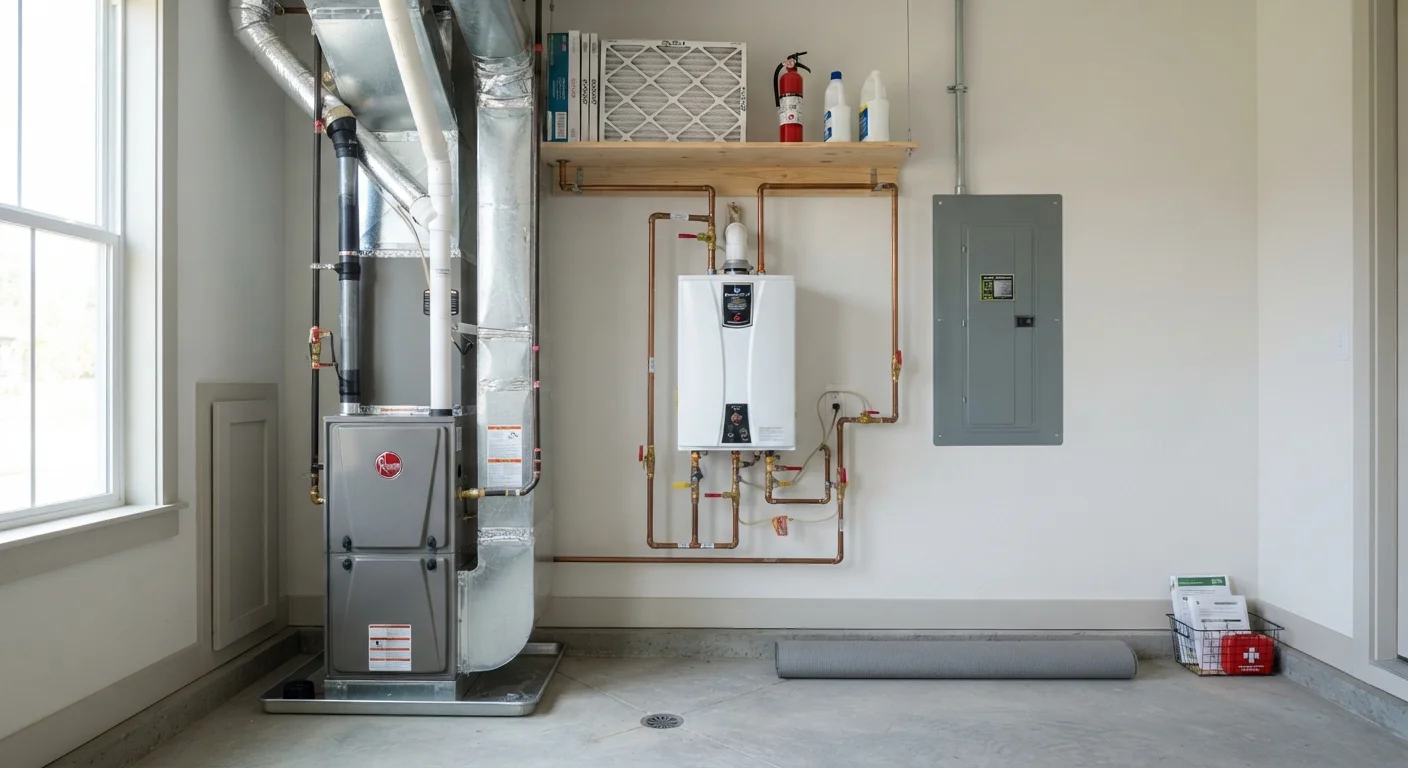
Key Takeaways
- Scheduling maintenance by season keeps critical systems from being overlooked year after year.
- Most HVAC, plumbing, and electrical checks are safe for homeowners to perform without professional help.
- Catching small issues early — like a clogged filter or corroded wire — typically costs far less than emergency repairs.
- Permits and licensed professionals are required for certain electrical, gas, and plumbing work — know the boundaries.
- A written maintenance log helps track what was done and flags patterns before they become failures.
Summary
22 items · 45–90 minutes per seasonal review
Why a Year-Round Schedule Works Better Than Reactive Repairs
Most homeowners only think about their HVAC, plumbing, or electrical systems when something goes wrong. By that point, a minor issue has often become an urgent — and expensive — repair. A structured, calendar-driven approach changes that dynamic entirely.
Think of whole-house systems maintenance the way you think about car oil changes: it's not glamorous, but skipping it compounds costs quickly. A scheduled routine vs. reactive repairs comparison makes clear that proactive upkeep reliably extends equipment life and reduces emergency call-outs.
This checklist organizes the essential tasks across four seasonal windows — spring, summer, fall, and winter — so you're never catching up all at once. Tasks are sorted by system: HVAC (heating, ventilation, and air conditioning), plumbing, and electrical. Where a task carries real safety risk or requires a permit, we note that clearly.
Know When to Call a Professional
This checklist covers visual inspections and basic DIY maintenance that homeowners can safely perform. Tasks involving gas lines, main electrical panels, refrigerant handling, or structural concerns must be handled by a licensed contractor. Many jurisdictions require permits for certain plumbing and electrical work — check with your local building department before proceeding with anything beyond routine upkeep.
For broader context on fitting this into a busy life, see seasonal maintenance on a tight schedule.
Tools You'll Need
Before diving into the checklist, gather these items. Having them on hand means you won't delay a task because you're missing a basic supply.
Replacement HVAC filters
Swap out clogged filters to maintain airflow and indoor air quality across all seasonal checks.
Flashlight or headlamp
Illuminate dark areas like crawl spaces, behind appliances, and inside utility closets during inspections.
GFCI outlet tester
Quickly verify that GFCI outlets are wiring correctly and responding to test and reset functions.
Drain flush kit or white vinegar
Clear condensate drain lines on the air handler to prevent clogs and standing water.
Screwdriver set (flathead and Phillips)
Remove vent covers, access panels, and appliance housings during routine inspections.
Pipe insulation sleeves
Wrap exposed pipes in unheated spaces during fall prep to reduce freeze risk in winter.
Wet/dry vacuum
Clear debris from around the condenser unit and remove standing water from drain pans.
The Year-Round Systems Maintenance Checklist
Work through each group once per season. Check off items as you go and note anything that needs a follow-up — either a future DIY fix or a call to a licensed contractor. If you're unfamiliar with any HVAC terms you encounter during these checks, the HVAC terminology guide is a helpful plain-language reference.
Spring — HVAC
Spring — Plumbing & Electrical
Summer — HVAC & Ventilation
Fall — HVAC & Heating
Fall — Plumbing
Winter — Electrical & Safety
Year-Round Habits
Carbon Monoxide Detectors Are Non-Negotiable
If your home uses gas appliances, a furnace, or an attached garage, working carbon monoxide detectors are essential — not optional. Test every detector each fall before heating season starts, and replace any unit that is more than 5–7 years old. Carbon monoxide is odorless and colorless; a detector is the only reliable warning system available to you.
After completing each seasonal pass, record your findings in a simple log (even a notes app works). Over time, this log reveals patterns — like a filter that clogs faster than expected — that help you adjust the schedule and catch declining equipment performance early. For a quick month-by-month task reference alongside this deeper systems checklist, see the seasonal home maintenance tasks by month reference card.
When a task reveals damage, unusual smells, moisture intrusion, or anything involving your main electrical panel or gas lines, stop and contact a licensed professional. See common DIY repairs and fixes for guidance on what's safely within a homeowner's scope.