

Key Takeaways
- Your car uses multiple fluids, and each one serves a distinct, critical purpose.
- Low or degraded fluid can cause expensive damage — catching it early is far cheaper than repairs.
- Most fluid levels can be checked visually at home without any tools.
- Always use the fluid type specified in your owner's manual — substitutes can cause harm.
- Warning lights often signal a fluid problem, so don't ignore them.
Car Fluid System
A car's fluid system refers to the collection of liquids that keep different vehicle systems running safely and efficiently. Each fluid has a specific job — from cooling the engine to helping your brakes stop the car. Checking these fluids regularly is one of the simplest forms of vehicle maintenance any driver can do.
Most modern vehicles have six to eight separate fluid circuits, each operating under different temperature and pressure conditions. Mixing up fluids or topping off the wrong reservoir can cause serious mechanical damage.
Why Fluids Matter More Than Most Drivers Realize
Think of your car's fluids the way you think of your home's plumbing — invisible most of the time, but absolutely essential. When one system fails, the damage spreads fast. The good news is that checking your car's fluids is one of the most accessible forms of maintenance you can do, and catching a problem early is almost always cheaper than fixing what happens when you don't.
If a warning light has ever caught your attention, there's a solid chance a fluid was involved. Our guide on car warning lights explains what those dashboard signals mean and when to act. But ideally, you want to stay ahead of those alerts entirely.
~40%
Engine failures linked to lubrication issues
Industry maintenance data consistently points to oil-related neglect as a leading cause of preventable engine damage.
Every 3 months
Recommended general fluid check frequency
Most automotive maintenance guidelines suggest a fluid inspection every three months or 3,000 miles, whichever comes first.
2+ years
Typical brake fluid service interval
Many manufacturers recommend brake fluid replacement every two years due to moisture absorption that degrades performance over time.
The Six Fluids Your Car Depends On
Engine Oil
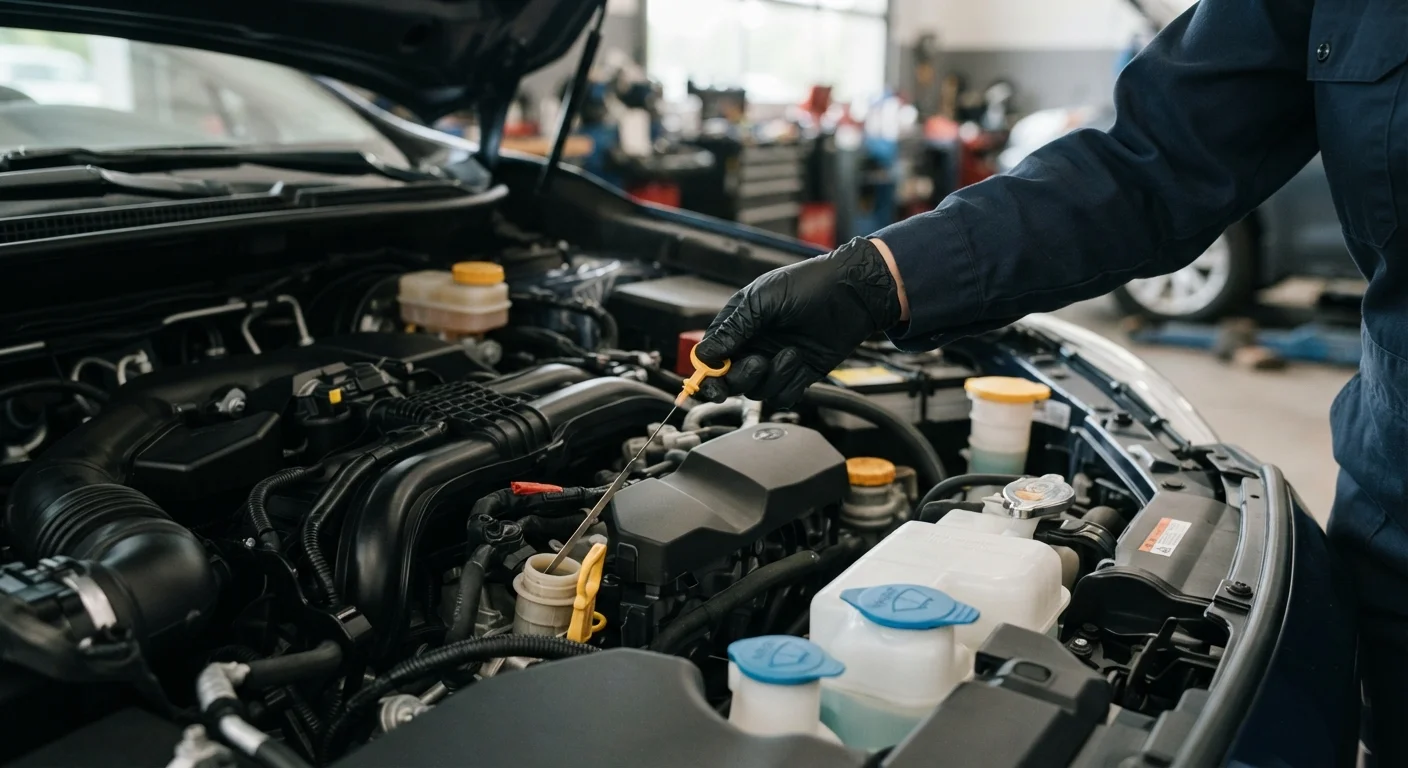
Engine oil lubricates the dozens of moving metal parts inside your engine, reducing friction and carrying heat away from components. Without it, metal grinds against metal and your engine can seize within minutes. Check the oil level using the dipstick under the hood — the oil should fall between the two markers and appear amber or light brown, not black and gritty. Change intervals vary by vehicle and oil type; your owner's manual has the definitive answer.
Coolant (Antifreeze)
Coolant circulates through the engine and radiator to regulate temperature, preventing both overheating in summer and freezing in winter. It's usually found in a translucent plastic reservoir near the radiator. Never open a hot radiator cap — pressure buildup can cause serious burns. Check it when the engine is cold.
Brake Fluid
When you press the brake pedal, brake fluid transmits that force hydraulically to the brake components at each wheel. It absorbs moisture over time, which lowers its boiling point and reduces stopping performance. If your brake pedal feels soft or spongy, low or degraded brake fluid may be a factor — have it inspected promptly. See our guide on brake warning signs for more context.
Transmission Fluid
Transmission fluid lubricates and cools the gears inside your transmission, whether automatic or manual. In automatic vehicles, it also acts as a hydraulic fluid that enables gear shifting. Dark or burnt-smelling transmission fluid is a sign it needs attention. Many modern vehicles have a sealed transmission with no dipstick — in those cases, a shop check is required.
Power Steering Fluid
This fluid powers the hydraulic system that makes turning your steering wheel easy. Low power steering fluid often announces itself as a whining noise when turning. Note that many newer vehicles use electric power steering and don't have this fluid at all — check your owner's manual to confirm.
Windshield Washer Fluid
The simplest fluid to manage, washer fluid keeps your windshield clear. Never substitute water — it can freeze in cold temperatures and doesn't clean as effectively. This is one of the easiest reservoirs to top off yourself.
How to Stay on Top of Your Fluids Without Overthinking It
You don't need a mechanic's training to keep an eye on your car's fluids. A quick visual check every month — oil level and color, coolant level, washer fluid — takes about five minutes. For fluids you can't easily assess yourself, like brake and transmission fluid, build in a professional check during your regular oil change visits.
Your owner's manual is the single most reliable source for what fluids your specific vehicle takes and when to change them. If reading it feels daunting, our guide on how to read your owner's manual walks you through exactly where to find maintenance schedules. And if you want to know which fluid-related tasks are genuinely safe to handle yourself, DIY car maintenance guidance can help you decide when to grab a funnel and when to call a pro.
This article is for general informational purposes only. Always consult a qualified mechanic for vehicle-specific maintenance advice, especially when you notice a change in performance or a warning light appears.