

Key Takeaways
- Several routine car tasks — like checking fluids and replacing wiper blades — are safe for most drivers to handle at home.
- DIY maintenance can reduce what you spend on labor, but only when the task genuinely matches your skill level.
- Some jobs, including brake system work and airbag-related repairs, carry real safety risks and should go to a qualified mechanic.
- The right tools and a reliable vehicle-specific resource (like your owner's manual) are non-negotiable starting points.
- Knowing where your limits are protects both you and your car — overconfidence is one of the most common DIY mistakes.
Saves money on routine labor costs
Shop labor rates can run $80–$150 per hour in many parts of the US. Handling simple jobs yourself means paying only for parts on straightforward tasks.
Builds real familiarity with your vehicle
Regularly checking fluids and replacing filters helps you notice changes early — like unusual color or smell — that might otherwise go undetected until a problem grows.
Flexible timing, no appointment needed
You can address a dirty air filter or low washer fluid on your own schedule, rather than waiting for an available shop slot.
Straightforward tasks have a low skill ceiling
Jobs like swapping wiper blades or topping off coolant require almost no mechanical background — just patience, the right supplies, and your owner's manual.
Mistakes on critical systems can be dangerous
Improper brake or suspension work can compromise vehicle control. Unlike a failed oil change, errors in these areas may not be immediately obvious and can cause accidents.
Upfront tool costs can offset savings
Some jobs require specific tools — torque wrenches, oil filter removal tools, or jack stands — that represent an investment before you save a cent on labor.
Warranty and liability complications
Some manufacturer or extended warranties include requirements about who performs maintenance. Improper DIY repairs can also affect insurance claims if a related incident occurs.
Risk of misdiagnosis without proper diagnostics
Replacing a part based on a symptom alone, without diagnostic tools or training, can mean spending money on the wrong fix while the real problem continues.
Our Verdict
DIY car maintenance is a practical option for a meaningful set of routine tasks — fluid checks, air filters, wiper blades, and similar jobs are generally accessible to anyone willing to follow instructions carefully. The savings on labor can add up over time, and handling straightforward maintenance builds useful familiarity with your vehicle. That said, anything involving brakes, suspension, fuel systems, or advanced electronics is genuinely better left to a qualified mechanic. The risk of getting those wrong isn't just inconvenient — it can be dangerous.
Best suited to homeowners who are comfortable following detailed instructions, have access to basic tools, and want to take a more hands-on role in keeping routine maintenance costs manageable.
What 'Safe to DIY' Actually Means
Not every car task is created equal. Some jobs require specialized tools, technical training, or access to systems where a small mistake can create a serious safety hazard. Others are genuinely straightforward — no lifts, no diagnostic scanners, no years of experience required.
The distinction matters. Doing the wrong job yourself doesn't just risk your car; it can put you and others on the road in danger. So before grabbing a wrench, it helps to have a clear-eyed picture of where the DIY line actually sits.
A good starting point: your owner's manual. It's one of the most underused resources most drivers have, and it's specific to your vehicle — not generic advice pulled from a forum. Pair that with the seasonal car maintenance routine that helps everyday drivers stay ahead of problems, and you've already got a useful framework.
What's Generally Safe to Handle Yourself
The following tasks fall within the reach of most careful, patient non-mechanics:
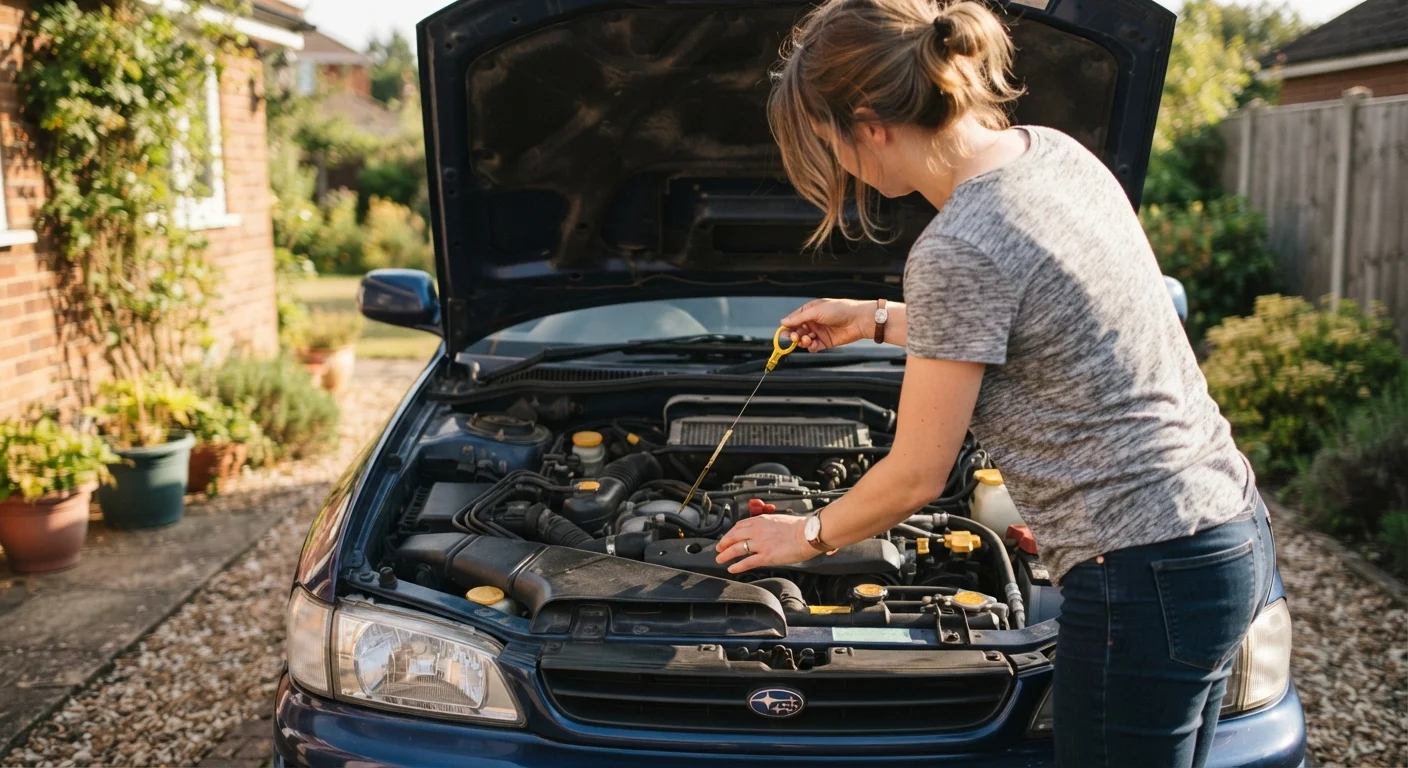
- Engine oil and filter changes — With the right tools, ramps or jack stands, and your manual open, this is one of the most common DIY jobs. Dispose of old oil responsibly at a recycling center.
- Air filter replacement — Engine air filters on most modern vehicles are accessible without tools and swap out in minutes.
- Wiper blade replacement — Clips vary by vehicle, but most blades come with clear instructions.
- Checking and topping off fluids — Coolant, windshield washer fluid, and power steering fluid reservoirs are usually clearly labeled under the hood.
- Battery terminal cleaning — Corrosion buildup on terminals is easy to address with a wire brush and baking soda solution. Check your manual first for any precautions specific to your car's electronics.
- Cabin air filter replacement — Often located behind the glove box; consult your manual for the exact location.
Saves money on routine labor costs
Shop labor rates can run $80–$150 per hour in many parts of the US. Handling simple jobs yourself means paying only for parts on straightforward tasks.
Builds real familiarity with your vehicle
Regularly checking fluids and replacing filters helps you notice changes early — like unusual color or smell — that might otherwise go undetected until a problem grows.
Flexible timing, no appointment needed
You can address a dirty air filter or low washer fluid on your own schedule, rather than waiting for an available shop slot.
Straightforward tasks have a low skill ceiling
Jobs like swapping wiper blades or topping off coolant require almost no mechanical background — just patience, the right supplies, and your owner's manual.
If keeping these costs manageable is a priority, see our guide to keeping a car running on a tight budget for realistic strategies.
Where DIY Gets Risky
There's a category of jobs where the consequences of a mistake aren't just expensive — they're potentially dangerous. These should be handed off to a qualified mechanic:
- Brake system work — Replacing pads or rotors seems approachable, but improper installation can cause brake failure. If you're not experienced with this system, don't start here.
- Suspension and steering components — Incorrect reassembly affects vehicle handling in ways that may not be obvious until you're on the highway.
- Airbag or SRS system repairs — These systems can deploy unexpectedly. This is firmly in professional territory.
- Fuel system repairs — Working near fuel lines introduces fire risk. Licensed mechanics have the training and environment to manage this safely.
- Advanced electrical diagnostics — Modern vehicles have complex, interconnected electronics. Guesswork here can cause expensive cascading failures.
Mistakes on critical systems can be dangerous
Improper brake or suspension work can compromise vehicle control. Unlike a failed oil change, errors in these areas may not be immediately obvious and can cause accidents.
Upfront tool costs can offset savings
Some jobs require specific tools — torque wrenches, oil filter removal tools, or jack stands — that represent an investment before you save a cent on labor.
Warranty and liability complications
Some manufacturer or extended warranties include requirements about who performs maintenance. Improper DIY repairs can also affect insurance claims if a related incident occurs.
Risk of misdiagnosis without proper diagnostics
Replacing a part based on a symptom alone, without diagnostic tools or training, can mean spending money on the wrong fix while the real problem continues.
For a broader look at where DIY ends and professional help begins, the DIY vs. tradesperson guide applies the same thinking to home repairs — the logic translates directly.
Before You Start Any DIY Job
Your Owner's Manual Is Your Best Tool
Every vehicle is different — what's accessible on one model may be tucked behind components on another. Your owner's manual includes maintenance intervals, fluid specifications, and location guides written specifically for your car. If you've lost the physical copy, most manufacturers make digital versions available through their websites. Treating the manual as your first stop, not a last resort, prevents a surprising number of DIY mistakes.
A few ground rules apply to every DIY task, regardless of how simple it looks:
- Use vehicle-specific instructions. Generic YouTube tutorials vary in quality. Cross-reference with your owner's manual or a service manual written for your exact make, model, and year.
- Get the right tools first. Improvising with the wrong tool is a common cause of stripped bolts, broken parts, and frustration.
- Work on a flat, stable surface. Never work under a vehicle supported only by a floor jack — always use proper jack stands.
- Know when to stop. If something unexpected comes up mid-job — unusual wear, a part that doesn't match, a system you didn't anticipate — pause and consult a professional rather than pushing through.
It's also worth checking out common car maintenance myths before you start — some widely repeated advice, like always changing oil every 3,000 miles, no longer holds up and can shape bad DIY habits.