

| Minimum starter toolkit size | 7–10 core hand tools |
| Standard hammer weight for household use | 16 ounces |
| Recommended tape measure length | 25 feet |
| Common screwdriver types | Flathead and Phillips |
| Useful adjustable wrench sizes | 6-inch and 10-inch |
| Tool storage goal | Dry, organized, and accessible |
Why Understanding Your Tools Matters
Owning tools and understanding them are two different things. Reaching for the wrong tool — using a flathead screwdriver as a pry bar, for example — can damage materials, strip fasteners, or cause injury. A foundational grasp of what each tool is designed to do helps you work more confidently and avoid the kind of missteps covered in common DIY errors.
This reference covers the core hand tools found in most functional home toolkits, what each is built for, and what distinguishes a well-made version from a poor one. For guidance on when power tools make more sense, see the corded vs. cordless tool comparison.
| Minimum starter toolkit size | 7–10 core hand tools |
| Standard hammer weight for household use | 16 ounces |
| Recommended tape measure length | 25 feet |
| Common screwdriver types | Flathead and Phillips |
| Useful adjustable wrench sizes | 6-inch and 10-inch |
| Tool storage goal | Dry, organized, and accessible |
Core Hand Tools and Their Functions
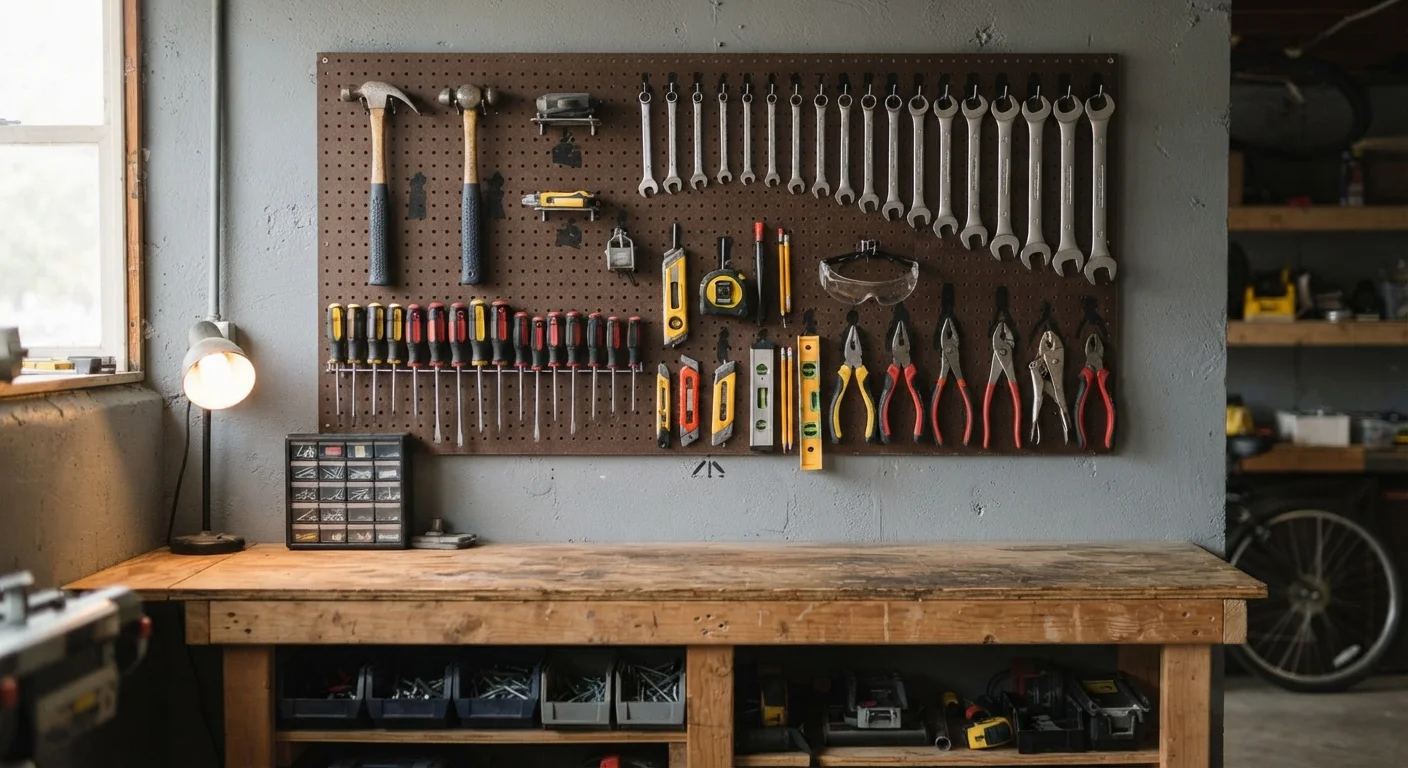
The following tools form the foundation of most everyday household repairs.
Drop-forged steel
Steel shaped by pressing heated metal under high pressure, rather than casting it in a mold. Drop-forged tools are generally stronger and more impact-resistant than cast alternatives.
Cam out
When a screwdriver tip slips out of a screw head under torque, often damaging the recess. Using a correctly sized tip for the screw type prevents cam-out.
Combination square
A multi-purpose measuring tool with a ruled blade and a sliding head that can mark 90- and 45-degree angles, check level, and measure depth.
Plumb
Perfectly vertical, as measured against gravity. A surface or structure is plumb when it aligns with a true vertical reference line, such as a plumb bob or level.
Slip-joint pliers
Pliers with an adjustable pivot point that allows the jaw to open to two or more width settings, making them adaptable for different object sizes.
Utility knife
A hand-held cutting tool with a retractable, snap-off, or replaceable blade designed for scoring, trimming, and general-purpose cutting tasks around the home.
Fastening and Driving
Screwdrivers come in two primary types: flathead (slotted) and Phillips. A quality set includes multiple shaft lengths and tip sizes — a mismatched tip will cam out and strip screw heads. Look for hardened steel tips and comfortable, non-slip handles.
A hammer is used for driving and pulling nails, light demolition, and tapping components into place. A standard 16-ounce curved-claw hammer handles most household tasks. Head weight and handle balance matter more than aesthetics.
Measuring and Marking
A tape measure is non-negotiable. A 25-foot model with a 1-inch blade width is stiff enough to extend without collapsing over typical room distances. Look for clear inch and metric markings and a locking thumb slide.
A combination square marks 90- and 45-degree angles accurately and checks whether surfaces are truly level or plumb. It's more versatile than a simple ruler for layout work.
Gripping and Turning
Pliers grip, bend, and cut wire or small components. Slip-joint pliers adjust to different jaw widths; needle-nose pliers reach into tight spaces. Neither should be used as a substitute wrench — they can round off bolt heads.
Adjustable wrenches fit a range of hex nut and bolt sizes. A 6-inch and a 10-inch model together cover the majority of household fastener sizes. Always pull rather than push a wrench to reduce the risk of slipping.
Cutting
A utility knife with a retractable, replaceable blade handles drywall scoring, carpet trimming, and general cutting tasks. Dull blades require more force and are more dangerous — replace them regularly.
Selecting Tools That Will Last
Quality doesn't require spending a lot, but it does require knowing what to look for. Drop-forged steel construction is more durable than cast metal for wrenches, pliers, and hammers. Handles should feel solid and balanced in your hand before you commit.
Ergonomics matter more than many people expect. Tools used repeatedly or at awkward angles can cause strain if the grip design is poor. Look for handles with comfortable gripping surfaces, especially on screwdrivers and pliers.
Storage also affects longevity. Tools left damp or exposed to humidity will rust. A simple toolbox or canvas roll keeps them organized, dry, and ready. Repairability is worth factoring into any purchase decision — choosing repairable, replaceable-part tools generally offers better long-term value.
When a Task Goes Beyond Hand Tools
Some repairs — particularly those involving electrical panels, gas lines, structural elements, or main plumbing connections — require licensed professionals regardless of tool availability. Local building codes often mandate permits and inspections for this type of work. Always verify your local requirements before starting any project that touches these systems.
With the right hand tools understood and on hand, many everyday repairs become genuinely accessible. For a practical sense of where DIY ends and a professional begins, see when to call a tradesperson.