

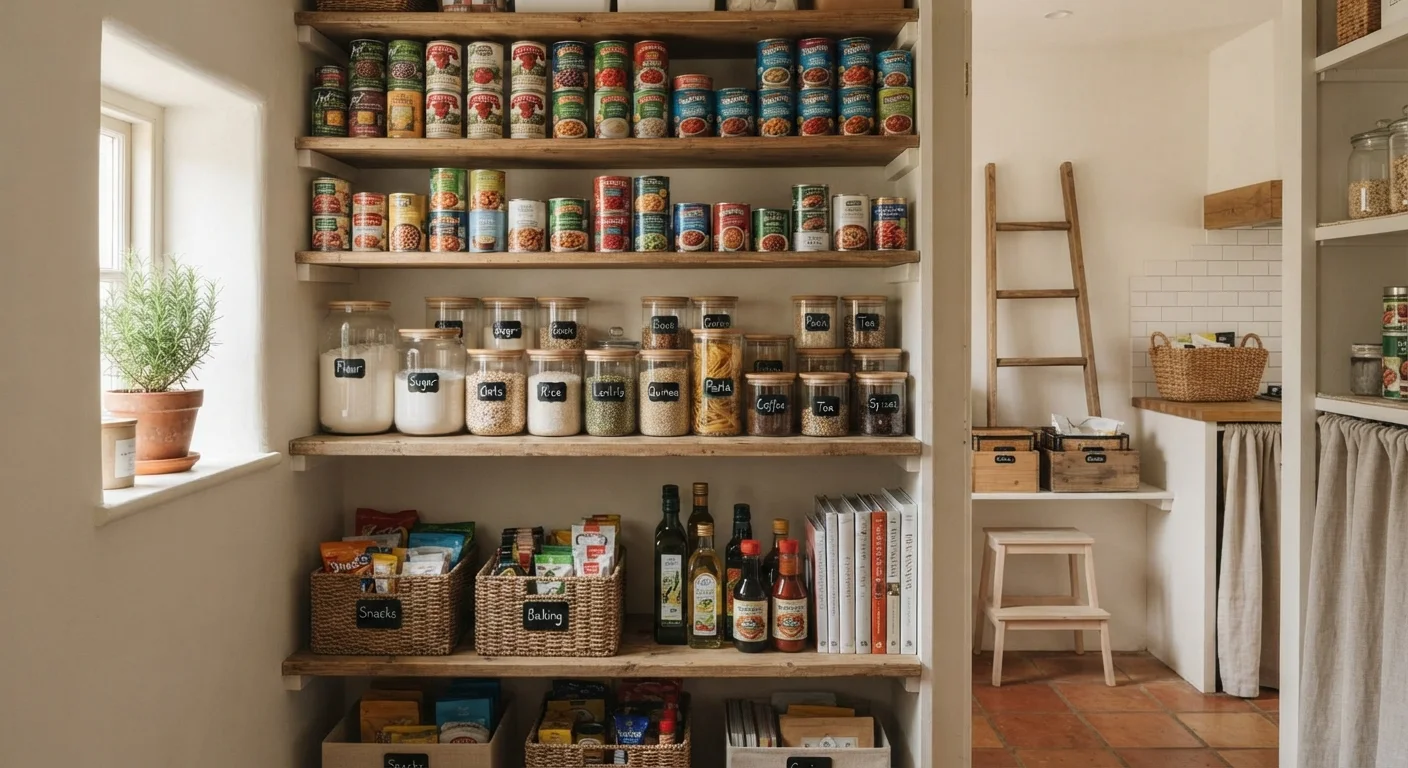
Key Takeaways
- Grouping pantry items by category and visibility dramatically reduces forgotten food and waste.
- The 'first in, first out' rotation method is the single most effective habit for cutting spoilage.
- A functional pantry system works with your cooking habits, not against them.
- Consistent zones — not perfect aesthetics — are what make organization last long-term.
Why Most Pantry Systems Break Down
Most homeowners organize their pantry once — usually when motivation is high — and watch it unravel within weeks. The problem isn't willpower; it's that the system wasn't built around how the pantry actually gets used. Items get shuffled during grocery unloading, categories drift, and expiration dates quietly pass unnoticed in the back of a shelf.
A durable pantry system starts with one principle: if you can't see it, you won't use it. Deep shelves and stacked cans create dead zones where food disappears for months. Before reorganizing anything, take stock of what you actually cook on a weekly basis and let that drive where things live. For a broader look at structuring every part of your kitchen, see our beginner's kitchen organization guide.
The Core Principles Behind a Functional Pantry
These aren't decorating tips — they're structural habits that determine whether your system holds up under daily use.
Assign every category a fixed zone and keep it there consistently
When categories drift — grains mixed with snacks, baking supplies scattered across two shelves — the pantry becomes unpredictable. Fixed zones create muscle memory, so restocking and retrieval happen without thought. This is what separates a system that lasts from one that collapses after a busy week.
Rotate stock using first in, first out (FIFO) every time you unpack groceries
FIFO — placing newer items behind older ones — is the same method used in commercial kitchens for good reason: it ensures older stock gets used before it expires. Without it, new cans consistently push older ones to the back until they're past their best-by date.
Store items at the eye level most relevant to who uses them
Eye-level storage is prime real estate. Items stored there get used; items on high or low shelves get forgotten. Matching the height to the primary user — including children if they help themselves to snacks — reinforces use and reduces waste.
Decant bulk dry goods into airtight containers with visible labels
Opened bags of flour, rice, and lentils deteriorate faster than sealed containers and are prone to pests. Airtight storage extends shelf life and lets you see at a glance how much is left, reducing both waste and emergency grocery runs.
Create a dedicated 'use soon' section for items approaching expiration
Out of sight means out of mind. A small, visible section at the front of a shelf — or a single basket — dedicated to near-expiration items ensures they surface during meal planning rather than getting discovered after the fact.
Labeling plays a bigger role than most people expect. The right approach depends on your household, and our guide to labeling systems that actually stick covers what works across different habits.
Quick Wins You Can Act On Today
You don't need to overhaul your entire pantry in one afternoon. These targeted actions move the needle without requiring a full reorganization.
If food waste beyond the pantry is a concern, meal planning from scratch and reducing food waste without overhauling your routine offer practical frameworks that pair well with a solid pantry setup.
Sustaining the System Over Time
The best pantry organization isn't a one-time project — it's a short recurring habit. A five-minute weekly check before grocery shopping accomplishes more than a monthly overhaul. Scan for items nearing expiration, return anything out of place to its zone, and note what's running low.
30–40%
Share of US food supply wasted annually
The USDA estimates that between 30 and 40 percent of the US food supply is wasted, much of it at the household level where storage habits play a direct role.
~$1,500
Estimated annual food waste cost per household
The Natural Resources Defense Council has estimated that the average American family discards roughly $1,500 worth of food per year, a figure tied closely to poor visibility and storage habits.
Multi-person households face an added challenge: different people unpack and reach for items differently. Our guide on organizing a shared kitchen addresses exactly this. And if you want your pantry stocked with ingredients that actually enable weeknight cooking, see keeping a well-stocked pantry for a complementary approach.
“Organization is not about perfection; it's about efficiency, reducing stress and clutter, saving time and money, and improving your overall quality of life.”
— Christina Scalise, Author and professional organizer