

Key Takeaways
- Most household food waste comes from poor storage and lack of visibility into what you already own.
- A quick weekly fridge audit takes under ten minutes and meaningfully reduces spoilage.
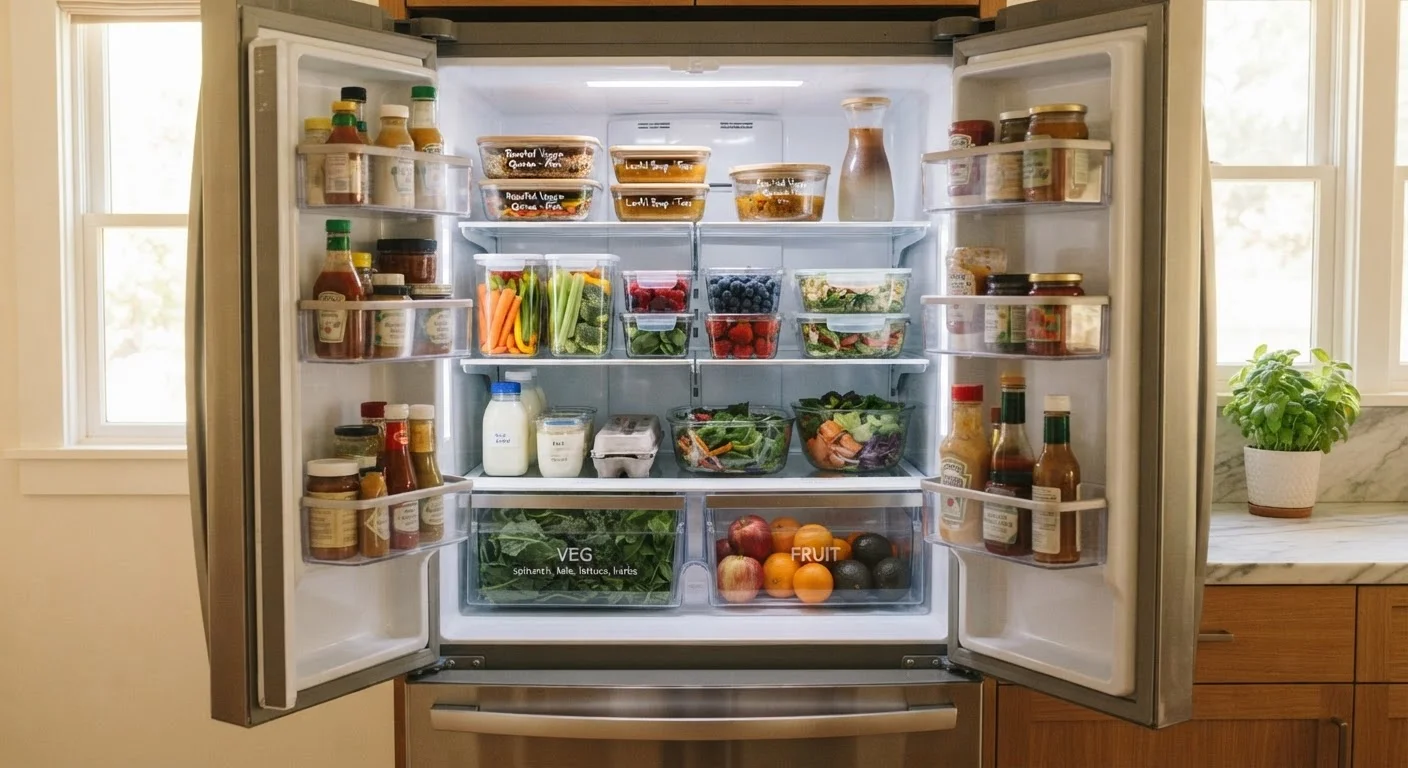
- Proper food storage — right containers, right zones — extends shelf life without extra cost.
- Using older ingredients first is a simple habit that compounds into real weekly savings.
- Small planning shifts cut waste without requiring a full meal-planning overhaul.
What you will need
Why Most Food Waste Happens — and Where to Target It
The majority of household food waste isn't the result of carelessness — it's the result of systems that make it easy to lose track of what you have. Produce gets pushed to the back of the crisper. Leftovers get stored but not labeled. Ingredients bought for one recipe sit unused until they're no longer safe to eat.
The good news is that these are structural problems with structural solutions. You don't need to meal-plan obsessively or change how you cook from scratch. You need a small number of consistent habits that improve visibility and sequencing — knowing what you have, knowing when it needs to be used, and making it easy to use it before it turns.
Don't Ignore the Cost of Food Waste
Research from the US Department of Agriculture estimates that American households throw away between 30 and 40 percent of the food they purchase. For the average family, that translates to hundreds of dollars annually — money that leaves with the trash. Addressing waste doesn't require a lifestyle overhaul; it requires a handful of consistent habits applied week over week.
The steps below are designed to be added incrementally. Start with one and build from there. Even a single habit, applied consistently, can produce a meaningful reduction in what your household throws away each week.
For a complementary look at how pantry habits affect your overall grocery spend, the pantry staples that quietly inflate your grocery bill article covers which items are most commonly over-purchased.
What You'll Need Before You Start
Getting these habits in place doesn't require much investment — mostly it's about having the right basic supplies on hand and committing a short block of time to an initial setup. Once the system is in place, maintenance takes minutes per week.
What you will need
Clear airtight containers
Allow you to see stored food at a glance while keeping it fresh longer than original packaging.
Masking tape and a marker
Used to label containers with contents and the date they were stored.
Refrigerator drawer organizers
Help group items by category so nothing gets pushed to the back and forgotten.
Freezer bags (reusable or zip-seal)
Extend the life of proteins, bread, and cooked meals well beyond refrigerator timelines.
Make the Most of What's Already in Your Pantry
Before each grocery run, do a quick scan of your pantry to build your shopping list around ingredients you already have. Our pantry audit checklist walks you through exactly how to do this in under ten minutes. It's one of the easiest ways to avoid duplicate purchases and rescue items before they expire.
Step-by-Step: Building the Habits
Conduct a Weekly Fridge Audit
Set aside ten minutes — ideally the evening before your regular grocery run — to go through every shelf and drawer in your refrigerator. Pull items forward, check what's close to its use-by date, and note anything that needs to be used within the next day or two. This visibility alone is the single most effective habit for cutting spoilage.
Group items that need to be used soon on a designated "use first" shelf at eye level. Out of sight genuinely means out of mind in the refrigerator.
Store Food in the Right Zones
Refrigerators have temperature gradients. The coldest zones — typically the back of lower shelves — are best for raw proteins and dairy. The crisper drawers are designed to maintain higher humidity for produce. Condiments and items with preservatives do fine in the door, which is the warmest area.
Matching food types to the right zone extends shelf life noticeably. Leafy greens stored in the crisper last considerably longer than those left on a standard shelf exposed to drier air.
Label and Date Everything You Store
Any time you transfer food into a container — leftovers, bulk-purchased proteins, cut vegetables — label it with the contents and the date. This eliminates the guessing game that causes people to throw out food unnecessarily, and helps you sequence meals around what needs to go first.
A roll of masking tape and a permanent marker costs next to nothing and removes a major source of household waste. For a practical look at how labeling fits into a broader pantry organization system, the principles transfer well from shelf to fridge.
Use the Freezer Strategically
The freezer is your most underused tool for cutting waste. Proteins approaching their use-by date, half-used cans of tomato paste, overripe bananas, bread going stale — all of these freeze well and can be returned to use over the coming weeks. Portion proteins before freezing so you only thaw what you need.
Label frozen items with the date stored, and keep a simple running list on the freezer door (a notepad or whiteboard works) so contents stay visible. Frozen food that isn't tracked becomes waste just the same.
Build Meals Around What You Have
Once or twice a week, let your "use first" shelf and your freezer inventory drive what you cook rather than defaulting to new ingredients. This approach — sometimes called "fridge clearing" — reduces both waste and grocery spend without requiring rigid meal planning.
If you want more structure, a meal planning framework built around waste reduction can help you systematize this. Even without a formal plan, regularly cooking from existing stock is one of the most reliable ways to keep spending predictable. For ideas on extending leftovers into genuinely good second meals, see turning leftovers into a second meal.
Don't Rely on 'Sell By' Dates Alone
Sell-by and best-by dates are manufacturer quality indicators, not safety cutoffs. Many foods remain safe and palatable beyond these dates if stored correctly. Use your senses — smell, texture, and appearance — alongside date labels, and when in genuine doubt about safety, discard the item.
If you find the fridge audit step reveals you're regularly over-buying, that's a useful signal to look at how you shop. A structured weekly meal plan can help align purchasing with actual usage so less ends up being wasted from the start.
Connecting Waste Reduction to Broader Household Savings
Food waste reduction doesn't exist in isolation. When you consistently use what you buy, you reduce how often you shop, which also reduces impulse spending. You cook more intentionally, which tends to mean fewer expensive takeout fallbacks. The savings compound across your weekly household budget in ways that aren't always obvious at first.
If you'd like to take the planning side further, building a repeatable dinner rotation is a practical next step that cuts decision fatigue while keeping your ingredient list predictable week to week. Similarly, a well-organized kitchen makes all of these habits easier to maintain — the small kitchen storage guide has practical layout ideas that apply regardless of kitchen size.
Reducing food waste is one of the most accessible ways to lower household costs without changing your lifestyle in any significant way. The habits above require no special equipment beyond a few containers and a marker — and the return, in both money and effort saved, is genuine.