

Key Takeaways
- A dinner rotation assigns meal categories to each weeknight, eliminating daily decision fatigue.
- Starting with five to seven reliable household favorites gives your rotation a sturdy, tested foundation.
- Rotating by cooking method — not just ingredient — naturally builds variety without extra planning effort.
- Building one flex night into the week handles leftovers and unexpected schedule changes gracefully.
- A well-structured rotation can reduce weekly grocery spending by making shopping lists more predictable.
What you will need
Why a Rotation Works Better Than Winging It
Most weeknight dinner stress isn't about cooking skill — it's about deciding what to cook when you're already tired. As explored in why weeknight cooking feels harder than it should, the gap between intention and execution almost always comes down to planning, not talent.
A dinner rotation solves this by replacing open-ended daily decisions with a loose but reliable structure. Monday might always be a pasta dish, Tuesday a sheet pan meal, Wednesday a soup or stew. You're not locked into a rigid recipe — you're assigning a category that narrows choices down to a manageable few. That predictability also makes weekly food spending more controllable, since your grocery list becomes far more consistent from week to week.
Category-Based Planning Beats Recipe-Based Planning
When you plan by category (e.g., 'pasta night') rather than specific recipe, you build in flexibility without sacrificing structure. This approach means a change in one ingredient or a different protein won't derail your plan — you just pivot within the category. It also makes grocery shopping less brittle when items are unavailable.
What You'll Need Before You Start
Building a rotation that sticks requires a few inputs before you write anything down.
What you will need
Once you have these elements in place, the actual rotation comes together quickly — usually in a single sitting.
Notepad or weekly planner template
Used to map meal categories to each day of the week and iterate as needed.
Running grocery list app or paper list
Helps you align pantry staples with your rotation so shopping becomes routine rather than reactive.
Recipe reference (notebook or bookmarked links)
Keeps your go-to recipes for each rotation slot accessible without searching from scratch.
Step-by-Step: Building Your Rotation
Follow these steps to put together a repeatable weekly dinner schedule that your household will actually use.
Audit your current dinner repertoire
Write down every dinner your household already eats and likes — don't filter yet. Aim for at least ten meals. Include simple ones: scrambled eggs with toast, pasta with jarred sauce, frozen pizza upgraded with fresh toppings. These are all valid rotation candidates. The goal here is an honest inventory, not a highlight reel.
Group meals by cooking method or category
Sort your list into loose categories such as: pasta or noodle dishes, sheet pan meals, one-pot soups and stews, egg-based dinners, stir-fries, slow-cooker meals, and grill or skillet proteins. You don't need a perfect taxonomy — just enough groupings to see what you have. This is also a good moment to note which meals require minimal active cooking time, since those belong on your busiest nights. For a useful comparison of two reliable low-effort methods, see sheet pan vs. one-pot cooking.
Map one category to each weeknight
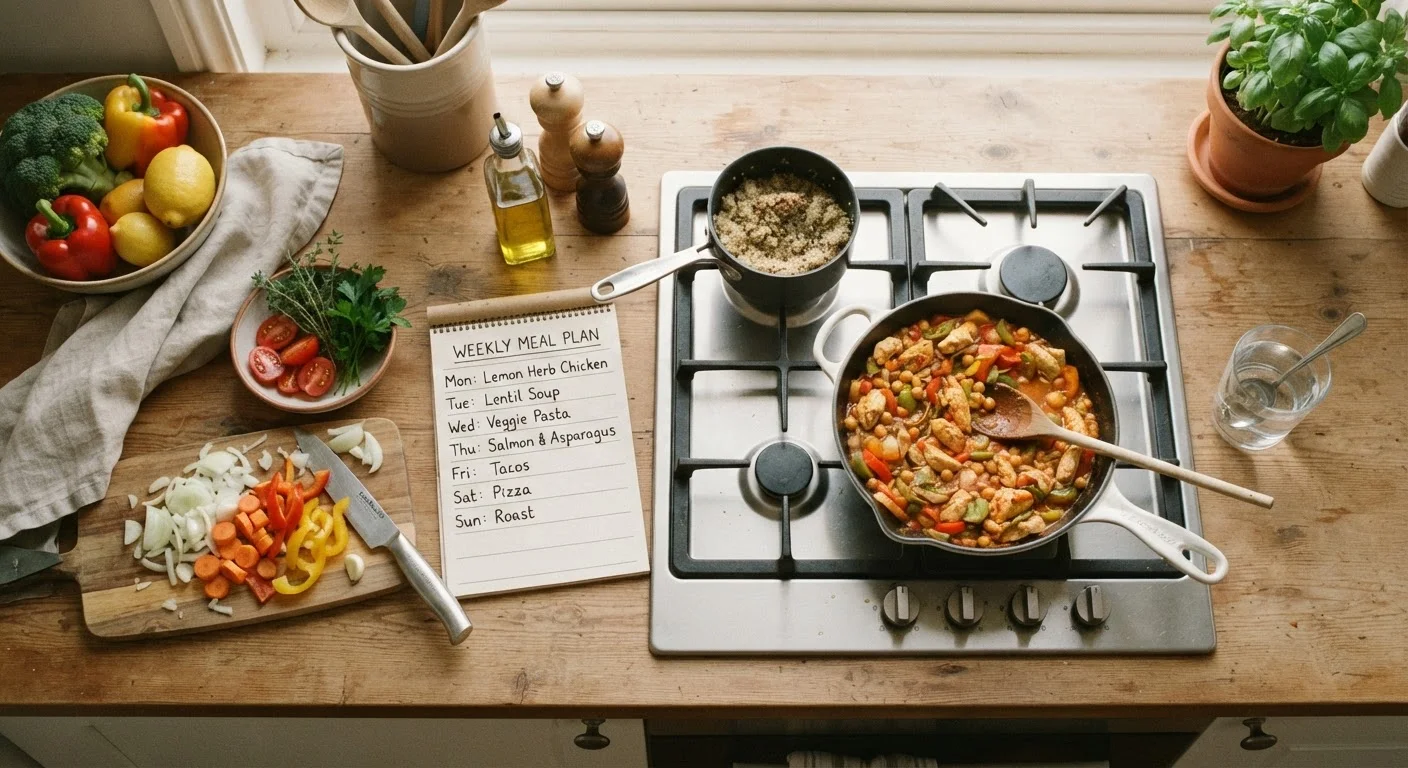
Assign a meal category — not a specific recipe — to each night of the week. A simple five-night structure might look like: Monday (pasta or noodles), Tuesday (sheet pan), Wednesday (soup or stew), Thursday (stir-fry or skillet), Friday (flex/leftovers). Leave Saturday and Sunday unassigned or use them for longer, more relaxed cooking. The key is matching your lowest-energy nights with your fastest categories.
Assign two to three meals per category slot
For each weeknight category, choose two or three specific meals that fit it. These become your rotation options for that slot — you pick one each week based on what's on sale, what's in the fridge, or simply what sounds good. This keeps variety alive while keeping planning effort low. Over time, you'll naturally expand some slots and retire meals that no longer appeal.
Run it for two weeks, then adjust
Commit to your draft rotation for two full weeks before changing anything. This gives you enough real-world feedback to know what's working and what isn't. After two weeks, note which nights felt smooth and which felt like a stretch. Swap out any meals that consistently felt like a chore, and adjust category-to-day pairings if your schedule has shifted. Your pantry will also start to self-organize as your staples align with your rotation — which connects directly to keeping a pantry stocked for fast dinners.
Don't Start With Too Many New Meals
It's tempting to build a rotation full of recipes you've always wanted to try. Resist this — unfamiliar recipes require more time, more focus, and more margin for error on a weeknight. Build your initial rotation almost entirely from meals you already know how to cook. Once the habit is established, you can introduce one new meal per month without disrupting the routine.
Keeping the Rotation Fresh Over Time
A rotation is a living document, not a permanent contract. Most households find they naturally rotate in one or two new meals every month or two, swapping out something that's lost its appeal. To avoid monotony without scrapping the whole system, try varying preparation style within a category — a stir-fry night that alternates between beef, tofu, and shrimp stays interesting without requiring new planning. For ideas on speeding up execution, see what 30-minute dinners actually demand from a home cook's realistic perspective.
Also worth considering: your flex night. Designate one evening — often Friday — as a no-plan night for leftovers, takeout, or fridge-clearing improvisation. This acts as a pressure valve that keeps the rest of the week on track. If you find yourself with cooked ingredients that need using, turning leftovers into a genuinely good second meal is easier than most people expect. Pair your rotation with a short weekly prep checklist done on the weekend, and you'll rarely face a chaotic dinnertime again.