

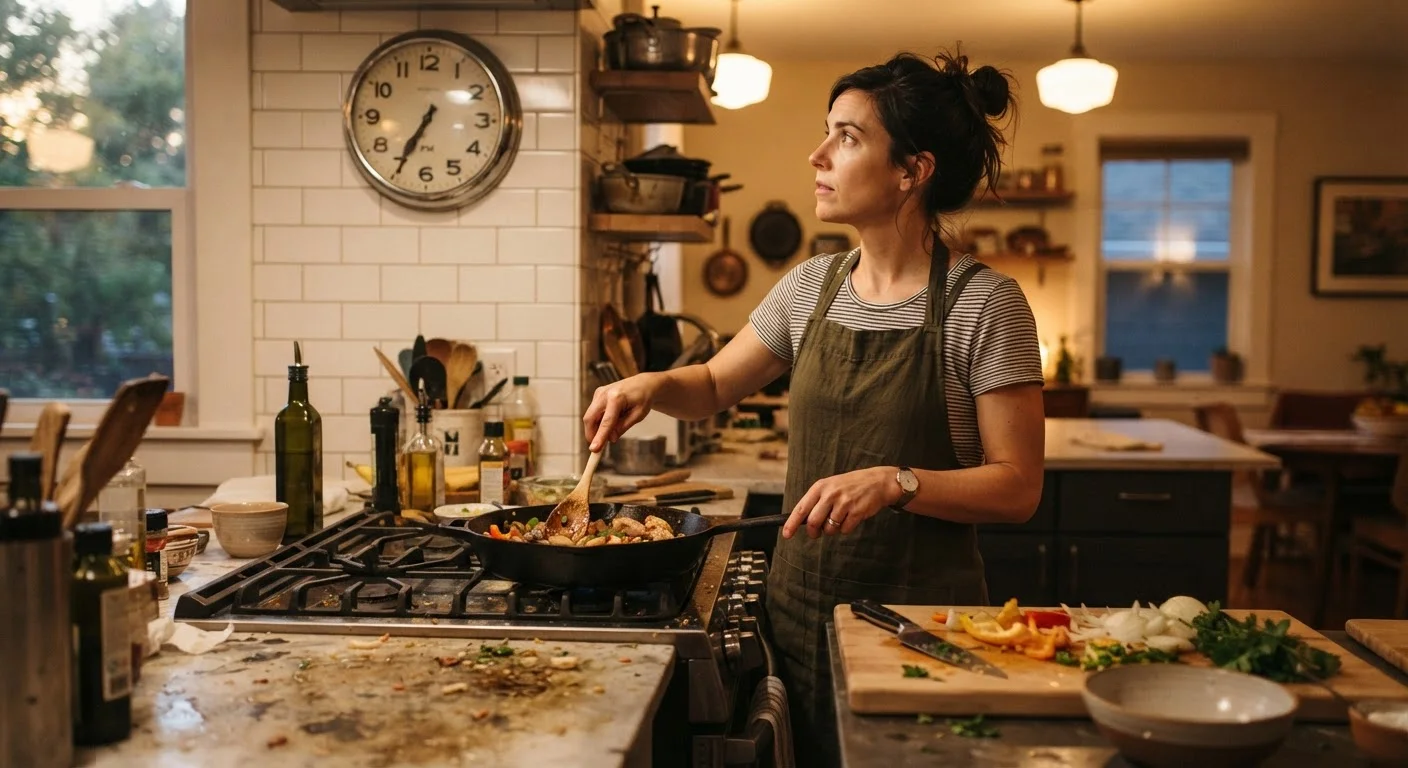
Key Takeaways
- The '30-minute' label typically counts active cook time, not total time from start to cleanup.
- Hidden assumptions — prepped ingredients, sharp knives, and a tidy workspace — can easily add 15–20 extra minutes.
- Skill level matters: chopping an onion takes seconds for an experienced cook and several minutes for a beginner.
- A stocked pantry and a small amount of weekly planning are what make fast dinners genuinely achievable.
- Stretching a 30-minute recipe to 45 minutes is normal and not a failure — it still beats takeout.
30-Minute Dinner
A 30-minute dinner is a meal designed to go from unprepared ingredients to the table in half an hour or less. The term is widely used in cookbooks, food media, and recipe apps as a signal that the dish is fast and weeknight-friendly. In practice, it describes the active cooking time under near-ideal conditions — not necessarily the total time a home cook will spend from walking in the door to sitting down.
Most 30-minute recipes measure hands-on and active cook time only, excluding shopping, defrosting, and cleanup. Actual elapsed time varies significantly based on knife skills, kitchen layout, and ingredient prep state.
What the Clock Is Actually Measuring
Pick up almost any weeknight cookbook or open a recipe app and you'll see the promise everywhere: Ready in 30 minutes. It's become shorthand for accessible, stress-free cooking. But the number rarely means what most home cooks assume it means.
Recipe timing is measured by food professionals — often experienced cooks working in test kitchens with prepped, measured ingredients and a clutter-free workspace. The clock starts when cooking begins, not when you walk through the front door after work. It stops when the food hits the plate, not when the last pan is washed.
That gap between recipe time and real time isn't a flaw or a lie — it's a framing difference worth understanding. Once you know what the label actually covers, you can plan around it instead of feeling like you're always running behind.
How Recipe Timing Is Typically Tested
Most recipes published in cookbooks and food media are developed and timed in professional test kitchens by experienced cooks. Ingredients are prepped and measured before the clock starts — a practice called mise en place. Home cooks working without this preparation are starting from a different baseline, which explains most of the time gap.
The Hidden Assumptions Built Into Fast Recipes
Every 30-minute recipe comes with a set of unstated assumptions. Recognizing them is the first step to closing the gap between the recipe's promise and your actual dinner time.
- Ingredients are ready to cook. Meat is thawed. Vegetables are washed. Garlic is on the counter, not buried in a cabinet. Most recipe timers don't include the five minutes spent hunting for the cumin.
- Your knife skills are reasonably practiced. Dicing an onion takes an experienced cook under two minutes. For a less practiced cook, the same task can take five or more. Across a full recipe with multiple vegetables, that difference compounds quickly.
- You can multitask on the stove. A 30-minute pasta dish often assumes you're boiling water, sautéing aromatics, and reducing a sauce simultaneously — not sequentially.
- The kitchen is set up and ready. A clear workspace, a hot burner, and a sharp knife shave real minutes off the process. A cluttered counter and a dull blade add them back.
None of these assumptions are unreasonable — they simply reflect the conditions under which most recipes are tested. Understanding them helps you see where your extra time is actually going. For a deeper look at the friction behind weeknight cooking, see why weeknight cooking feels harder than it should.
~44 min
Average time Americans spend on dinner preparation
According to U.S. Bureau of Labor Statistics American Time Use Survey data, average food preparation and cleanup time on days when cooking occurs is roughly 44 minutes for primary meal preparers.
15–20 min
Time added by hidden prep steps
Food educators commonly note that thawing, locating pantry items, and basic knife prep routinely add 15–20 minutes beyond a recipe's stated cook time for home cooks without tested routines.
What Actually Makes a Fast Dinner Fast
Speed in the kitchen is less about the recipe itself and more about the systems surrounding it. The cooks who consistently get dinner on the table in 30 minutes usually share a few habits.
A stocked pantry does most of the work. When your shelves hold canned beans, quick-cooking grains, pasta, a few good sauces, and reliable aromatics, any protein can become a complete meal without a mid-week grocery run. Stocking a pantry for fast dinners is one of the highest-leverage moves a home cook can make.
Familiarity beats novelty on busy nights. Cooking a dish for the third time is dramatically faster than cooking it for the first. A rotating set of reliable weeknight meals — maybe eight to ten recipes your household enjoys — removes the decision fatigue that quietly eats up time before you've touched a single ingredient. Building a weekly dinner rotation is one of the most practical things you can do for weeknight cooking.
Shortcuts are legitimate tools. Pre-cut vegetables, rotisserie chicken, canned legumes, and frozen greens are not concessions — they're practical decisions. Recipe developers use them too. The goal is a satisfying meal, not a performance of from-scratch cooking.
Recalibrating Your Expectations (and Your Kitchen)
If a 30-minute recipe regularly takes you 45 minutes, that's not a sign you're a slow cook or doing something wrong. It's a realistic output for someone managing a real kitchen, real distractions, and a real learning curve. The time will decrease naturally as any dish becomes familiar.
A more useful mental model: think of the 30-minute label as a floor, not a ceiling. It tells you the dish is structurally fast — few components, quick-cooking proteins, minimal hands-off time. Your actual time will vary based on experience and setup, and both of those are things you can improve over time.
Small investments in kitchen organization — like keeping frequently used tools accessible and grouping pantry staples logically — can reduce the invisible time lost to searching and navigating a cluttered space. If you're building cooking confidence from the ground up, the Weeknight Cooking Playbook walks through the foundational habits that make fast meals genuinely manageable.
The honest benchmark for a 30-minute dinner isn't perfection — it's progress toward a home-cooked meal that's faster, cheaper, and more satisfying than the alternative.
Read the Recipe Before You Start Cooking
Scanning a recipe all the way through before turning on a burner is one of the most effective time-saving habits in the kitchen. It lets you identify steps you can overlap, ingredients that need to come to room temperature, and any equipment you'll need to locate. Cooks who do this consistently find that recipe times feel far more achievable.