

| Average pantry staple shelf life | 1–3 years for most canned and dried goods (USDA Food Safety guidelines) |
| Core pantry categories | Grains, proteins, sauces/condiments, aromatics, fats |
| Fastest-cooking grains | White rice (18 min), couscous (5 min), quick-cook oats |
| Fastest shelf-stable proteins | Canned fish, canned beans, dried red lentils (cook in ~20 min) |
| Essential aromatics to keep stocked | Garlic, onions, dried chili flakes, cumin, smoked paprika |
| Sauce types that work across cuisines | Soy sauce, canned tomatoes, coconut milk, stock |
Why the Pantry — Not the Fridge — Is Your Real Weeknight Safety Net
Most weeknight cooking struggles don't start at the stove — they start in the planning gap. As explored in why weeknight cooking feels harder than it should, the real friction is rarely skill. It's arriving home to a fridge with wilted produce and no clear plan.
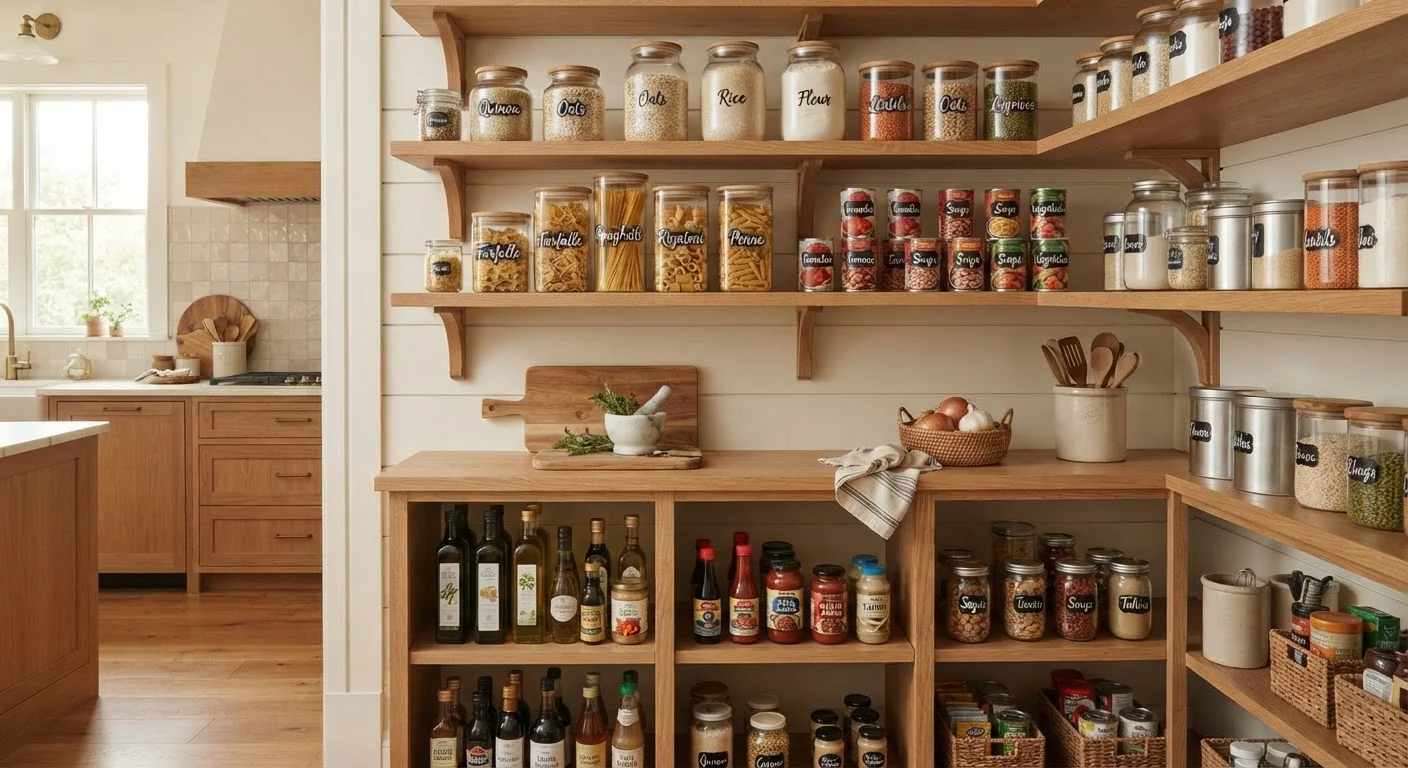
The pantry solves a different problem than the fridge does. Fresh ingredients offer quality; pantry ingredients offer availability. A well-constructed pantry means that even on nights when grocery shopping didn't happen, you still have everything needed to build a complete, satisfying meal. The goal isn't abundance — it's reliable coverage across five categories: grains, proteins, sauces, aromatics, and cooking fats.
| Average pantry staple shelf life | 1–3 years for most canned and dried goods (USDA Food Safety guidelines) |
| Core pantry categories | Grains, proteins, sauces/condiments, aromatics, fats |
| Fastest-cooking grains | White rice (18 min), couscous (5 min), quick-cook oats |
| Fastest shelf-stable proteins | Canned fish, canned beans, dried red lentils (cook in ~20 min) |
| Essential aromatics to keep stocked | Garlic, onions, dried chili flakes, cumin, smoked paprika |
| Sauce types that work across cuisines | Soy sauce, canned tomatoes, coconut milk, stock |
The Five Pantry Pillars — What to Keep and Why
Grains and Starches
These form the bulk and base of most fast meals. Prioritize speed: couscous hydrates in five minutes, white rice cooks in under 20, and dried pasta is endlessly versatile. Keep at least two or three varieties so you're not repeating the same base every night. Whole-grain options like brown rice or farro take longer but add nutritional value for planned-ahead meals.
Shelf-Stable Proteins
Canned beans, lentils, and fish are the backbone of bare-fridge dinners. Canned chickpeas can be roasted or stirred into a sauce in minutes. Dried red lentils need no soaking and cook in roughly 20 minutes, making them one of the fastest protein foundations available — a topic covered in depth in our guide to cooking with pulses. Canned tuna or sardines deliver ready-to-eat protein with minimal prep.
Sauces and Liquids
This is where flavor comes from when the fridge is empty. Canned crushed tomatoes, coconut milk, low-sodium stock, and soy sauce each anchor a completely different flavor profile. A single can of coconut milk plus aromatics and a grain becomes a Thai-inspired bowl; canned tomatoes plus garlic becomes a pasta sauce. For more on how sauces do the heavy lifting, see sauce as a shortcut.
Aromatics
Whole garlic and onions store well on the counter for weeks. Beyond fresh aromatics, keep dried spices that you actually use: cumin, smoked paprika, chili flakes, dried oregano, and turmeric cover a wide range of cuisines. Tomato paste — in a tube for convenience — adds deep umami to almost anything.
Pantry staple
A shelf-stable ingredient kept on hand consistently, forming the base of many meals without frequent restocking. Examples include canned beans, dried pasta, and cooking oils.
Aromatic
An ingredient — such as garlic, onion, or ginger — added early in cooking to build the flavor foundation of a dish.
Shelf-stable protein
A protein source that requires no refrigeration before opening, such as canned tuna, canned chickpeas, or dried lentils. These are key backup proteins for bare-fridge nights.
Umami
A savory depth of flavor found in ingredients like soy sauce, tomato paste, and miso. Adding an umami-rich pantry item can elevate a simple dish significantly.
Whole grain
A grain that retains its bran and germ layers, offering more fiber and nutrients than refined versions. Brown rice, farro, and whole-wheat pasta are common pantry examples.
Meal framework
A flexible, repeatable structure for building a meal — such as protein + grain + sauce + vegetable — that works with whatever ingredients are on hand.
Cooking Fats
Neutral oil (such as vegetable or canola) and olive oil handle most cooking needs. A small bottle of toasted sesame oil or chili oil adds finishing flavor with almost no effort.
Putting It Together: From Pantry to Plate
The real test of a pantry isn't how full it looks — it's how many distinct meals it can produce. Aim for a mental library of at least five meal frameworks that your pantry reliably supports. For example: grain + canned protein + sauce + spice becomes a lentil dal, a chickpea stew, a tuna pasta, or a coconut rice bowl depending solely on which items you reach for.
Once your pantry is solid, pair it with an approach to weeknight methods. Whether you prefer sheet pan cooking or a single pot, our comparison of sheet pan vs. one-pot dinners can help you choose the approach that fits your cleanup tolerance and schedule. A weekly dinner rotation also helps you shop more deliberately so pantry stocks don't run down unevenly.
Rotating Your Stock Prevents Waste
When restocking, move older cans and packages to the front and place new purchases behind them. This simple habit — sometimes called FIFO (first in, first out) — ensures you use items before they expire. See more in our pantry organization guide.
The pantry doesn't replace fresh ingredients — it backs them up. Even a modest collection of staples, thoughtfully chosen, makes the difference between a stressful scrounge and a real dinner on a genuinely difficult night.