

Key Takeaways
- Sheet pan dinners deliver roasted, crispy textures that one-pot cooking simply cannot replicate.
- One-pot meals generally require less active prep and are more forgiving with timing.
- Cleanup is minimal for both methods, but the type of mess differs — baked-on vs. simmered-on.
- Sheet pan cooking suits proteins and vegetables that benefit from dry heat and caramelisation.
- One-pot meals handle legumes, grains, and braised proteins especially well.
- Both methods can anchor a practical weekly dinner rotation with the right ingredients on hand.
Option A
Sheet Pan Dinners
The hands-off, high-heat method for crispy, roasted weeknight meals.
Best for: Cooks who want caramelised textures and easy cleanup with minimal active cooking time.
Option B
One-Pot Meals
The flexible, all-in-one method that builds deep flavour with minimal equipment.
Best for: Households that prefer saucy, comforting dishes and want a single vessel from stovetop to table.
If you want crispy, caramelised results with almost no stirring
Sheet Pan Dinners
Dry oven heat produces browning and texture that braising or simmering in a pot simply won't. Spread ingredients in a single layer and walk away.
If you're cooking dried beans, grains, or braised meats
One-Pot Meals
Liquid-based cooking is essential for these ingredients, and a single covered pot manages moisture and timing far better than an open oven pan.
If you want easy portioning and flexible quantity scaling
Sheet Pan Dinners
Ingredients sit in individual portions and can be pulled early or added in stages, making it easier to cook different amounts without adjusting liquid ratios.
If you prefer a hands-off simmer while you handle other tasks
One-Pot Meals
Once simmering, a covered pot needs very little attention — ideal for multitasking evenings when you can't stand at the stove.
If you're short on cookware or working with a small kitchen
One-Pot Meals
A single heavy-bottomed pot or Dutch oven handles the whole job — no need for multiple baking sheets or oven space management.
How Each Method Actually Works
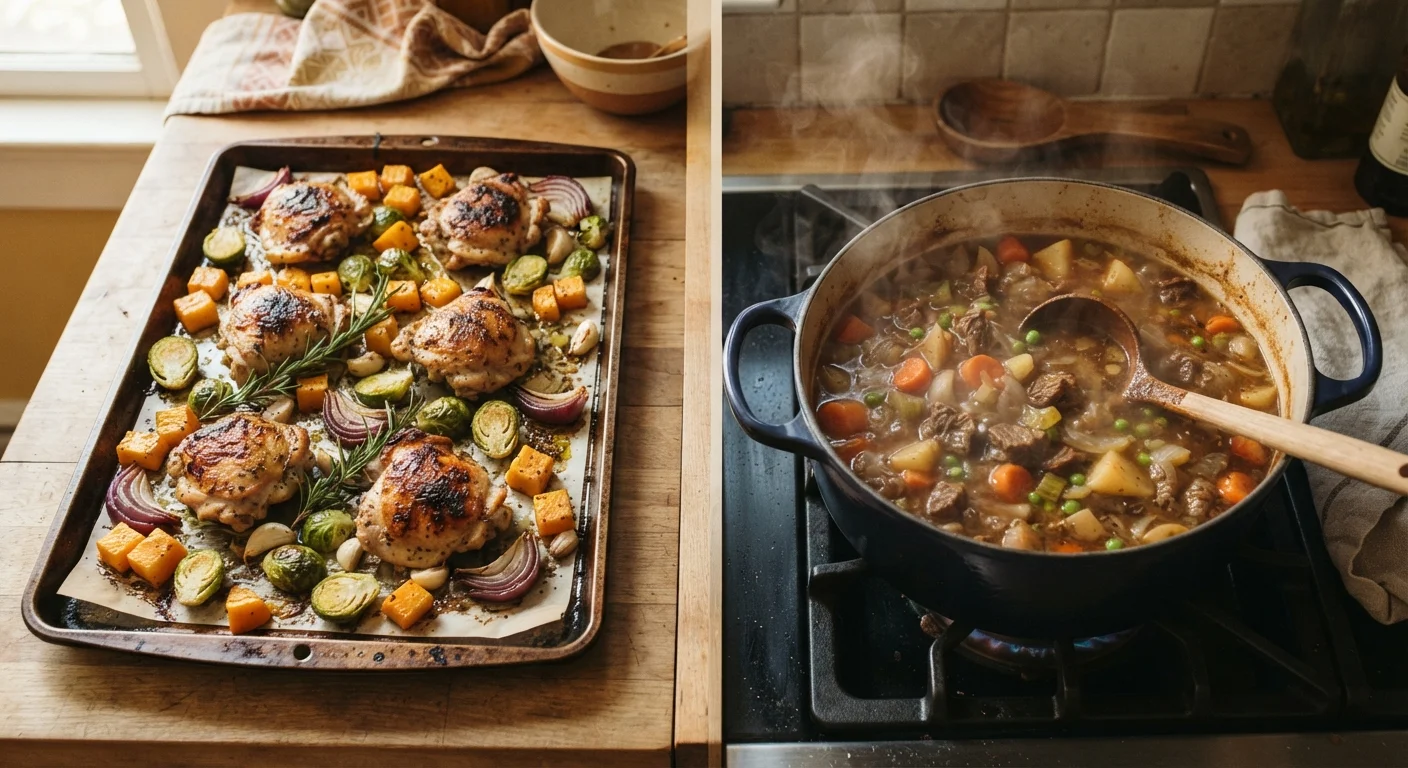
Sheet pan dinners use dry oven heat — typically between 400°F and 450°F — to roast proteins and vegetables together on a single rimmed baking sheet. The high heat drives moisture out of ingredients quickly, producing browning and a slightly crispy exterior through a process called the Maillard reaction. Active cooking time is minimal: toss, arrange, and roast.
One-pot meals work by cooking everything in a single vessel using liquid — stock, canned tomatoes, coconut milk, or water — that distributes heat evenly and builds a cohesive sauce as ingredients release their flavours. This method covers everything from braised chicken thighs to hearty lentil soups and rice-based dishes. See our guide to one-pot meals that don't sacrifice texture for practical tips on managing the trade-offs.
Understanding the core mechanic of each method helps you choose the right one for the ingredients you have on hand — and the result you actually want.
| Criterion | Sheet Pan Dinners | One-Pot Meals |
|---|---|---|
| Heat method | Dry oven heat (400–450°F) | Moist heat via liquid (stovetop or oven) |
| Texture outcome | Crispy, caramelised edges | Tender, saucy, fall-apart |
| Active cooking time | Low — toss and roast | Low to moderate — stir occasionally |
| Cleanup effort | Moderate (use parchment to reduce) | Easy (soak removes residue) |
| Scaling for larger portions | Requires additional pans | Scales easily in the same pot |
| Best ingredients | Vegetables, chicken thighs, fish, sausage | Beans, grains, braised meats, leafy greens |
| Equipment needed | Rimmed baking sheet, oven | Heavy pot or Dutch oven |
Cleanup, Equipment, and Kitchen Logistics
Both methods earn their weeknight reputation by limiting the number of dishes involved, but the nature of cleanup differs. Sheet pans tend to accumulate caramelised, stuck-on bits that require soaking or scrubbing — lining your pan with foil or parchment paper largely solves this. One-pot vessels can develop a film of reduced sauce at the bottom, but a brief soak usually handles it.
Sheet pan cooking requires oven space and time to preheat, typically 10–15 minutes. If you're cooking for four or more, you may need two pans — and overcrowding a pan is the most common mistake, leading to steaming rather than roasting. One-pot meals scale more naturally, since adding a larger volume of liquid and ingredients to the same pot rarely compromises the method. The type of cookware you use affects both methods: a heavy oven-safe Dutch oven bridges both approaches, moving from stovetop browning to oven-braising seamlessly.
~15 min
Typical active prep time for sheet pan meals
Most sheet pan dinner recipes involve simple chopping and seasoning before the oven takes over.
1 vessel
Dishes used in a one-pot meal
One-pot cooking limits post-dinner cleanup to a single pot, lid, and serving utensil.
400–450°F
Ideal oven range for sheet pan roasting
This temperature range promotes Maillard browning without drying out most proteins or vegetables.
Flavour, Texture, and What Each Method Does Best
The clearest difference between these two methods is texture. Sheet pan roasting creates concentrated, slightly caramelised edges on vegetables and renders fat from proteins in a way that's simply not achievable with moist-heat cooking. Chicken thighs come out with crispy skin; broccoli develops charred florets; cherry tomatoes burst and intensify.
One-pot meals build flavour differently — through long contact between ingredients in liquid. Aromatics like onion, garlic, and spice blooms infuse a dish evenly, and braised proteins become tender and fall-apart in ways that oven roasting won't achieve. Dishes like global one-pan dinners — from shakshuka to spiced lentil stews — rely on this layered, simmered flavour. For quick-cooking proteins on a weeknight, understanding how each protein behaves under heat helps you pair the right cut to the right method.
The honest answer: neither method is superior. Roasted salmon with asparagus suits a sheet pan. A chickpea and tomato braise suits a pot. The question is which outcome you're after.
Building Both Into Your Weekly Routine
The most practical weeknight kitchen doesn't commit exclusively to one method — it rotates between them based on what's in the fridge and how much time and energy you have. A weekly dinner rotation that alternates sheet pan nights with one-pot nights naturally reduces decision fatigue and uses your pantry more efficiently.
A general framework that works for many households: use sheet pan dinners when you have fresh vegetables that need using up and proteins that benefit from dry heat. Reach for a one-pot approach when you're working with canned beans, dried legumes, grains, or when a brothy, warming meal fits the evening. Both methods pair well with a semi-homemade approach — using pre-cut vegetables, rotisserie chicken, or canned tomatoes shortens active time without sacrificing quality.
Mastering both methods expands your repertoire without requiring new skills — just an understanding of what each technique does well.
When Overcrowding Ruins the Method
The single most common sheet pan mistake is placing too many ingredients too close together. When pieces crowd each other, steam builds up and ingredients braise rather than roast — you lose the crispy texture entirely. Use two pans if needed, and leave at least half an inch of space between pieces. The same principle applies in reverse with one-pot meals: too little liquid leads to scorching, so keep an eye on the pot during long simmers and add a splash of stock or water if needed.