
Cookware Materials Compared: Stainless Steel, Cast Iron, Non-Stick, and Carbon Steel

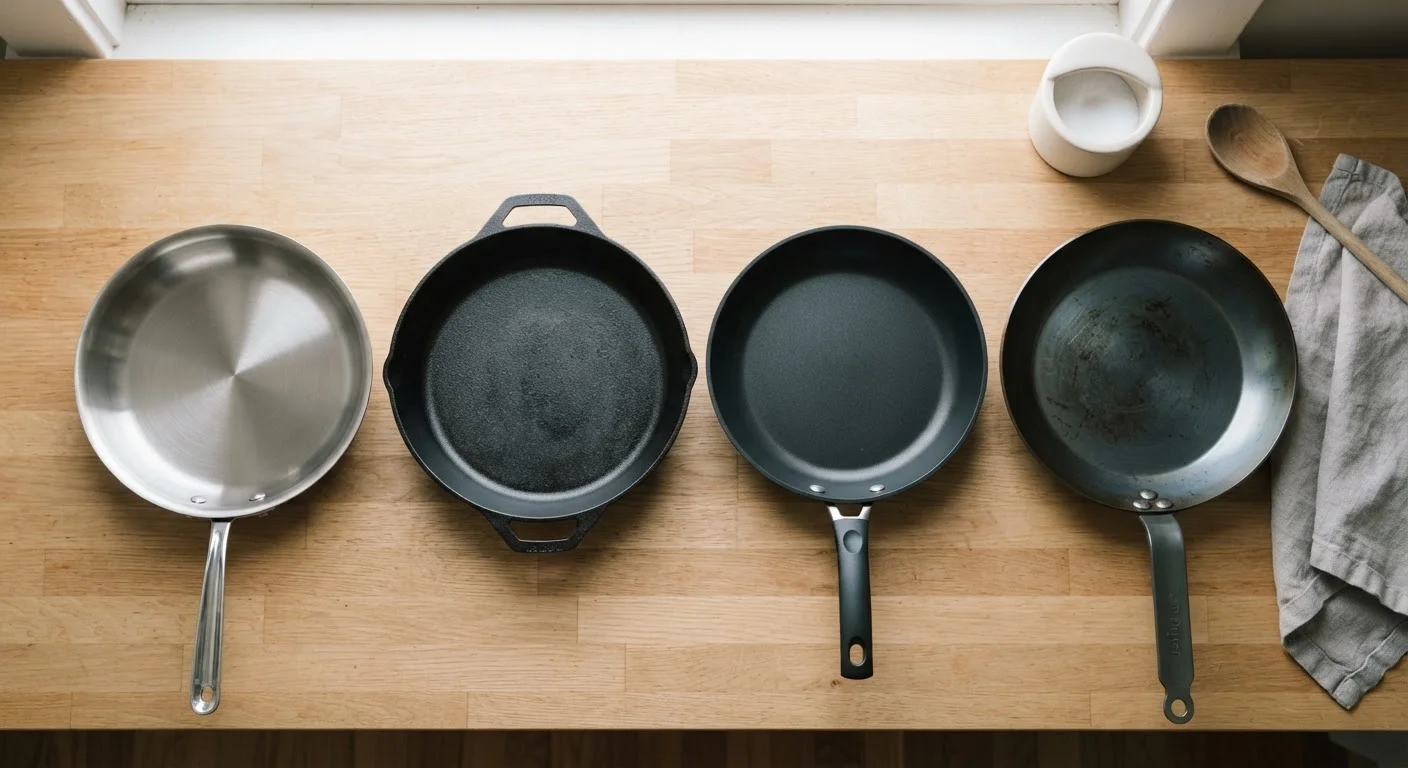
Key Takeaways
- Cast iron retains heat exceptionally well but is heavy and requires seasoning maintenance.
- Stainless steel is durable and versatile but has a steeper learning curve to prevent sticking.
- Non-stick is beginner-friendly for delicate foods but degrades over time with high heat.
- Carbon steel is lightweight like non-stick but requires seasoning and builds a natural release surface.
- No single material suits every cooking task — the right choice depends on your cooking habits.
Our Verdict
Each cookware material fills a different role in the kitchen. Stainless steel handles high-heat searing and acidic dishes reliably. Cast iron excels at heat retention and oven use. Non-stick removes friction for beginners cooking eggs or fish. Carbon steel bridges cast iron and non-stick with a lighter frame. Most experienced home cooks end up with at least two different materials rather than one.
| Best for | Recommended |
|---|---|
| Beginners and those cooking delicate proteins like eggs and fish | Non-Stick |
| Cooks who sear meat, deglaze pans, and want a lifetime pan | Stainless Steel |
| Those who bake, braise, or want maximum heat retention | Cast Iron |
| Cooks who want cast iron performance without the weight | Carbon Steel |
Stainless Steel: The Versatile Workhorse
Stainless steel cookware is prized for its durability, non-reactive surface, and ability to handle high heat. Because it doesn't react with acidic ingredients like tomatoes or wine, it's well-suited for building pan sauces and braising. The fond — the browned bits that stick to the pan after searing — is not a failure; it's flavor, and stainless excels at producing it.
The main challenge is sticking. Stainless requires proper preheating and adequate fat to minimize food adhesion. Understanding pan temperature matters more than most cooks realize — see our article on why pan temperature matters more than your recipe for practical guidance. Stainless is dishwasher-safe, resists scratching from metal utensils, and typically lasts decades with basic care.
Cast Iron: Heat Retention Champion
Cast iron heats slowly but holds that heat exceptionally well, making it ideal for searing steaks, baking cornbread, and frying. It transitions seamlessly from stovetop to oven, tolerating temperatures that would damage most other materials. Over time and with regular seasoning — the process of baking thin layers of oil into the surface — cast iron develops a naturally non-stick patina.
The drawbacks are weight and maintenance. A 12-inch cast iron skillet can weigh over five pounds, making it awkward for some cooks. It must be dried thoroughly after washing to prevent rust, and acidic foods cooked for extended periods can strip seasoning. Cast iron is not dishwasher-safe. That said, a well-maintained cast iron pan can genuinely last generations, making it one of the more cost-effective long-term options.
| Stainless Steel | Cast Iron | Non-Stick | Carbon Steel | |
|---|---|---|---|---|
| Heat retention | Moderate | Excellent | Low to moderate | Good |
| Heat responsiveness | Good | Slow | Fast | Very fast |
| Non-stick surface | None (technique-dependent) | Develops with seasoning | Yes (coated) | Develops with seasoning |
| Weight | Moderate | Heavy | Light | Light to moderate |
| Maintenance level | Low | High | Low | High |
| Oven-safe temperature | Very high | Very high | Limited (check manufacturer) | Very high |
| Lifespan | Decades | Lifetime | 2–5 years typically | Decades |
| Works with acidic foods | Yes | Not ideal | Yes | Not ideal |
Non-Stick: Low Friction, Lower Ceiling
Non-stick pans — most commonly coated with PTFE (polytetrafluoroethylene, often known by brand names like Teflon) or ceramic alternatives — reduce food adhesion with minimal oil. They're particularly forgiving for eggs, fish fillets, and crepes. Cleanup is quick, and there's less technique required to achieve decent results, which makes non-stick genuinely useful for beginners.
The limitations are real. Non-stick coatings degrade with high heat, abrasive scrubbing, and metal utensils. Most manufacturers recommend avoiding temperatures above 500°F, which rules out high-heat searing. Scratched or peeling non-stick surfaces should be replaced. Ceramic-coated alternatives avoid PTFE but tend to lose their non-stick properties faster than traditional coatings. Non-stick is rarely oven-safe beyond moderate temperatures and has the shortest lifespan of these four materials.
When to Replace a Non-Stick Pan
A non-stick pan with a visibly scratched, chipped, or flaking coating should be replaced rather than continued in use. While the health implications of small amounts of ingested coating material remain a subject of ongoing study, a damaged surface also performs poorly. Avoid using metal utensils on non-stick surfaces, and don't preheat an empty non-stick pan on high heat, as this degrades the coating faster.
Carbon Steel: The Professional Kitchen Standard
Carbon steel is the material found in most professional restaurant kitchens, and for good reason. Like cast iron, it must be seasoned and improves with use. Unlike cast iron, it's significantly lighter — a 12-inch carbon steel pan typically weighs around three pounds — and heats more quickly and evenly due to its thinner walls.
Carbon steel responds to temperature changes faster than cast iron, giving cooks more control during cooking. It handles high heat well and can be used for searing, sautéing, and oven finishing. The tradeoff is that it requires the same maintenance discipline as cast iron: hand-washing, thorough drying, and occasional re-seasoning. It's also reactive to acidic foods and not ideal for long-simmered tomato sauces. For cooks who want cast iron performance with a lighter feel, carbon steel is worth considering. It pairs particularly well with techniques explored in sautéing and stir-frying.
Choosing Based on How You Actually Cook
The practical question isn't which material is objectively best — it's which suits your habits. If you cook eggs daily and value easy cleanup, non-stick earns its spot. If you frequently sear proteins and build pan sauces, stainless steel rewards investment in technique. If you braise, bake, or cook large batches, cast iron's heat retention is hard to match. If you want a single reactive-metal pan that handles most high-heat tasks without the weight penalty, carbon steel is worth the seasoning learning curve.
Many home cooks find a two-pan setup covers most needs: one stainless or carbon steel for high-heat work, and one non-stick for delicate foods. For recipes that use a single vessel, understanding how your pan material interacts with the cooking method matters — our guide to one-pot meals that don't sacrifice texture or flavour explores this dynamic. Before adding more cookware to your cabinet, it also helps to think about storage — kitchen organization strategies can help you avoid accumulating pans you don't actually use.