

Why Protein Choice Determines Your Weeknight Pace
On a busy weeknight, the protein you choose isn't just a nutritional decision — it's a timing decision. A bone-in pork shoulder and a can of white beans both deliver protein, but one takes four hours and the other takes four minutes. Understanding how different proteins behave under heat helps you make smarter choices before you even open the fridge.
This guide covers the most practical fast-cooking proteins available to U.S. home cooks, what makes each one quick, and the small technique adjustments that keep each from going wrong. For a broader look at how to stock these items before you need them, see stocking a weeknight-ready pantry.
Fast Proteins at a Glance: How Each One Behaves
Eggs
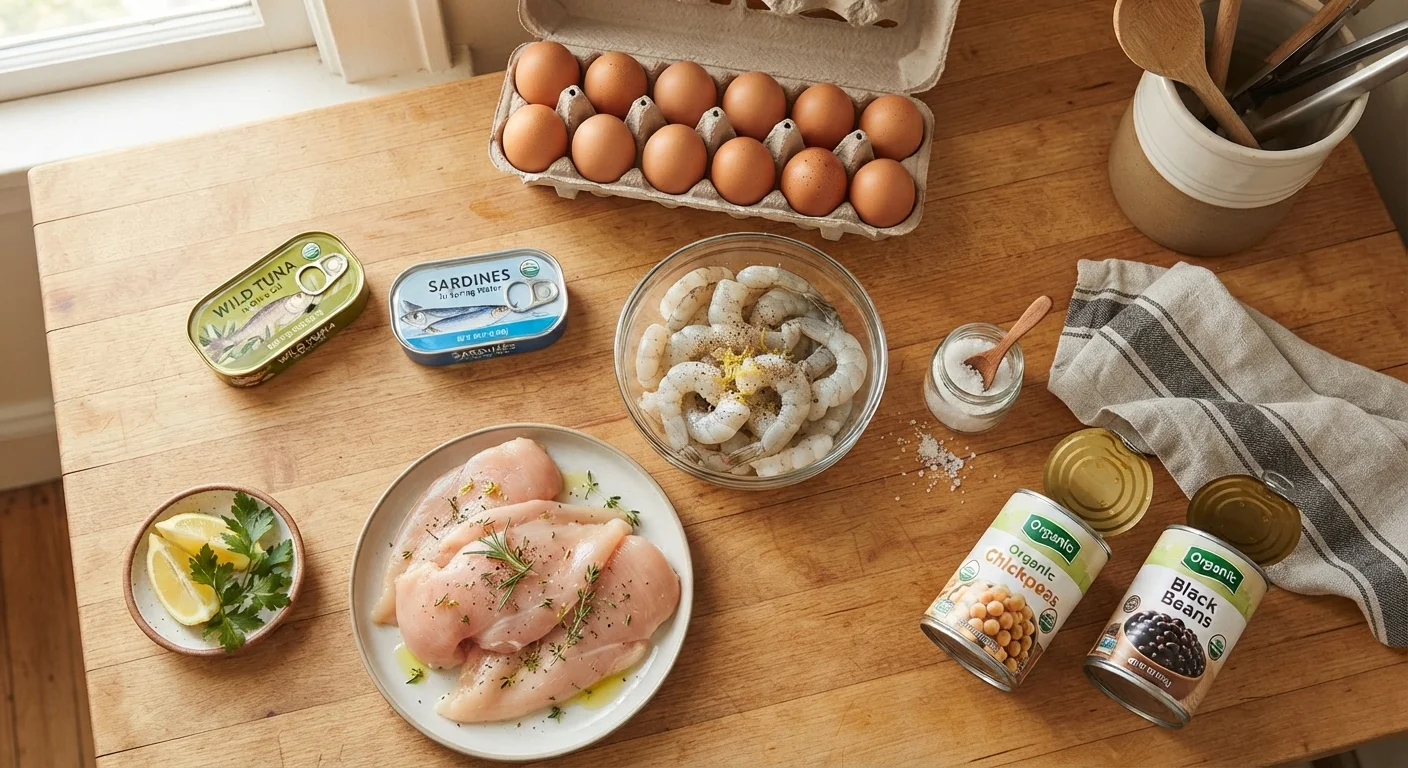
Active cook time: 2–8 minutes. Eggs set fast and punish overcooking. Scrambled eggs go rubbery within a minute past done; a fried egg with a runny yolk needs medium heat and a watchful eye. The advantage: eggs require no thawing, no marinating, and minimal prep. They work as a standalone or as a protein layer over grains, greens, or leftovers.
Canned Fish (Tuna, Salmon, Sardines)
Active cook time: 0 minutes — already cooked. Canned fish is a true no-cook protein. Drain it, season it, and it's done. Tuna folds into pasta, grain bowls, or quick salads. Sardines on toast with mustard and lemon is a legitimate five-minute dinner. The main technique consideration is draining well to avoid a watery dish.
Shrimp
Active cook time: 3–5 minutes. Shrimp cook almost too fast — they're done when they curl into a C shape and turn opaque. A shrimp that curls into a tight O shape is overcooked. High heat in a dry or lightly oiled pan works best. Pre-peeled, deveined shrimp from the freezer thaw in cold water in under 15 minutes, making them one of the most reliable weeknight options.
Thin-Cut Chicken Breast or Thighs
Active cook time: 6–10 minutes. Thickness is the variable. A standard chicken breast can take 20+ minutes, but a breast sliced horizontally (called a cutlet) cooks in 6–8 minutes over medium-high heat. Chicken thighs, which are more forgiving of a minute or two of extra heat, can be cut thin for similar speed. Pound cutlets to even thickness before cooking for consistent results.
Canned or Pre-Cooked Legumes
Active cook time: 0–5 minutes. Canned chickpeas, white beans, and lentils are already fully cooked. They need only to be warmed through and seasoned. Pan-frying canned chickpeas in a bit of oil for 5–7 minutes adds a satisfying crisp. For a deeper look at legumes as a protein foundation, cooking with pulses covers technique and meal applications in detail.
Ground Meat (Beef, Turkey, Pork)
Active cook time: 8–12 minutes. Ground meat browns quickly because of its large surface area. It needs to reach a safe internal temperature (165°F for ground poultry, 160°F for ground beef and pork per USDA guidelines), but the fine texture means heat penetrates fast. Break it up early in cooking so it browns rather than steams.
Cutlet
A thin, flat piece of meat — typically chicken or turkey breast — sliced or pounded to an even thickness of about ½ inch. The reduced thickness allows the meat to cook through much faster than a whole breast.
Deveined shrimp
Shrimp from which the digestive tract (the dark line running along the back) has been removed. Pre-peeled, deveined shrimp from the freezer section eliminates the most time-consuming prep step.
No-cook protein
A protein source that arrives fully cooked and shelf-stable, requiring only draining and seasoning before eating. Canned fish and canned legumes are the most common examples.
Browning (Maillard reaction)
The chemical process that gives browned meat its savory flavor and color. It requires high, dry heat — too much moisture in the pan prevents browning and leads to steaming instead.
Matching Your Protein to the Method
Fast proteins still benefit from matching to the right cooking method. Shrimp and thin chicken cutlets thrive in a hot skillet; canned beans warm up best in a saucy pan with aromatics; eggs prefer gentler, more controlled heat. If you're working with a sheet pan or one-pot approach, thin chicken cutlets and shrimp adapt well to both — just watch timing closely since they can overcook faster than thicker proteins.
Pairing a fast protein with pantry staples — a can of tomatoes, jarred sauce, cooked grains from earlier in the week — is where weeknight speed really compounds. The home cooking tips hub has more guidance on building meals efficiently from what's already on hand.
One practical habit: when you have a few extra minutes earlier in the week, pre-slice chicken breasts into cutlets and store them flat in the fridge. That single step removes prep time on the nights you have none to spare.