

Key Takeaways
- Pulses are among the most cost-effective protein sources in any grocery store.
- Lentils require no soaking and cook in under 30 minutes, making them weeknight-friendly.
- Canned chickpeas and split peas are ready-to-use shortcuts without sacrificing nutrition.
- Pairing pulses with grains creates a nutritionally complete protein profile.
- Proper seasoning and acid balance are the keys to flavorful pulse-based dishes.
Why Pulses Deserve a Spot in Every Kitchen
Pulses — the dried seeds of legume plants — include lentils, chickpeas, split peas, and dried beans. They are one of the most affordable, shelf-stable, and nutritionally dense protein sources in any US grocery store. A pound of dried lentils costs roughly a dollar or two and yields six or more servings of protein-rich food.
Beyond cost, pulses offer practical advantages that other proteins can't match. They store for a year or more in a sealed container, require no refrigeration, and cook with minimal hands-on effort. For households building a smarter pantry, they're an anchor ingredient. See how they fit into a broader strategy in our guide to stocking a pantry for fast dinners.
~18g
Protein per cooked cup of lentils
According to USDA FoodData Central, one cup of cooked lentils provides approximately 18 grams of protein.
$1–$2
Average cost per pound of dried pulses
Dried lentils, chickpeas, and split peas consistently rank among the lowest-cost protein sources per serving at US grocery stores.
15g+
Dietary fiber per cooked cup of chickpeas
USDA data shows cooked chickpeas deliver over 15 grams of dietary fiber per cup, supporting digestive health.
Understanding Each Pulse: Lentils, Chickpeas, and Split Peas
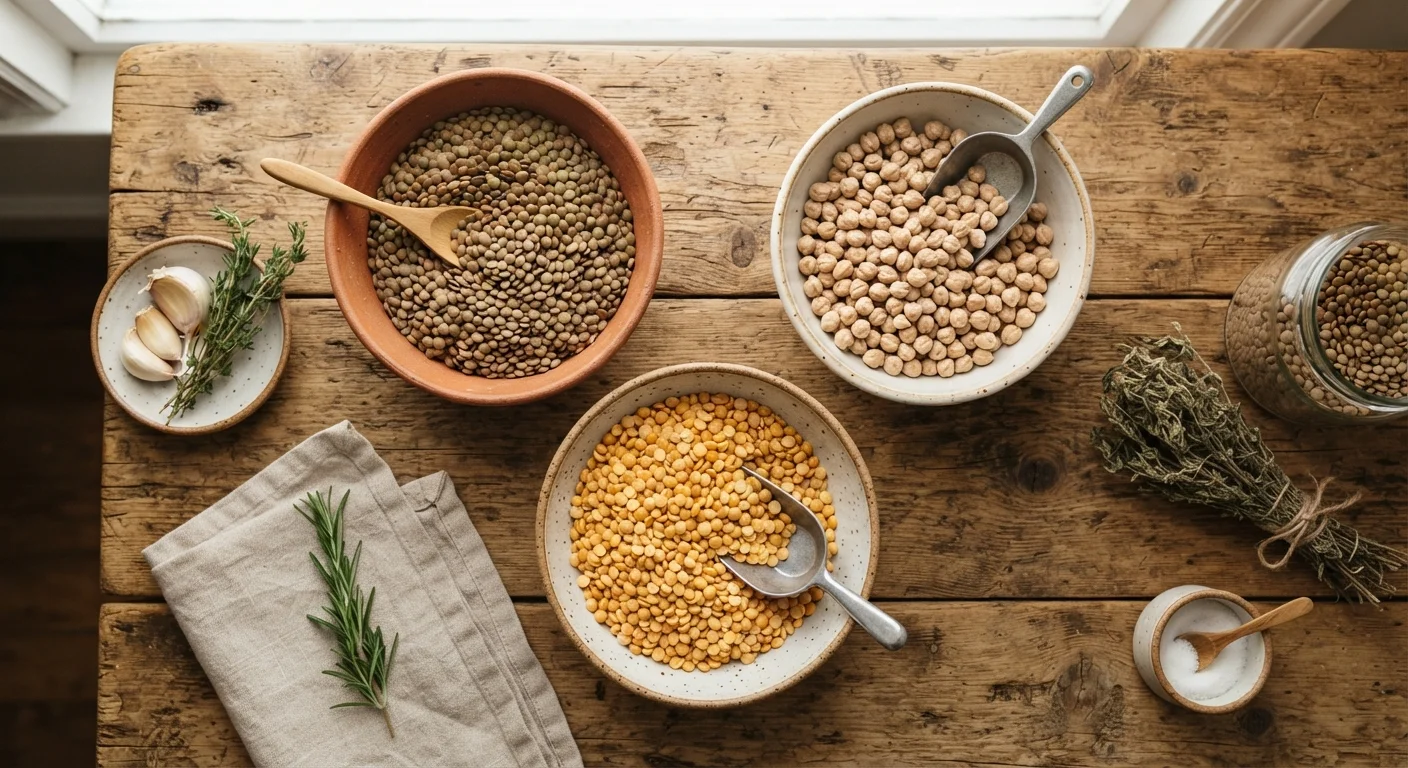
Each pulse has its own flavor profile, texture, and ideal application. Knowing these differences helps you choose the right one for any dish.
Lentils
Lentils come in several varieties. Brown and green lentils hold their shape well after cooking and work well in salads, grain bowls, and side dishes. Red lentils break down quickly into a soft, creamy consistency — ideal for soups, dals, and purees. French green lentils (Puy) are firmer and peppery, and they stand up well to dressings.
Chickpeas
Also called garbanzo beans, chickpeas have a mild, nutty flavor and a firm texture that holds up to roasting, simmering, and blending. They are the base of hummus, a natural addition to stews, and satisfying roasted as a crunchy snack or salad topping.
Split Peas
Yellow and green split peas cook down into a thick, velvety texture that makes them ideal for hearty soups and pureed dishes. Their earthy sweetness is amplified by aromatics like onion, garlic, and bay leaf.
Pulses and Complete Protein
Pulses are high in protein but are considered an incomplete protein source on their own, meaning they lack sufficient amounts of certain essential amino acids. Pairing them with grains — rice, wheat, corn, or oats — throughout the day creates a full amino acid profile. You don't need to combine them in a single meal; eating both across the course of a day is nutritionally effective.
Dried vs. Canned: Which to Use and When
Both forms have genuine merit, and the right choice depends on your time and how you plan to use them.
- Dried lentils and split peas require no soaking and cook in 20–35 minutes, making them among the most weeknight-friendly pulses in their dried form.
- Dried chickpeas need soaking (ideally overnight) and a longer cook time — typically 1 to 1.5 hours. They reward you with better texture and more control over seasoning.
- Canned chickpeas and lentils are fully cooked and ready in minutes. They are a genuine convenience without meaningful nutritional sacrifice.
Rinse Canned Pulses Before Using
Canned chickpeas, lentils, and split peas are packed in a starchy, salty liquid. Draining and rinsing them under cold water removes excess sodium — sometimes reducing it by up to 40% — and improves the final flavor of your dish. If a recipe calls for the liquid (aquafaba from chickpeas, for example), set it aside before rinsing.
If you're comparing the speed of pulses against other fast proteins, our weeknight protein guide offers a useful side-by-side perspective.
Building Meals Around Pulses
The simplest mental shift is treating pulses as the foundation of a meal rather than a side. Here are reliable frameworks:
Soup and Stew Base
Red lentils or split peas simmered with aromatics (onion, garlic, cumin, turmeric) and broth produce a complete, warming meal in under 40 minutes with almost no active cooking.
Grain and Pulse Bowl
Combine cooked brown lentils or chickpeas with a grain base and whatever vegetables you have. This pairing also addresses amino acid complementarity. See affordable grain alternatives for what to pair with your pulses.
Mashed or Pureed Dishes
Blended chickpeas become hummus or a sandwich spread. Pureed split peas become a thick sauce for grains or a dip with flatbread.
Batch Cook Once, Eat All Week
Cook a large pot of dried lentils or chickpeas on Sunday and refrigerate them in their cooking liquid. They'll stay fresh for up to five days and can be folded into soups, salads, grain bowls, or wraps on demand. This single prep habit dramatically cuts weeknight cooking time.
Salads and Cold Dishes
French green lentils or cooked chickpeas tossed with vinaigrette, raw vegetables, and herbs make a satisfying lunch that improves as it sits.
Flavor and Texture: Getting the Most From Each Pulse
Pulses absorb flavors readily during cooking. The following principles make a consistent difference:
- Toast your spices first. Bloom cumin, coriander, smoked paprika, or turmeric in oil for 30–60 seconds before adding liquid. This step unlocks fat-soluble compounds that deepen flavor significantly.
- Build an aromatic base. Onion, garlic, and celery sautéed before adding lentils or split peas create a flavor foundation that carries through the finished dish.
- Finish with acid. A squeeze of lemon juice or a splash of vinegar added at the end brightens the dish and balances the earthy richness of pulses.
- Don't skip salt. Pulses can taste flat without adequate seasoning. Taste as you go, and season generously at the end.
Add a strip of kombu (dried seaweed) to dried chickpeas or split peas while they cook — it helps soften the skins and may reduce digestive discomfort without affecting flavor.
Kombu contains enzymes that help break down complex sugars in legumes, a technique used widely in Japanese and macrobiotic cooking traditions.
Always add salt and acidic ingredients like tomatoes or lemon juice after your lentils or split peas are fully tender, not before — acid and salt introduced too early can prevent them from softening.
The cell walls of pulses are sensitive to acid and salt during cooking; adding them at the end ensures even, creamy texture throughout.
“Legumes are among the most nutrient-dense, affordable, and environmentally sustainable foods available. Building more meals around them is one of the simplest changes a household can make.”
— Walter Willett, Professor of Epidemiology and Nutrition, Harvard T.H. Chan School of Public Health
Common Mistakes and How to Avoid Them
Even experienced cooks make avoidable errors with pulses. Here are the most common:
- Salting too early
- Salt added at the start of cooking can toughen lentil and split pea skins. Add salt in the final 10–15 minutes or after cooking is complete.
- Skipping a rinse on dried pulses
- Always rinse dried lentils, split peas, and chickpeas under cold water before cooking to remove dust, debris, and any damaged pieces.
- Undercooking
- Undercooked pulses are chalky and hard to digest. Taste before removing from heat — they should be fully tender throughout, not just soft on the outside.
- Overcrowding the pan when roasting chickpeas
- For crispy roasted chickpeas, pat them very dry and spread them in a single layer with space between each one. Overcrowding creates steam instead of a roast.
Raw Kidney Beans Require Special Handling
Unlike lentils and split peas, raw kidney beans contain a naturally occurring toxin called phytohaemagglutinin that must be destroyed by a full rolling boil for at least 10 minutes before slow cooking. Slow cookers alone do not reach a high enough temperature to neutralize this compound. Canned kidney beans are safe to use straight from the can.
For a broader look at eating well on a budget, including shopping strategies and meal planning, visit our dedicated starting-point guide.