

Key Takeaways
- Several whole grains cost less per serving than many people expect and cook just as easily as rice.
- Each grain has a distinct texture, flavor, and nutritional profile that suits different dishes.
- Buying grains in bulk and storing them properly can meaningfully stretch a household grocery budget.
- Pairing grains with pulses creates complete, satisfying meals without relying on expensive proteins.
- Most of these grains work in both sweet and savory applications, adding real menu flexibility.
Why Look Past Rice?
Rice is a reliable staple, but leaning on it exclusively can quietly limit both your nutrition and your cooking. A broader grain rotation means more dietary fiber, a wider range of vitamins and minerals, and — often — a lower cost per pound when you buy in bulk. If you're already thinking carefully about your grocery spending, the practical strategies for budget cooking covered in our beginner's guide apply directly here: buying shelf-stable staples in larger quantities is one of the most consistent ways to reduce weekly food costs.
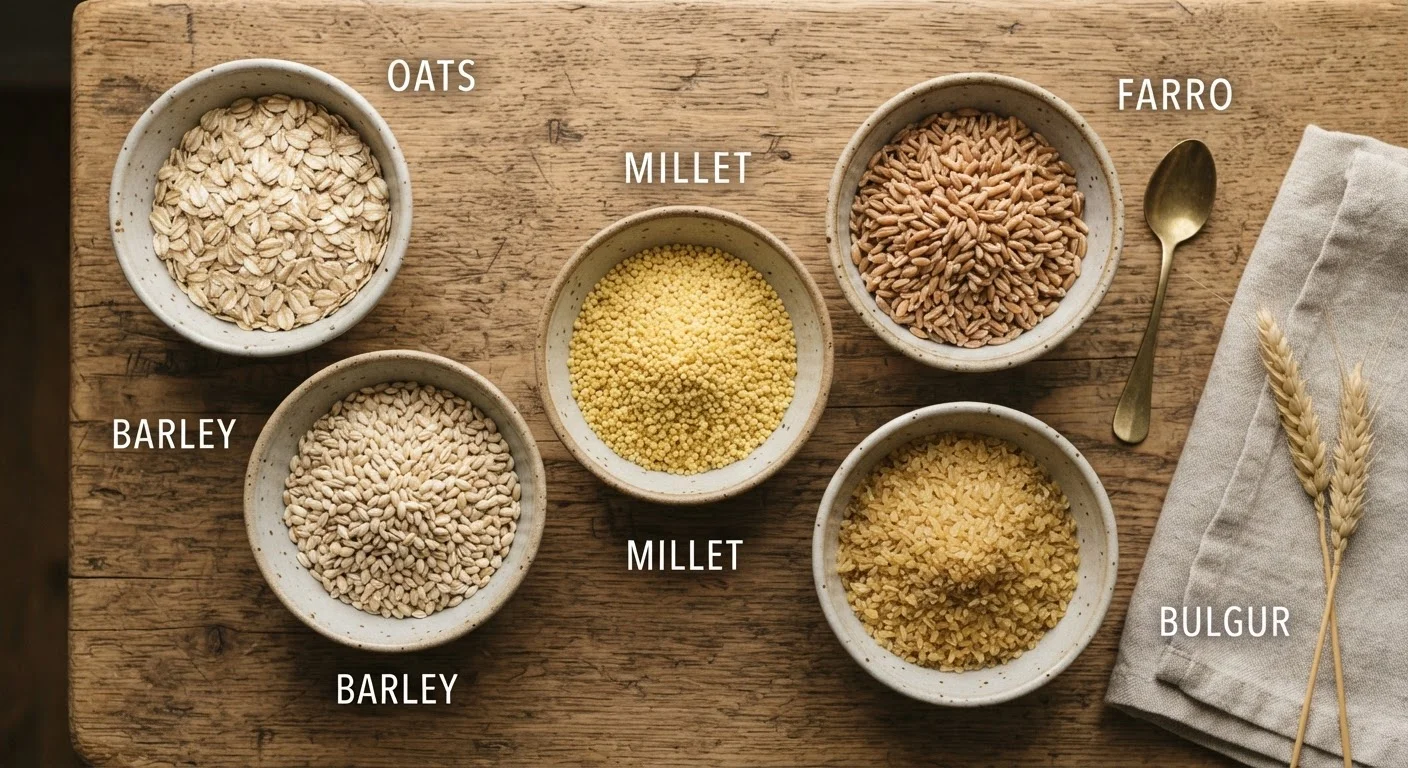
The five grains below are widely available at US grocery stores and bulk bins, cook on the stovetop without special equipment, and each brings something distinct to the table. None of them require you to overhaul how you cook — just try one at a time and see what fits your household.
Rolled Oats
Rolled oats are among the most affordable grains by weight in the US, and their versatility is genuinely underused. Most home cooks stop at breakfast porridge, but oats work as a binder in savory patties, a thickener in soups, and even a base for savory grain bowls when cooked in broth with aromatics instead of water.
Old-fashioned rolled oats cook in about five minutes on the stovetop. Steel-cut oats take longer — roughly 20 to 30 minutes — but have a chewier texture that holds up better in savory applications and keeps you full longer. Both store well in a sealed container for months.
Oats cooked in broth with aromatics make a surprisingly satisfying savory grain bowl.
Bulgur Wheat
Bulgur is cracked wheat that has been parboiled and dried, which means it cooks faster than almost any other whole grain — often in 10 to 15 minutes, sometimes with nothing more than boiling water poured over it. It has a mild, slightly nutty flavor and a tender chew that works in salads, stuffed vegetables, and as a simple side dish.
It is a staple in Middle Eastern cooking and widely available in US grocery stores, usually at a modest price. Bulgur is a practical choice when you need a quick weeknight grain that still delivers fiber and plant-based protein.
Bulgur often needs only boiling water and 15 minutes — faster than almost any other whole grain.
Millet
Millet is a small, round grain that cooks in about 20 minutes and is naturally gluten-free, making it useful for households cooking for people with gluten sensitivities. Its flavor is mild and slightly sweet, and its texture adapts based on the water ratio: less water produces a fluffy, pilaf-like result, while more water creates something closer to a creamy porridge.
It is often overlooked in US kitchens despite being widely available — sometimes shelved in the bulk aisle or the natural foods section. Toasting millet dry in the pan before adding water deepens its flavor noticeably without adding any cost.
Toasting millet dry before adding water deepens its flavor with no extra cost or effort.
Barley
Pearl barley — the most common form in US grocery stores — has had its outer hull and bran layers polished away, which shortens cooking time to around 25 to 35 minutes on the stovetop. It has a pleasantly chewy texture and a mild, slightly earthy flavor that works well in soups, stews, and grain salads.
Barley is notably high in beta-glucan, a type of soluble fiber that has a well-established role in supporting healthy cholesterol levels according to nutritional research. As a budget ingredient, it tends to be one of the more affordable options in the grain aisle and expands significantly during cooking, making it an economical choice for feeding a household.
Barley expands considerably during cooking, making it one of the more economical grains per serving.
Farro
Farro has a reputation as a restaurant grain, but semi-pearled farro — the most common variety sold in US stores — cooks in about 25 to 30 minutes and is genuinely practical for home cooking. It has a firm, chewy bite and a rich, nutty flavor that holds up well under dressings, roasted vegetables, and bold seasonings.
It costs more per pound than oats or bulgur, but a little goes a long way because it is filling and substantial. Used as one component of a larger grain rotation rather than an everyday staple, farro adds real variety without significantly changing a weekly grocery budget.
Semi-pearled farro cooks in about 30 minutes and delivers a richly nutty bite worth the occasional splurge.
Putting It All Together
Adding one or two of these grains to your weekly rotation is a low-risk, high-reward move. Start with whichever sounds most familiar — bulgur if you already enjoy tabbouleh, oats if breakfast is your first priority — and build from there. Batch-cook a large portion on the weekend and refrigerate it; most cooked grains keep well for four to five days and reheat easily with a splash of water or broth.
Store Grains Properly to Maximize Shelf Life
Whole grains contain natural oils that can turn rancid over time, especially in warm or humid conditions. Transfer grains from their original packaging into airtight containers and store them in a cool, dry pantry or cupboard. If you buy in bulk, keeping a smaller working supply in the pantry and the rest in the freezer is a practical way to extend shelf life without sacrificing convenience.
These grains pair especially well with legumes. Cooking with pulses like lentils and chickpeas alongside your grain of choice creates a nutritionally complete, genuinely filling meal at a fraction of the cost of meat-centered dishes. And once you have a grain base and a legume ready, good seasoning is what ties everything together — the right herbs and spices make simple ingredients taste intentional rather than plain.
Finally, watch out for processing and packaging markups. Our look at pantry staples that quietly inflate grocery bills identifies several categories where a small format change — such as buying plain rolled oats instead of flavored single-serve packets — can reduce costs significantly without any sacrifice in quality.