

Key Takeaways
- Garlic, onion, and a handful of dried spices can do more flavour work than expensive specialty ingredients.
- Buying spices in small quantities prevents waste and keeps your seasoning supply fresh and effective.
- Learning when and how to add aromatics — not just which ones to buy — is what separates flat dishes from flavorful ones.
- Toasting whole or ground spices before use intensifies their flavour significantly at no extra cost.
- A well-stocked spice drawer makes inexpensive base ingredients like beans, grains, and eggs taste genuinely satisfying.
Why Aromatics Are the Budget Cook's Best Tool
When grocery budgets are tight, flavour is often the first casualty. Meals built around rice, dried beans, eggs, or frozen vegetables can feel monotonous — not because those ingredients are boring, but because they need aromatics to come alive. The good news is that the ingredients capable of doing the most flavour work are also among the least expensive in any grocery store.
Garlic, yellow onions, dried cumin, smoked paprika, and bay leaves cost very little per use and punch far above their price. Unlike expensive cuts of meat or specialty sauces, aromatics work by building complexity at the molecular level — triggering reactions that create savory depth, warmth, and fragrance. Understanding how to use them strategically is one of the most practical skills a home cook can develop. For a broader foundation on eating well without overspending, this practical starting point covers the bigger picture well.
The Core Aromatics Worth Keeping on Hand
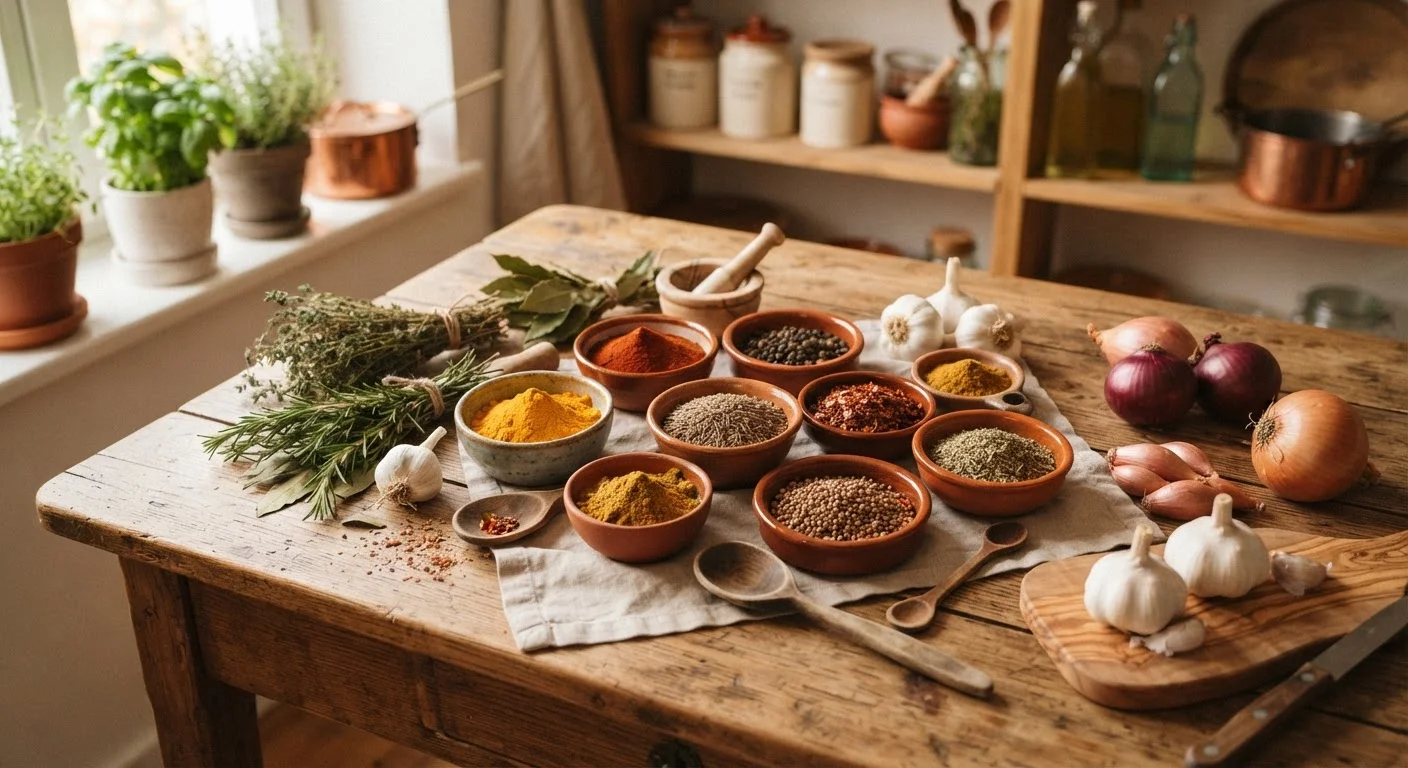
Not every spice earns its cabinet space. These are the workhorses that appear across dozens of cuisines and recipes:
- Garlic and onion: The foundation of most savory cooking worldwide. Fresh garlic and yellow onions are cheap, versatile, and irreplaceable for building a flavor base. Garlic powder and onion powder serve as useful backups but cannot fully replicate the depth of fresh.
- Cumin: Earthy, warm, and slightly smoky — cumin is essential in Mexican, Indian, Middle Eastern, and North African cooking. A small jar goes a long way.
- Smoked paprika: Adds complexity and color to roasted vegetables, beans, eggs, and rice dishes without adding heat. Ground sweet paprika is a milder alternative.
- Bay leaves: Often overlooked, bay leaves quietly add an herbal, slightly floral note to soups, braises, and any pot of dried beans. Always remove before serving.
- Dried oregano and thyme: Mediterranean staples that work in tomato sauces, roasted meats, and grain dishes. Dried versions are more concentrated than fresh and much more affordable per use.
- Red pepper flakes: A small pinch adds background heat and complexity to almost any savory dish without overwhelming it.
Bloom dried spices in oil or fat before adding other ingredients
Most of the aromatic compounds in dried spices are fat-soluble, meaning they release and disperse through a dish when heated in oil. Skipping this step leaves a significant amount of flavour locked in the powder. This is one of the simplest changes a cook can make with immediate, noticeable results.
Use the full onion-garlic-aromatic sequence as your cooking foundation
Beginning almost every savory dish with softened onion followed by garlic, then dried spices, creates a layered base that carries through the entire dish. This sequence appears across professional kitchens worldwide because it consistently produces depth and balance. It costs almost nothing to implement.
Toast whole spices before grinding or using them
Dry heat activates aromatic oils in whole spices that remain partially dormant at room temperature. Even 60 to 90 seconds in a dry skillet over medium heat can dramatically increase fragrance and flavor intensity. This costs nothing and takes almost no time.
Build herb stems and aromatics into your stock scraps
Parsley stems, thyme twigs, and bay leaves that would otherwise go to waste are some of the best flavoring agents for homemade stock. Capturing their value costs nothing and adds depth to soups, braises, and grain cooking liquid. This turns kitchen offcuts into flavor assets.
Match your spice profile to your base ingredient for maximum impact
Different aromatics have natural affinities for different foods. Cumin and coriander pair naturally with legumes; thyme and rosemary amplify root vegetables and meats; smoked paprika enhances eggs, rice, and roasted vegetables. Using the right aromatics means less seasoning is needed for a stronger result.
Techniques That Make Cheap Spices Work Harder
Owning good aromatics is only half the equation — knowing when and how to use them determines the result. A few reliable techniques make a significant difference:
Timing matters as much as quantity. Dried spices added early in cooking — bloomed in a little oil before other ingredients go in — release fat-soluble compounds that dissolve into the dish and coat every ingredient. The same spices added at the end of cooking taste sharp and raw by comparison. This principle applies to garlic too: cooked slowly in oil, it becomes sweet and mellow; added late, it stays pungent and harsh.
Whole spices like cumin seeds, coriander seeds, or mustard seeds can be dry-toasted in a skillet for 60 to 90 seconds before grinding or adding to a dish. The heat activates aromatic oils that are otherwise locked in the seed. This single step can transform a ground spice from flat to fragrant — at zero extra cost.
Pairing aromatics with affordable slow-cooked cuts or budget-friendly grains compounds the value of both. Slow cooking gives spices time to integrate, while grains and legumes absorb seasoning deeply.
Storing and Buying Spices Without Wasting Money
A common mistake is buying large containers of spices only to find them tasteless two years later. Ground spices lose potency relatively quickly — most are best used within 12 to 18 months of opening. Whole spices last longer. Buying smaller quantities, even if the per-ounce price is slightly higher, can mean you actually use what you have before it fades.
Bulk bins at some grocery stores allow you to buy only what you need, which is genuinely economical for spices you use infrequently. Store spices away from heat and direct light — the rack mounted above the stove looks convenient but shortens shelf life considerably. A cool, dark drawer or cabinet preserves potency far longer.
It's also worth auditing what you already own. Stale spices can quietly inflate your cooking's blandness rather than contributing flavor — and that connects to a broader point about pantry items that quietly cost more than they contribute. Fresh aromatics work better than a dozen dull ones.
For those building kitchen confidence further, understanding how and when to salt throughout cooking complements everything discussed here — seasoning with aromatics and salt together is where the real flavour building happens.