

Key Takeaways
- Salt builds flavour differently depending on when it's added during cooking.
- Seasoning in layers — not just at the end — produces more balanced, complex results.
- Different cooking stages call for different amounts and types of salt.
- Tasting throughout the process is essential to avoid over- or under-seasoning.
- Understanding salt's role in each stage is a foundational skill for confident home cooking.
Why Timing Matters More Than Amount
Most home cooks learn to season at the table — a pinch of salt after everything is plated. That habit isn't wrong, but it leaves a lot of flavour on the table. Salt added at the end sits on the surface of food. Salt added during cooking penetrates, draws out moisture, and interacts with proteins and starches in ways that fundamentally change the texture and depth of a dish.
Think of seasoning less like a single switch and more like a dimmer you adjust throughout cooking. Each stage offers a different opportunity to develop flavour, and skipping any one of them often means finishing with food that tastes flat — no matter how much salt you shake on at the end.
This is one of those foundational kitchen skills that separates instinctive, confident cooking from recipe-dependence. For more on building that kind of practical palate, see our guide to tasting as you go.
“Salt is the one ingredient that, used correctly and at the right times, has the power to make everything else taste more like itself.”
— Samin Nosrat, Culinary educator and author of Salt, Fat, Acid, Heat
Best Practices for Salting at Every Stage
Applying salt thoughtfully at each stage of cooking isn't complicated once you understand what it's doing at each step. The practices below cover the key moments from prep through plating.
Season proteins before cooking, not after
Salt applied to meat, poultry, or fish before cooking has time to penetrate the surface and begin drawing out and then reabsorbing moisture, which concentrates flavour and improves texture. A last-minute salting after cooking can't replicate this effect. Even 15–30 minutes of resting time makes a meaningful difference.
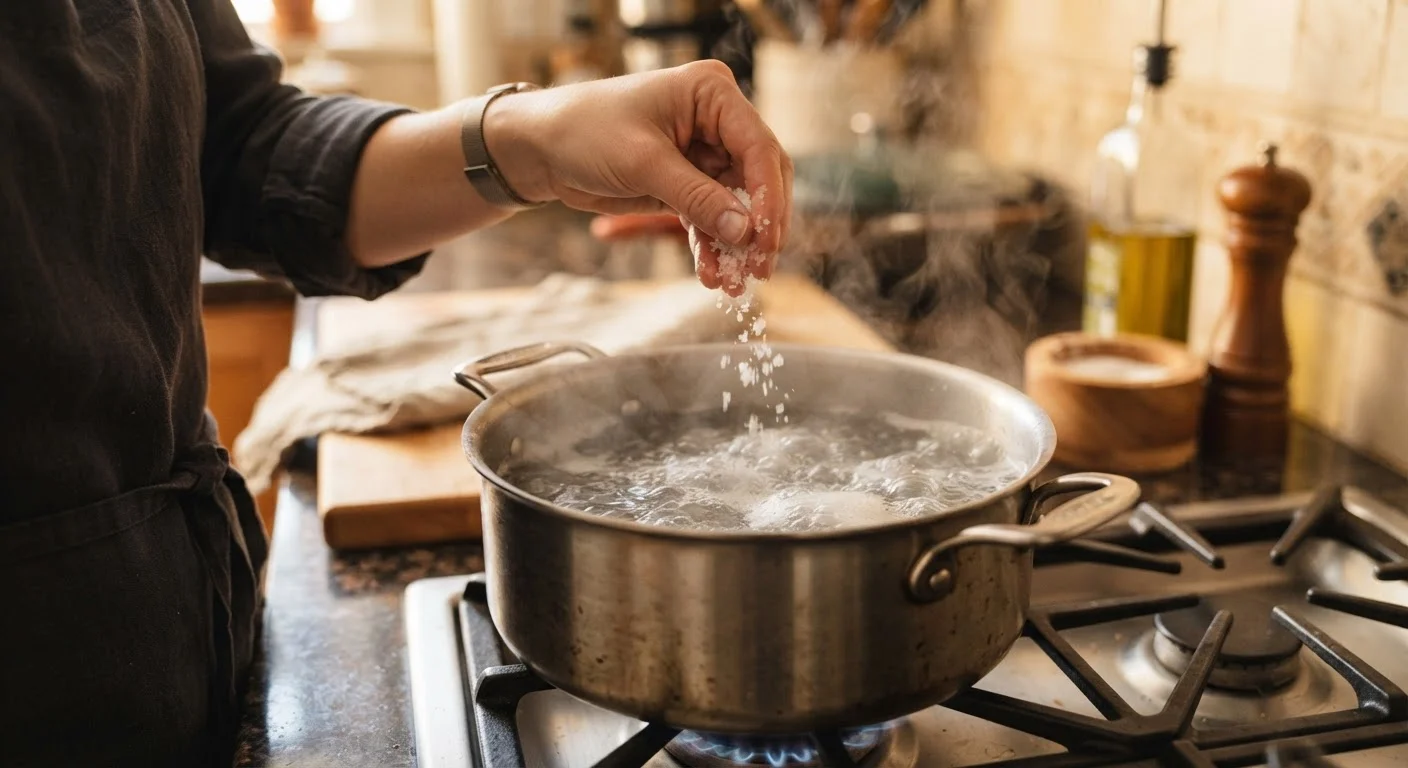
Salt pasta water until it tastes pleasantly seasoned
Pasta absorbs water as it cooks, which means it also absorbs salt. If the cooking water is unseasoned, you lose a critical window for flavouring the pasta itself — sauce added at the end can't fully compensate. The water doesn't need to taste like the ocean, but it should have a noticeable savouriness.
Season vegetables before roasting or sautéing
Salt draws moisture from vegetables, which helps them brown rather than steam. It also softens cell walls, which speeds cooking and concentrates natural sugars. Salting at the end of roasting gives you a flat, watery result by comparison.
Taste and adjust seasoning before serving, not instead of seasoning throughout
A final taste check is important, but it should be a minor correction, not the primary seasoning moment. If you rely entirely on this step, you're compensating for missed opportunities earlier, and the result will taste surface-salted rather than well-seasoned. Use this moment to fine-tune, not fix.
Season soups and braises at the beginning and again at the end
Long-cooked dishes need salt introduced early so it can interact with ingredients as they break down. However, as liquid reduces, saltiness concentrates — which is why a second tasting and light adjustment near the end is just as important as the opening seasoning. Doing one without the other leads to under- or over-seasoned results.
Quick Wins You Can Apply Tonight
You don't need to overhaul how you cook to start seasoning better. These small adjustments deliver immediate results in flavour and confidence.
Putting It All Together
Seasoning throughout cooking isn't about adding more salt overall — it's about using salt smarter, at the right moments, so each ingredient reaches its potential. When you salt your vegetables before roasting, season your braising liquid at the start, and taste before finishing, you're not following a rule. You're developing an instinct.
Salt also works best in combination with other flavour builders. Aromatics like garlic, onion, and warm spices can amplify the work salt does at each stage. Our piece on budget-friendly herbs and spices covers how to build deep flavour without spending more.
It's also worth noting that many cooking rules about salt — including myths about when you can and can't add it — don't hold up under scrutiny. For a clear-eyed look at what the evidence actually says, check out common kitchen myths debunked. And if you've ever stared at a recipe instruction that says "season to taste" and wondered what that actually means, this guide breaks it down in plain language.
Like any kitchen skill, salting well takes practice and attention. Start with one change — seasoning your protein before it hits the pan — and build from there.