

Key Takeaways
- Tough cuts are tough because they come from muscles that work hardest — not because they lack quality.
- Collagen, abundant in cheap cuts, converts to rich gelatin when cooked low and slow.
- High heat causes muscle fibers to seize and toughen; sustained low heat gradually relaxes them.
- Braising liquid absorbs fat-soluble flavors from the meat, creating a built-in sauce.
- Cuts like chuck, shin, and brisket are often a fraction of the price of premium steaks yet deliver comparable or greater flavor when braised.
Slow Cooking Tough Cuts
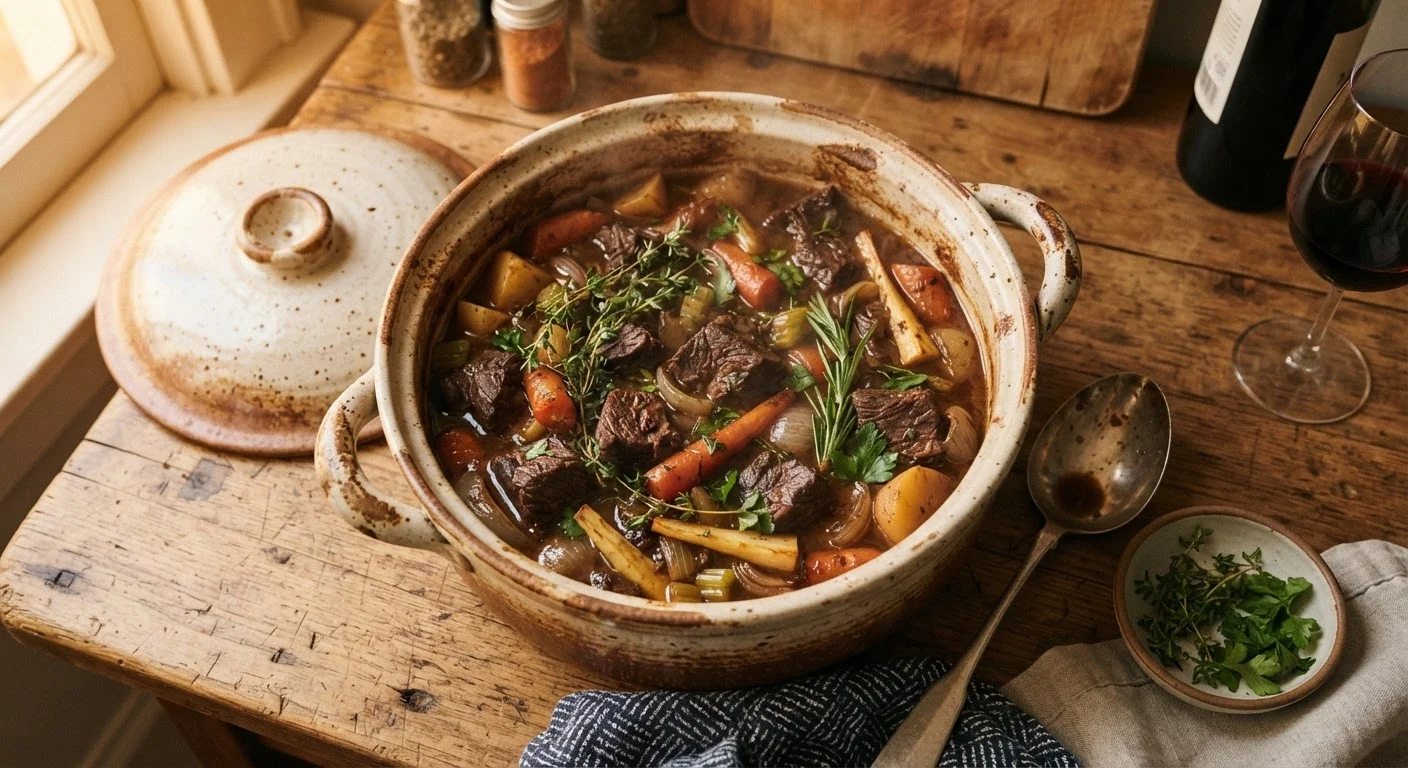
Slow cooking is the process of applying low heat over a long period — typically two to eight hours — to break down the structure of tougher, less expensive cuts of meat. These cuts come from the hardest-working muscles of an animal and contain higher amounts of collagen and connective tissue. Gentle, sustained heat converts that collagen into gelatin, producing meat that is deeply tender and surrounded by a naturally rich, silky sauce.
Collagen conversion to gelatin accelerates at temperatures between 160°F and 180°F (71°C–82°C), which is why low-and-slow methods outperform high-heat cooking for these cuts.
Why Cheap Cuts Get a Bad Reputation
Walk past the premium section of any butcher counter and you'll spot the price gap immediately. A ribeye or tenderloin commands a premium because those muscles do very little work during the animal's life — they stay soft, with fine-grained fibers and modest connective tissue. Tougher cuts — chuck, shin, brisket, shoulder — come from muscles that move constantly, carrying load and generating power. That activity builds dense, interwoven fibers held together by generous amounts of collagen, the structural protein in connective tissue.
High-heat cooking — a hot grill or a screaming-hot skillet — works beautifully for tender cuts because muscle fibers cook through quickly before they tighten too much. Apply that same heat to a chuck roast and those denser fibers contract aggressively, squeezing out moisture and leaving you with something chewy and dry. It's not a flaw in the cut. It's a mismatch of method.
The Science: What Heat Does to Collagen
Collagen is the key to understanding why slow cooking works. At room temperature, collagen is tough and fibrous — it's essentially what holds muscle bundles together. But it's also sensitive to sustained heat.
When meat is held at temperatures between roughly 160°F and 180°F (71°C–82°C) for an extended period, collagen begins to denature and convert into gelatin. Gelatin is a soluble protein with a completely different texture — soft, slippery, and capable of holding moisture. As collagen transforms, the tight structure of the meat relaxes. Fibers that were locked together begin to separate. The result is meat that pulls apart easily and retains moisture rather than losing it.
At the same time, fat embedded within these working muscles slowly renders out, basting the surrounding tissue from the inside. This internal marbling — more common in hardworking muscle groups — contributes significantly to the rich, rounded flavor that makes braised chuck taste more satisfying than a poorly cooked premium steak.
160°F–180°F
Optimal temperature range for collagen-to-gelatin conversion
Food science research consistently identifies this sustained temperature range as the point at which collagen breaks down effectively during braising.
2–8 hours
Typical slow-cook time for tough cuts
Cooking time varies by cut size and collagen content; smaller cuts like shin slices may be tender in two hours, while a whole brisket may need six to eight.
Up to 50%
Potential price difference vs. premium cuts
Cuts like chuck, shin, and shoulder are frequently priced significantly lower per pound than tender cuts like ribeye or tenderloin at comparable retailers.
Why the Cooking Liquid Matters as Much as the Meat
Slow cooking is almost always a moist-heat method — the meat is partially or fully submerged in stock, wine, water, or a combination. That liquid does more than prevent scorching. It acts as a flavor reservoir throughout the entire cook.
As the meat braises, fat-soluble flavor compounds from the meat and any aromatics — onions, garlic, herbs, spices — migrate into the liquid. Gelatin from the collagen enriches the braising liquid with body. By the time the meat is done, the liquid has become a naturally thickened, deeply flavored sauce that cost almost nothing extra to produce.
Building that braising liquid thoughtfully is one of the best investments a home cook can make. A good homemade stock amplifies this effect considerably — for guidance on making the most of kitchen scraps, see Making Stock from Scraps. And if you want to push flavor further with minimal effort, a well-built sauce can transform even simple braised dishes.
Practical Tips for Getting It Right
Understanding the science is useful; applying it consistently is even better. A few habits make the difference between good and exceptional slow-cooked meat.
- Brown the meat first. Searing in a hot, lightly oiled pan before braising triggers the Maillard reaction — a chemical process that creates hundreds of flavor compounds not possible through moist heat alone. Don't skip this step if you have five minutes.
- Keep liquid levels in check. The meat doesn't need to swim. Covering it roughly halfway allows the submerged portion to braise while the exposed surface steams and concentrates flavor.
- Cook low and resist the urge to rush. Bumping the temperature to speed things up defeats the purpose. Collagen conversion needs time, not just heat.
- Let it rest before serving. As with any cooked meat, a brief rest allows juices to redistribute. For a deeper explanation of why this matters, resting meat is worth understanding fully.
- Season your aromatics well. Garlic, onion, bay leaves, and whole spices do significant flavor work in a long braise. See affordable aromatics that deliver maximum impact for ideas.
Make Extra and Freeze It
Slow-cooked meat actually improves after a day in the refrigerator as flavors meld and gelatin firms up the sauce. It also freezes exceptionally well. Cooking a larger batch and portioning it into freezer containers gives you ready-made weeknight meals at no extra effort.
Cuts Worth Trying
If you're new to slow cooking, starting with a familiar cut reduces guesswork. Beef chuck is forgiving, widely available, and consistently produces tender results after three to four hours of braising. Beef shin is even more collagen-rich and produces an especially silky sauce. Pork shoulder is versatile and economical, working equally well in a Dutch oven or slow cooker. Lamb neck has a depth of flavor that rivals far more expensive lamb cuts when given enough time.
The common thread is collagen content and connective tissue — the more a muscle works, the more of both it contains, and the more dramatically it rewards the slow-cooking process. For home cooks focused on eating well without overspending, these cuts represent some of the best value available at any butcher counter or grocery store. For more foundational kitchen skills that help you get the most from every ingredient, explore Home Cooking Tips.