

Key Takeaways
- Adding a fresh acid, fat, or herb can immediately lift the flat taste of reheated food.
- Changing the format — turning roast chicken into tacos or soup — masks the leftover effect entirely.
- Proper storage matters: airtight containers and correct fridge temperatures preserve flavor and texture.
- Mixing leftover proteins and vegetables into a new sauce or broth makes the dish feel freshly made.
- Planning one transformable base meal per week dramatically reduces food waste and cooking time.
What you will need
Why Leftovers Taste Like Leftovers in the First Place
Most reheated food falls flat for a predictable set of reasons: moisture loss, oxidized fats, and proteins that have tightened during refrigeration. Starches like rice and pasta can turn gummy or dry. Herbs dull. Seasoning that tasted balanced hot can taste muted or one-dimensional cold. The issue isn't that the food is bad — it's that it needs to be woken back up.
Understanding this makes the fix straightforward. You're not trying to pretend nothing happened; you're compensating for what storage and time actually do to cooked food. That usually means adding brightness, freshness, or moisture — and sometimes simply changing the dish's identity entirely so the question of "does this taste like leftovers?" never even comes up.
For a broader approach to keeping your kitchen running efficiently, see our meal planning framework for reducing food waste.
What You'll Need Before You Start
You don't need special equipment, but a few pantry staples and tools make leftover transformation significantly easier.
What you will need
Cast iron or nonstick skillet
Provides the high, even heat needed to properly sear or crisp leftover proteins and grains.
Airtight storage containers
Preserve moisture and prevent the flavor bleed that makes leftovers taste stale.
Citrus (lemon or lime)
Fresh acid brightens dulled seasoning and counteracts the flatness of reheated food.
Fresh herbs (parsley, cilantro, basil, or scallions)
Adds a layer of freshness that signals "newly made" to the palate.
Stock or broth
Adds moisture when rehydrating grains or proteins and forms a base for quick soups and sauces.
How to Transform Leftovers Into a Real Meal
Follow these steps each time you're working with refrigerated cooked food. The goal is a dish that genuinely stands on its own — not something that just tastes like it's been reheated.
Assess what you're working with
Before reheating anything, take stock of what you have: the protein, the starch, the vegetables, and any sauce or braising liquid that was stored alongside. Identify what's dried out, what's still moist, and what might need to be discarded (anything older than three to four days in the fridge, or showing off odors or discoloration).
Choose a new format for the dish
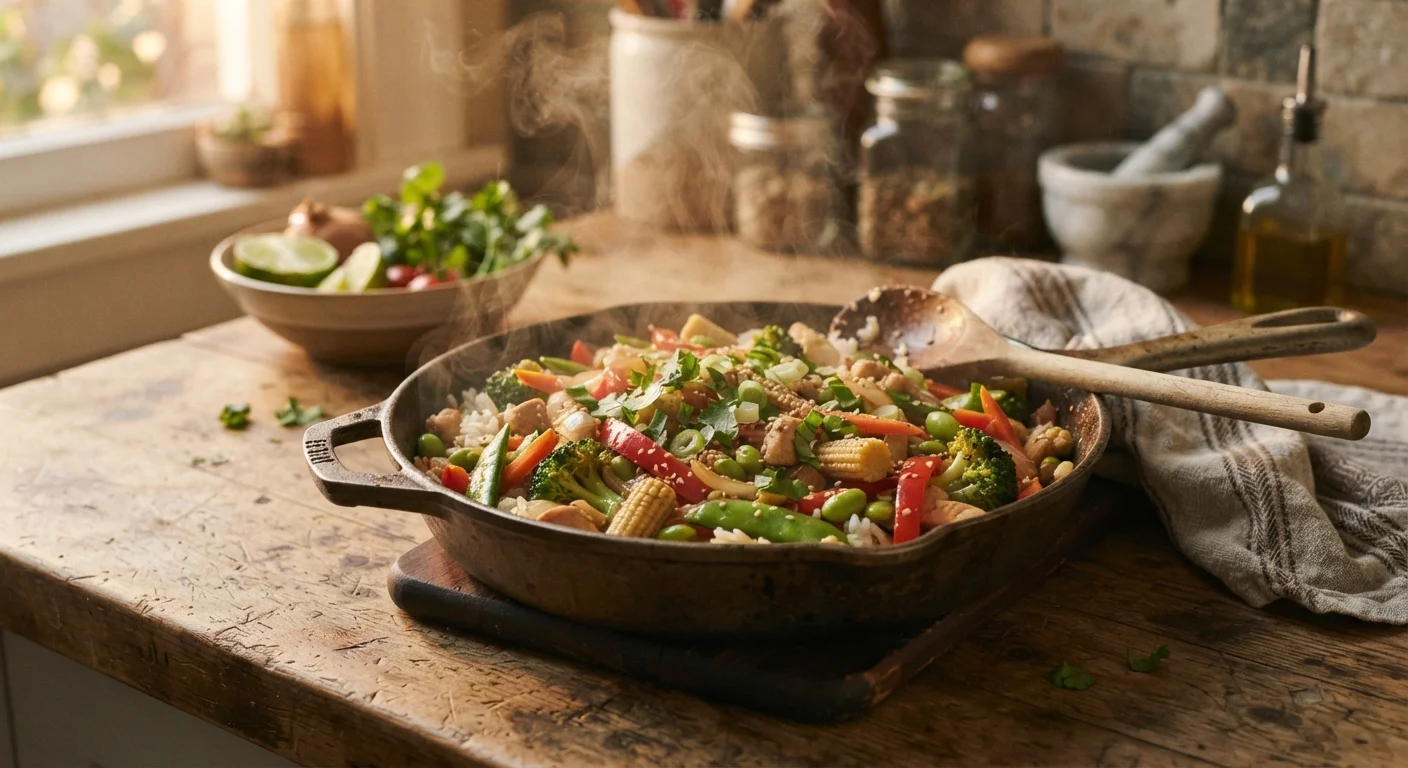
Decide whether you're going to serve this as the same dish reheated, or change its identity entirely. Options include: grain bowls, tacos or wraps, fried rice, pasta, soup, or a frittata. The format change is the single most effective tool you have. When the presentation is different, the comparison to the original meal disappears.
Reheat with added moisture and medium-high heat
Avoid microwaving directly in a container unless you have no other option. Instead, add a splash of water, broth, or oil to a skillet and reheat the food over medium-high heat, stirring often. For proteins, a brief sear in a hot pan restores some of the texture lost during refrigeration. For grains, a little liquid and a covered pan for two to three minutes rehydrates them effectively.
Add fresh acid and seasoning
Once heated, taste the food before adding anything else. Then add a small squeeze of lemon or lime juice, or a dash of vinegar. This step alone can transform a flat, dull dish into something that tastes actively seasoned. Re-season with salt as needed — chilling food dulls salt perception, so what was perfectly seasoned yesterday may need a small addition today.
Finish with something fresh
Add a fresh component just before serving: chopped herbs, raw scallions, a handful of fresh greens wilted briefly in the pan, or a dollop of yogurt or sour cream. This finishing layer is what distinguishes a truly satisfying second meal from something that feels like it was scraped together. It costs almost nothing but changes the eating experience substantially.
Plan One "Transformable" Meal Per Week
Cooking a large batch of a versatile base — roast chicken thighs, a pot of grains, or a sheet pan of roasted vegetables — gives you raw material for two or three different meals across the week. This approach turns leftover management from reactive to intentional. See our Kitchen Skills & Tips hub for more foundational cooking strategies.
Common Leftover Transformations That Actually Work
Some combinations reliably produce a better second meal than the original. Cooked grains — rice, farro, barley — become fried rice or grain bowls when tossed in a hot pan with an egg and whatever vegetables are on hand. Roasted or braised proteins break down beautifully into tacos, quesadillas, or a quick pasta sauce. Roasted vegetables blend into a smooth soup with a cup of broth and a few minutes on the stove.
The key principle in each case is format change. When you alter how a food is presented — its texture, its vessel, its accompanying components — your brain stops comparing it to the original meal. It registers as something new.
If you plan your week with this in mind, it becomes a system rather than an improvisation. Our guide on building a weekly dinner rotation explains how to structure meals so one cook session sets up two or three nights of eating.
Don't overlook the fats left behind in your pans or containers either — rendered drippings and cooking oils can add serious depth to your second meal. See our article on getting the most out of leftover cooking fats for guidance on storing and reusing them safely.
Food Safety Applies to Every Leftover
Cooked food should be refrigerated within two hours of cooking and consumed within three to four days. When in doubt about whether something is still safe to eat, trust your nose and discard it — food safety guidelines exist for good reason. Reheating food to an internal temperature of 165°F (74°C) is the general standard recommended by food safety authorities.