

Key Takeaways
- Auditing your pantry and fridge before planning prevents duplicate purchases and forgotten ingredients.
- Building meals around perishables first keeps the freshest items from going to waste.
- A flexible weekly framework beats a rigid day-by-day schedule for most households.
- Writing a single, organized shopping list reduces impulse buys and repeat trips.
- Designating one 'use-it-up' meal per week clears odds and ends before the next shop.
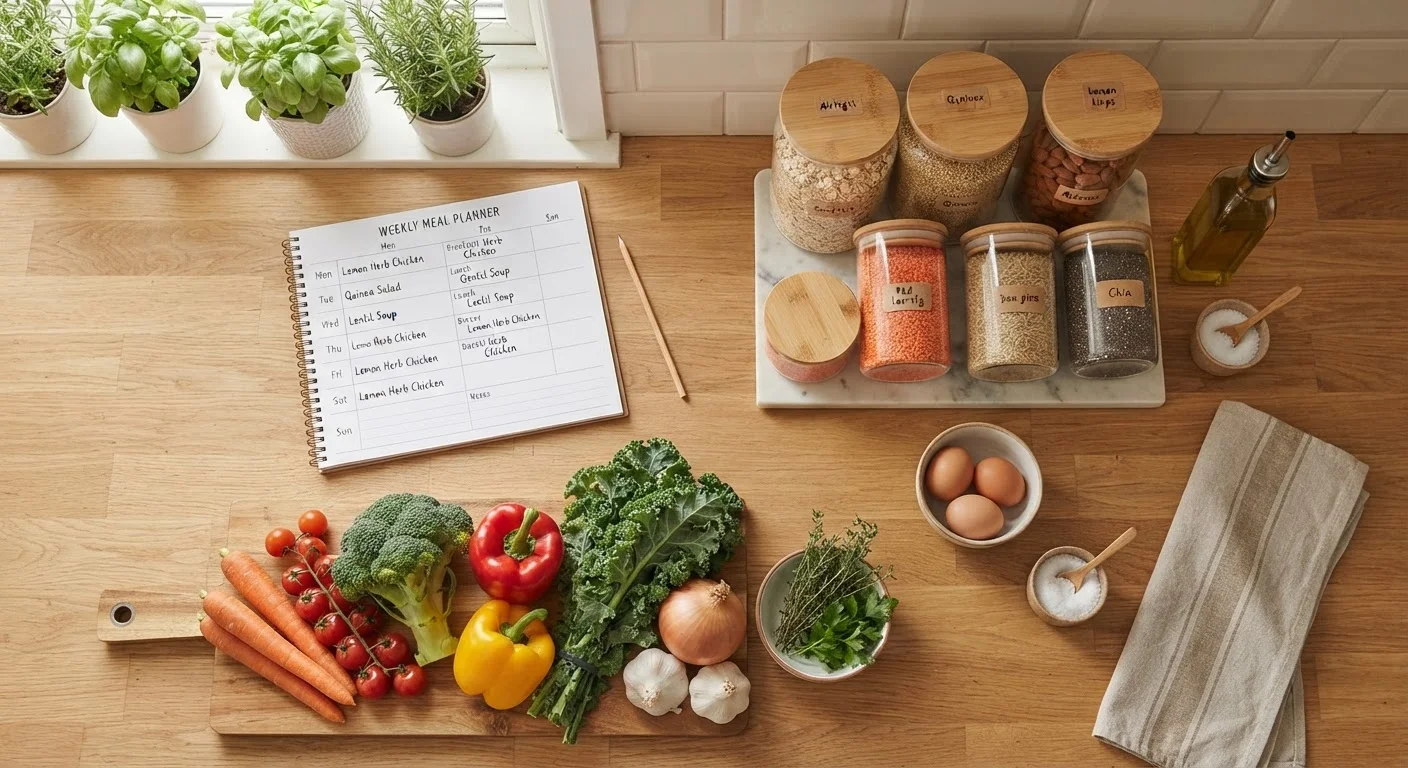
What you will need
Why Most Meal Planning Fails (and How a Framework Fixes It)
Most people who try meal planning abandon it within a few weeks — not because the idea is flawed, but because the approach is. Planning too rigidly (Monday: pasta, Tuesday: chicken, no exceptions) collapses the moment a busy evening or an unexpected craving hits. Planning too loosely means you still stare blankly into the fridge each evening wondering what to cook.
A weekly framework sits between those two extremes. Rather than locking in exact meals for exact nights, it gives you a pool of planned meals, a stocked kitchen that supports them, and enough flexibility to swap Tuesday's dinner to Thursday without anything going to waste. The result is fewer shopping trips, less spoilage, and noticeably less stress at dinnertime.
This framework takes roughly 20–40 minutes once a week and becomes faster as it becomes habit. For a complementary look at building a repeatable dinner rotation alongside this system, see our weekly dinner rotation guide.
What you will need
The Weekly Planning Process: Step by Step
Work through these steps in order each week — ideally the day before or the morning of your main grocery shop. Once you build the habit, the full process rarely takes more than half an hour.
Audit what you already have
Before planning a single meal, spend five minutes checking your fridge, freezer, and pantry. Pull out anything that's close to expiring and set it where you can see it. Note what proteins, grains, canned goods, and vegetables you already have on hand. This inventory becomes the starting point — not an afterthought — of your plan.
Choose meals that lead with perishables
Using your audit as a guide, select 4–5 meals for the week that actively use up what you already have — especially the most perishable items. Fresh herbs, leafy greens, ripe tomatoes, and open dairy should anchor your first two or three meals. Hardier produce, frozen proteins, and pantry staples can support meals later in the week.
Aim for variety in cooking method (one-pan, stovetop, baked) rather than strict day-by-day scheduling. This makes it easier to swap nights around without wasting anything.
Build your shopping list from the gaps
Once your meals are chosen, list only the ingredients you don't already have. Organize your list by store section (produce, dairy, pantry, meat) to move efficiently and avoid backtracking. Avoid buying more of something you already have unless a recipe needs a specific quantity you're short on.
Keep your list on your phone so it's always with you — this prevents the classic mid-week emergency run for a single forgotten item. Consistent planning like this is one of the most reliable ways to keep food spending predictable week to week, as explored in our meal planning spending habits article.
Assign meals loosely, not rigidly
Rather than assigning a specific meal to every specific night, simply identify your 4–5 meals for the week and note which two or three are most time-sensitive (because they use the freshest ingredients). Make a mental note to cook those earlier in the week. The rest can slide based on your energy, schedule, and mood.
This flexibility is what makes the system sustainable. A rigid plan breaks at the first sign of a busy Wednesday; a flexible one bends and holds.
Reserve one meal as a 'use-it-up' slot
Designate one meal each week — Friday or Saturday often works well — as an intentional odds-and-ends meal. This is where partial bags of pasta, a lone potato, leftover cooked grains, or that half-can of coconut milk get used up before the next shopping cycle begins. Frittatas, fried rice, grain bowls, soups, and pasta dishes are all well-suited to this role.
If you're looking for more specific strategies for making these repurposed meals genuinely satisfying, see turning leftovers into a second meal.
Start With Four Meals, Not Seven
New planners often try to plan all seven nights and burn out quickly. Starting with just four or five dinners per week leaves room for a takeout night, a simple breakfast-for-dinner, or eating out with friends — without derailing the plan. Build up to fuller planning once the habit feels natural.
Reducing Waste as a Built-In Feature, Not an Afterthought
Food waste isn't primarily a willpower problem — it's a planning problem. When perishables don't have an assigned purpose, they get pushed to the back of the fridge and forgotten. The steps above address that structurally by anchoring your plan to what you already have rather than what sounds good in the abstract.
Two habits reinforce this further. First, store items that need to be used soon at eye level in the fridge — visibility alone makes a measurable difference. Second, treat your weekly use-it-up meal (Step 5) as genuinely non-negotiable. That single meal consistently prevents the small accumulation of partial bags, half-used cans, and lone vegetables that quietly inflate waste over time. For more on this, see small shifts that reduce food waste without changing your whole routine.
A well-organized pantry also makes this easier — when you can see what you have at a glance, you shop more accurately. Our pantry organization principles article covers practical systems that hold up over time. And if you want to take this framework further, batch cooking in a single weekly session can dramatically cut your daily cooking time once the planning habit is in place.