

Key Takeaways
- Choose 2–3 versatile base ingredients that can be used across multiple meals to reduce waste and repetition.
- Sequencing your cooking tasks by temperature and cook time dramatically cuts total time spent in the kitchen.
- Proper portioning and labeling before refrigerating is the difference between a useful week of food and forgotten leftovers.
- Batch cooking works best when meals share components but differ in seasoning, format, or pairing.
- Planning around your actual weekly schedule prevents food waste and saves money over time.
What you will need
Why Batch Cooking From Scratch Beats Other Approaches
Batch cooking from scratch gives you genuine control over what goes into your food — no mystery additives, no excess sodium, and no paying a premium for convenience. The key difference between a successful batch cook and a week of eating the same bland thing is intentional variety built from shared components.
Think of it this way: a pot of cooked grains, a tray of roasted vegetables, and a seasoned protein aren't three meals — they're the raw material for a dozen different ones. Grain bowls, wraps, soups, stir-fries, and salads can all pull from the same foundation when you plan before you shop. If you're looking to stretch ingredient budgets further, the Budget-Friendly Cooking hub offers complementary strategies for affordable swaps that pair naturally with this approach.
This guide walks you through exactly how to plan, prep, and execute a single weekly session — so that Tuesday night dinner takes five minutes instead of fifty.
What you will need
How to Plan Your Week Before You Cook
The session itself is only as good as the plan behind it. Before you buy anything, map out five to six meals you actually want to eat — not aspirational meals you'll skip in favor of takeout.
Identify overlapping ingredients across those meals. For example, roasted sweet potatoes work in a morning hash, a grain bowl, and a black bean taco filling. A whole roasted chicken can yield sliced meat for one night, shredded meat for another, and a simple stock from the carcass. For a deeper look at that particular strategy, stretching one bird across several meals is worth reading before your next shop.
Once your meals are mapped, build a single shopping list organized by category — produce, proteins, pantry staples, dairy. This prevents duplicate purchases and forgotten items.
Build Meals Around Flavor Pivots
The secret to avoiding batch-cook monotony is seasoning the same base ingredient differently for each use. Plain cooked chickpeas, for example, can become lemony with cumin for a grain bowl, smoky-spiced for tacos, or curry-sauced for a quick dinner — same ingredient, three distinct meals. Plan your flavor pivots before you cook, not after.
Running Your Batch Cook Session Efficiently
The most common mistake home cooks make is working linearly — finishing one dish before starting the next. Efficient batch cooking is about parallel processing: your oven, stovetop, and countertop should all be active at once.
Preheat the oven and start your longest-cooking items first
Set your oven to 400°F (205°C). Load sheet pans with root vegetables, whole grains in covered Dutch ovens, or a chicken — anything that takes 45 minutes or longer. These go in first and mostly cook unattended.
Start stovetop items while the oven runs
Use burners simultaneously for dried beans or lentils (which need 30–45 minutes of simmering), stock, or any sauce base. Keep heat at a steady simmer and set a timer so nothing reduces too far.
Prep cold and raw components during wait time
While the oven and stove handle the heat work, use the time to wash and chop raw vegetables for salads, make dressings, cook a batch of hard-boiled eggs, or portion ingredients for wraps and snack boxes.
Quick-cook remaining proteins last
Reserve stovetop proteins — eggs, fish fillets, or thinly sliced meats — for the final 15 minutes when other components are cooling. These cook fast and are best when freshest, so there's no benefit to cooking them early.
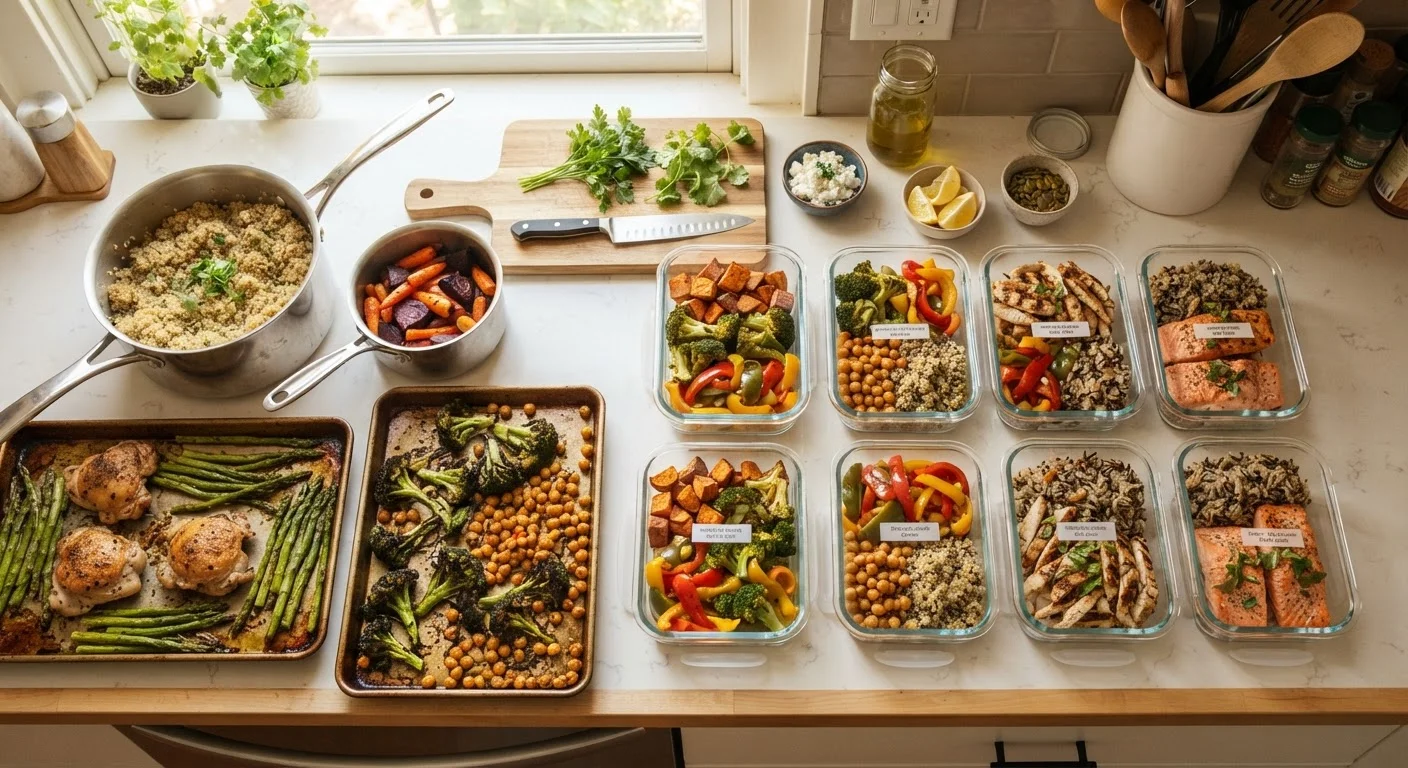
Cool, portion, and label everything before storing
Allow cooked food to cool on the counter for no more than two hours before refrigerating — this is a food safety threshold, not a suggestion. Divide into meal-sized portions, label with contents and date, and refrigerate or freeze according to your week's plan.
After cooling, portion everything into labeled containers before refrigerating. Label each container with the contents and date. This simple habit is what separates a productive batch cook from a chaotic fridge of mystery containers.
If your weeknights are tight even after a batch cook, Quick Weeknight Meals offers fast assembly ideas that complement prepped components well. And if you're trying to build consistency week over week, building a repeatable weekly dinner rotation can help reduce the planning fatigue that trips up even motivated cooks.
Not every week calls for full from-scratch cooking — balancing scratch cooking with semi-homemade shortcuts is a legitimate strategy for busier periods, and knowing when to lean on each approach makes you more consistent over time.
Refrigerator Storage Times Matter
Cooked proteins are generally safe for 3–4 days when properly refrigerated; cooked grains and vegetables typically last 4–5 days. If your plan extends beyond that window, freeze portions on cook day rather than banking on fridge storage alone. When in doubt, label clearly and trust your nose and eyes — off smells or visible changes mean discard, not risk.