

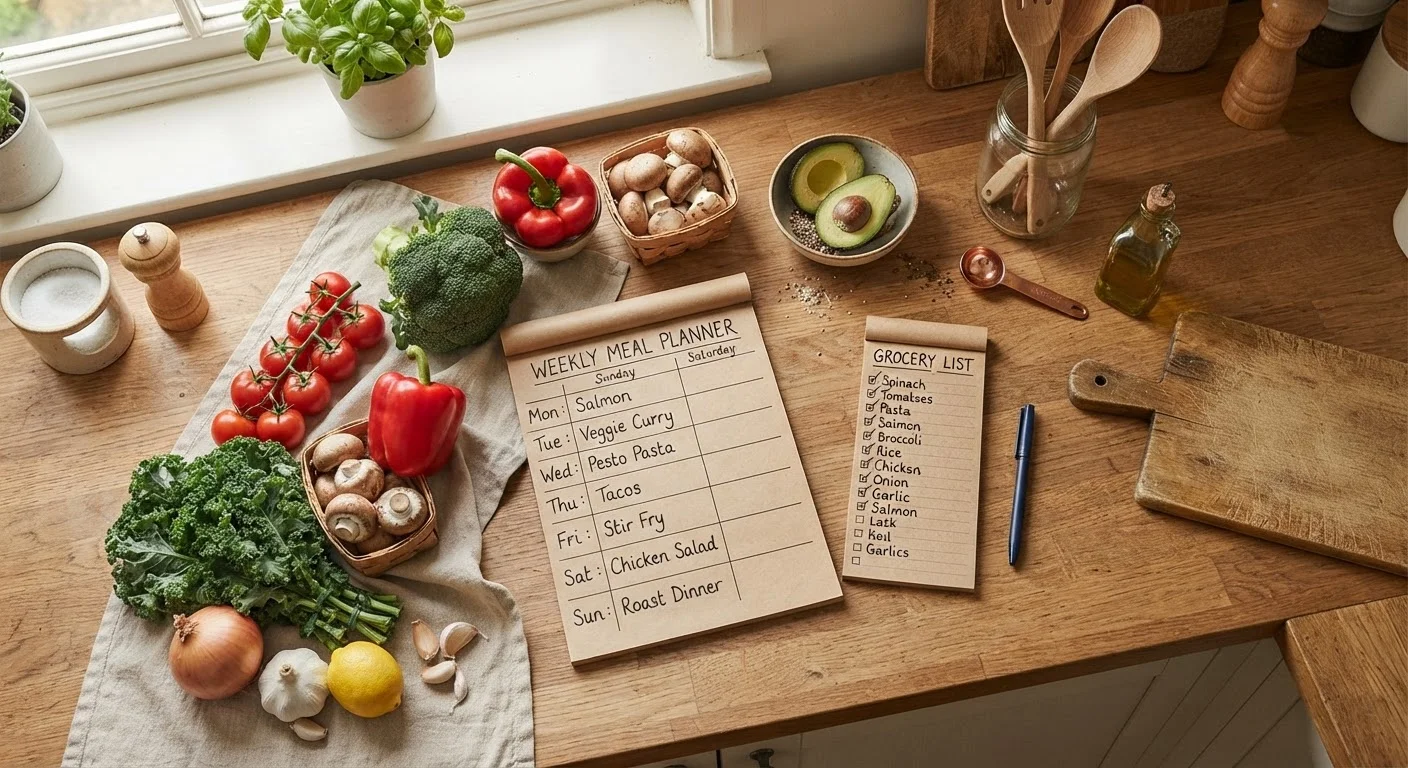
Key Takeaways
- Planning meals before shopping consistently reduces impulse purchases and unplanned spending.
- Building flexible, ingredient-overlapping menus helps minimize food waste and stretch your budget further.
- Tracking your weekly food spend — even roughly — reveals patterns that make future planning more accurate.
- A rotating dinner framework reduces decision fatigue and prevents costly last-minute takeout orders.
- Auditing your pantry before each planning session prevents buying duplicates of items you already own.
Why Meal Planning Has a Direct Impact on Food Costs
Most household grocery overspending isn't caused by buying luxury items — it's the product of unplanned trips, forgotten pantry staples, and food that spoils before it's used. Meal planning addresses all three at once. When you know what you're cooking before you shop, you buy with purpose rather than guesswork.
Research from consumer behavior studies consistently shows that shoppers without a list spend meaningfully more per trip than those who arrive prepared. That gap compounds quickly across 52 weeks. For homeowners trying to bring predictability to a household budget, a reliable planning habit can be one of the most impactful changes — no major lifestyle overhaul required.
For a broader look at managing household spending beyond the grocery aisle, see this end-to-end household budget guide.
~$1,500
Average annual US household food waste cost
The USDA estimates the average American household discards roughly $1,500 worth of food per year, much of which is preventable through better planning.
30–40%
Share of US food supply wasted at the consumer level
According to USDA Economic Research Service data, between 30 and 40 percent of the US food supply is lost or wasted, with a significant portion occurring in the home.
Core Habits That Keep Spending Predictable Week to Week
Effective meal planning isn't about rigid perfection — it's about building repeatable habits that reduce friction and prevent costly decisions made under pressure. The practices below are straightforward to adopt and compound in value the longer you maintain them.
Audit your pantry, fridge, and freezer before planning each week's meals.
Buying duplicates of items you already have is a common source of silent overspending. A quick inventory before you plan ensures you're building meals around what's already on hand, which also reduces waste from forgotten ingredients.
Set a firm, realistic weekly food budget before you plan — not after.
Planning meals without a budget ceiling often results in aspirational menus that quietly exceed what you intended to spend. A number set in advance shapes your choices from the start and makes trade-offs easier to navigate.
Build at least two meals each week around overlapping ingredients.
Shared ingredients across multiple meals reduce the chance of any single item going to waste and lower the total number of distinct items on your shopping list. This approach also keeps per-serving costs lower by getting more value from each purchase.
Maintain a simple, repeatable dinner rotation of seven to ten reliable meals.
Decision fatigue is one of the most underrated drivers of food-related overspending — when you can't decide what to cook, takeout becomes the default. A rotation of familiar meals you genuinely enjoy eliminates that friction. See how to build a dinner rotation you'll stick to for practical guidance.
Write one consolidated shopping list and commit to it during the trip.
Unplanned additions at the store — especially in high-margin categories like snacks, prepared foods, and beverages — are a primary driver of budget overruns. A complete list written at home, reviewed before checkout, significantly reduces this.
Track your actual weekly food spending, even informally.
Without tracking, most households significantly underestimate what they spend on food. Even a rough weekly tally — kept in a notes app or a simple notebook — reveals patterns and makes future planning more grounded in reality.
Quick-Start Actions You Can Take This Week
You don't need a complete system in place to start saving. A few targeted actions this week can immediately reduce waste and unplanned spending, giving you momentum to build on.
If you're new to tracking what you spend on food, this household budget tracking starter guide walks through simple methods for getting a clear picture without complex spreadsheets.
Reducing Waste Is the Same as Reducing Spending
Every ingredient that spoils unused is money already spent that returns no value. A well-structured meal plan accounts for this by designing meals that share ingredients — so a bunch of cilantro or a can of coconut milk bought for Tuesday's dinner reappears in Thursday's dish rather than wilting in the crisper drawer.
This ingredient-overlap approach also simplifies shopping lists and reduces the chance of buying items you don't need. For more on this strategy, this meal planning framework focused on waste reduction offers a structured weekly method worth bookmarking.
Small storage improvements — labeling leftovers, keeping older produce at the front of the fridge — also make a measurable difference. Reducing food waste without overhauling your routine covers those adjustments in plain, actionable terms.
Use the 'Eat First' Rule for Perishables
At the start of each week, identify the two or three most perishable items in your fridge and build at least one meal around them first. This simple prioritization habit can noticeably reduce how much you throw away. For more practical ideas, eating well on a tight budget covers ingredient-first thinking in depth.