

Key Takeaways
- Your home plumbing has two distinct subsystems: pressurized supply lines and gravity-driven drain-waste-vent pipes.
- Every drain fixture requires a P-trap to block sewer gases from entering living spaces.
- Shutoff valves — both main and individual — are essential tools for controlling water during leaks or repairs.
- Vent pipes are critical to proper drainage; blocked vents cause slow drains and gurgling sounds.
- Knowing where your main shutoff valve is located can prevent significant water damage in an emergency.
- Many plumbing symptoms visible at fixtures originate from problems elsewhere in the system.
Home Plumbing System
A home plumbing system is the network of pipes, valves, fixtures, and drains that delivers fresh water to your faucets and appliances while safely removing wastewater from your home. It operates through two separate subsystems: one that brings water in under pressure, and one that carries waste out using gravity. Understanding how these two sides work gives homeowners the foundation to spot problems early and maintain their home confidently.
The supply side typically operates at 40–80 psi (pounds per square inch), while the drain-waste-vent (DWV) system relies entirely on gravity-driven flow and atmospheric pressure equalization through vent stacks.
The Two Sides of Every Home Plumbing System
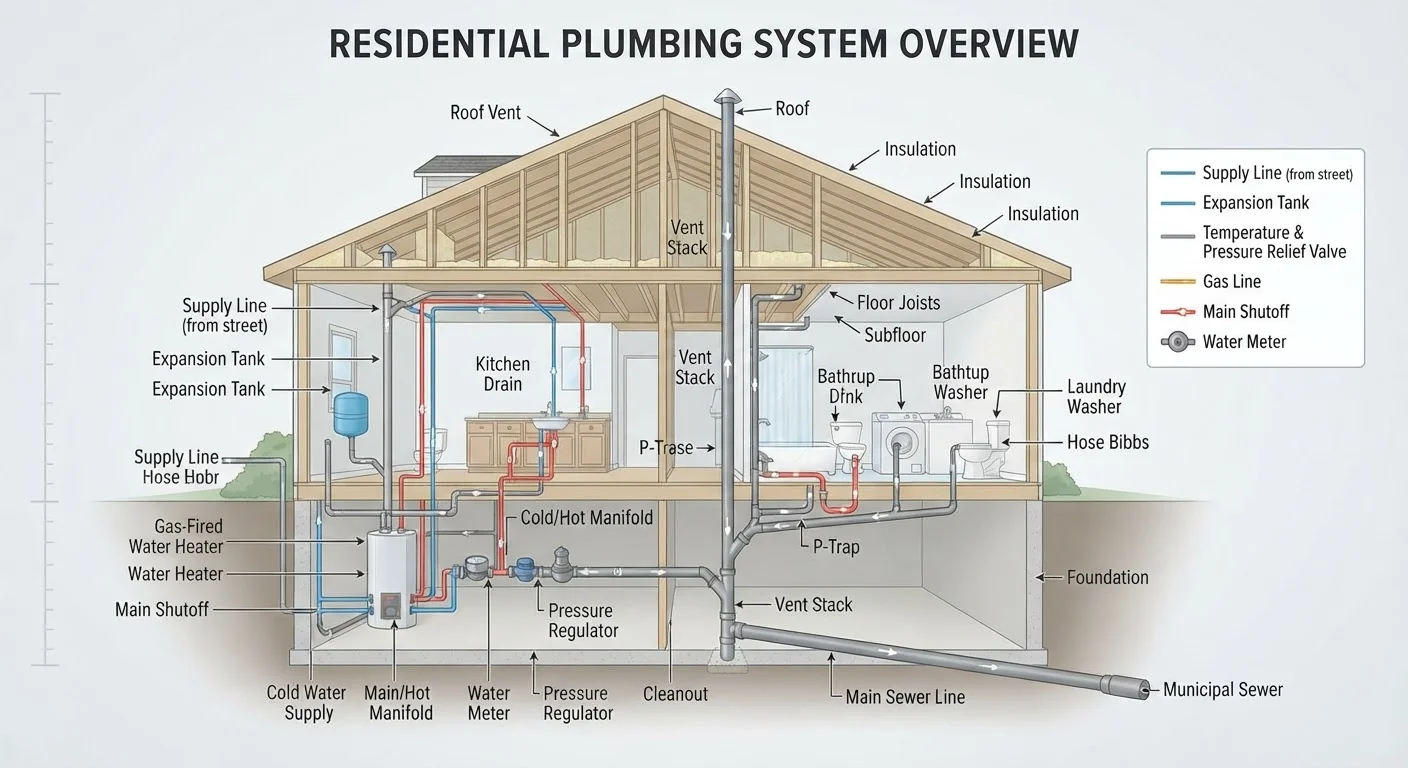
Every residential plumbing system operates as two separate but coordinated networks. The first is the supply system, which delivers pressurized cold and hot water throughout your home. The second is the drain-waste-vent (DWV) system, which removes used water and sewage using gravity.
These two sides never mix. Supply pipes are sealed and pressurized; DWV pipes are open to atmospheric pressure through vent stacks that typically exit through the roof. Together, they make up the complete plumbing loop. For a broader view of how plumbing interacts with your home's other core systems, see Your Home's Three Core Systems.
40–80 psi
Typical residential water supply pressure
Most US municipal systems deliver water pressure within this range; pressure outside this range can stress fixtures and supply lines.
1/4"
Drain pipe slope per foot of run
This standard slope, per common plumbing guidelines, ensures wastewater flows reliably toward the main drain stack without pooling.
~14%
Of US household water use comes from leaks
According to the U.S. Environmental Protection Agency (EPA), the average home's leaks account for roughly 10,000 gallons of water wasted per year.
Supply Lines: Bringing Water Where You Need It
Fresh water enters your home through a single main supply line connected to a municipal water main or a private well. A main shutoff valve sits on this line — usually near the point of entry — and can stop all water flow to the house instantly. Knowing exactly where this valve is located is one of the most practical things any homeowner can do.
From the main line, supply pipes branch throughout the house. Cold water runs directly to fixtures; a separate branch feeds your water heater, which then supplies hot water lines running in parallel. Individual fixture shutoff valves (also called stop valves) sit beneath sinks and behind toilets, allowing you to isolate a single fixture without shutting off the whole house.
Common supply pipe materials in US homes include copper, CPVC (a rigid plastic), and PEX (a flexible plastic). Older homes may still have galvanized steel pipes, which are prone to corrosion and reduced flow over time.
Drain-Waste-Vent Pipes: Moving Wastewater Out Safely
Once water is used, it enters the DWV side. Drain pipes slope gently downward — typically about 1/4 inch per foot — so gravity pulls wastewater toward the main drain stack, a large vertical pipe that runs from your basement to your roof. From there, waste exits to the municipal sewer or your septic system.
Vent pipes branch off drain lines and run upward to exit through the roof. They serve two purposes: they allow sewer gases to escape safely outside, and they admit air into the drain pipes so water can flow freely without creating a vacuum. A blocked vent is a surprisingly common cause of sluggish or gurgling drains.
If you notice slow drains throughout the house or hear gurgling after flushing, the warning signs your home's systems send often point to a DWV issue worth investigating.
Run Rarely Used Fixtures Periodically
Any sink, shower, or floor drain that goes weeks without use can lose the water seal in its P-trap through evaporation. Running each fixture for 30 seconds every few weeks — especially in guest bathrooms or utility rooms — keeps traps sealed and sewer gases out.
Traps: The Simple Barrier Protecting Your Indoor Air
Every drain fixture — sinks, showers, tubs, and floor drains — has a P-trap: a curved pipe section that retains a small amount of water after each use. That water creates a physical seal, preventing sewer gases (including methane and hydrogen sulfide) from traveling back through the drain into your living space.
P-traps can fail in two ways. First, if a fixture goes unused for an extended period, the water in the trap can evaporate, breaking the seal. Running the water briefly restores it. Second, a negative-pressure event caused by a blocked vent pipe can siphon the trap dry even with regular use. Both situations call for attention.
Toilets differ slightly — they have a built-in trap as part of their porcelain design, so no external P-trap is needed beneath them.
What Homeowners Should Know for Everyday Maintenance
Understanding your plumbing's structure helps you respond faster and smarter when something goes wrong. A few foundational habits go a long way:
- Locate all shutoff valves — main, fixture-level, and appliance shutoffs for the washing machine, dishwasher, and refrigerator ice maker.
- Test shutoff valves periodically — valves that haven't been turned in years can seize. Exercising them once a year keeps them operational.
- Watch for early warning signs — slow drains, water stains on ceilings, unexpected spikes in your water bill, or musty odors can all signal plumbing issues before they become costly.
- Know your pipe materials — this affects how long pipes may last and what repair methods are appropriate.
For a structured approach to plumbing upkeep throughout the year, the whole-house systems maintenance schedule provides a practical month-by-month framework. And before assuming any leak is minor, reviewing what homeowners get wrong when a pipe starts leaking can help you avoid making a small problem worse.