
Textiles vs. Hard Furnishings: Balancing Softness and Structure in a Living Room

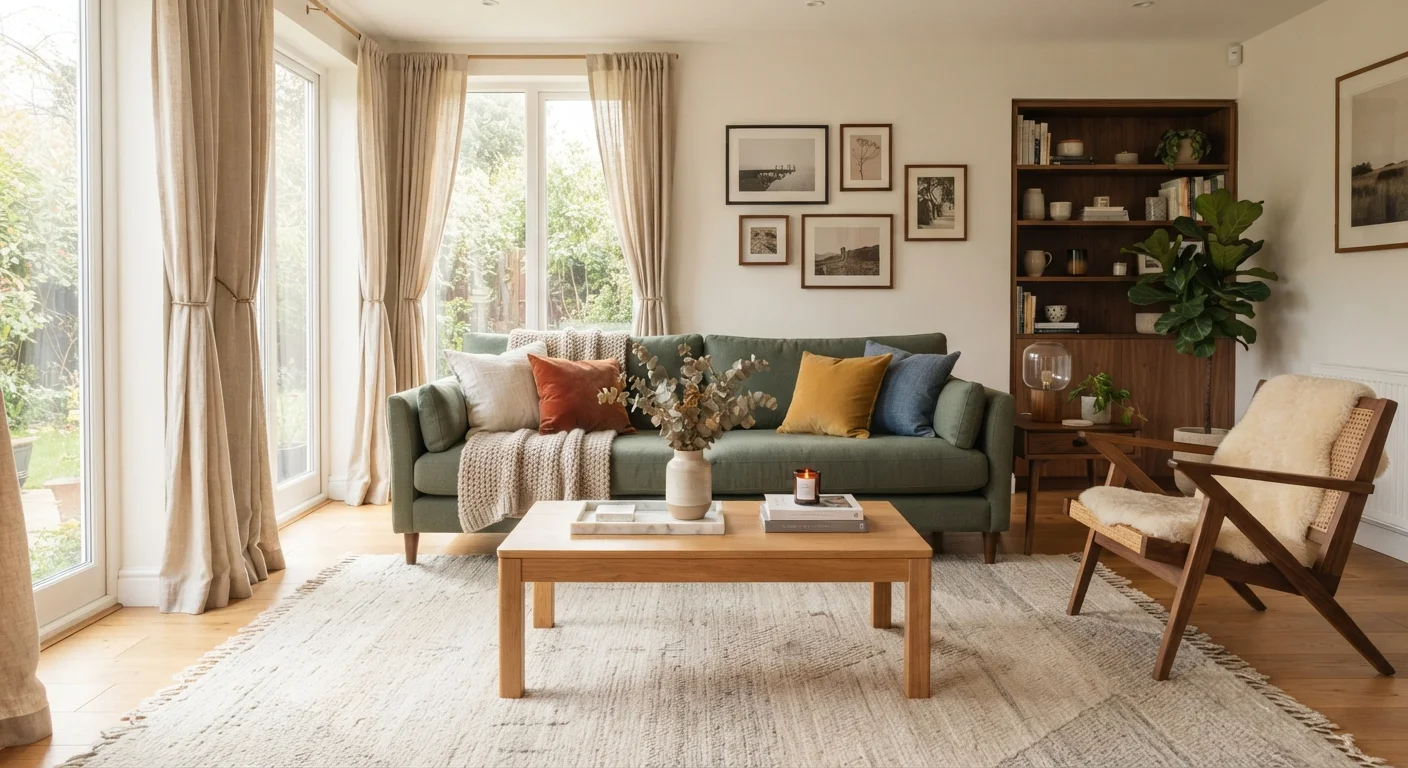
Key Takeaways
- Textiles add warmth, sound absorption, and visual softness; hard furnishings provide structure, durability, and scale.
- A room weighted too heavily in either direction tends to feel either sterile or visually chaotic.
- The right balance depends on room size, household use patterns, and the acoustic qualities you want.
- Layering textiles over a hard-furnishing foundation gives the most flexibility for seasonal or style changes.
- Rugs are often the single most impactful textile for grounding a room and softening hard flooring.
Our Verdict
Neither textiles nor hard furnishings win outright — the most livable rooms use hard pieces to define structure and scale, then layer soft elements to add comfort, warmth, and acoustic control. The proportions you choose should reflect how your household actually uses the space, not a fixed aesthetic rule.
| Best for | Recommended |
|---|---|
| Households with children or pets needing durability and easy cleanup | Hard furnishing-forward approach with strategic textile accents |
| Quiet, noise-sensitive homes or apartments with hard flooring | Textile-heavy layering over a structured hard furnishing base |
| Small living rooms where visual weight matters | Minimal hard pieces with light, low-profile textiles |
| Renters or those who redecorate often | Neutral hard furnishings with interchangeable soft layers |
What Each Category Actually Does in a Room
Hard furnishings — sofas with rigid frames, wood or metal tables, shelving units, and stone or tile surfaces — provide the architectural skeleton of a living room. They establish scale, define zones, and create sight lines that hold steady regardless of season or mood. Their weight and permanence make them commitments, but that stability is also their strength.
Textiles — rugs, throw pillows, curtains, upholstered fabric, blankets, and woven wall hangings — layer on top of that skeleton to modulate how the room feels physically and acoustically. Soft furnishings absorb sound, add tactile warmth, and give the eye places to rest. They're also far easier to swap out when your priorities shift.
The tension between the two isn't a design problem to solve once — it's an ongoing calibration. See our layout principles guide for how spatial arrangement interacts with material choices at a foundational level.
How to Read the Room Before Choosing a Ratio
Before deciding how much soft versus hard material a space needs, assess three things: the room's acoustics, the flooring type, and how the space is actually used day to day.
Acoustics: Rooms with hard flooring, minimal furniture, and bare walls are prone to echo and sound bounce — an issue that disproportionately affects apartments and open-plan homes. Textiles are one of the most practical acoustic treatments available without construction work. A large area rug, upholstered seating, and lined curtains can meaningfully reduce reverberation.
Flooring: Hardwood, tile, or polished concrete already contributes significant visual and tactile hardness. A room with soft carpet underfoot can tolerate more rigid furnishings without feeling cold. Hard flooring generally calls for more textile layering to achieve the same level of perceived warmth.
Usage patterns: A living room used primarily for watching television and daily family activity has different demands than one used mainly for quiet reading or occasional entertaining. High-traffic spaces benefit from durable hard frames with replaceable textile covers; lower-traffic rooms can support more delicate or sculptural pieces. The comfort strategies for small rooms article explores how these trade-offs shift in compact spaces.
| Textiles | Hard Furnishings | |
|---|---|---|
| Primary function | Comfort, warmth, acoustic softening | Structure, scale, visual anchoring |
| Durability | Variable; fabric wears and fades over time | Generally long-lasting with proper care |
| Ease of change | High — swappable seasonally or affordably | Low — heavy, expensive, and infrequent |
| Sound absorption | Significant — reduces echo and reverberation | Minimal — hard surfaces reflect sound |
| Maintenance in high-traffic homes | Requires regular cleaning; some covers washable | Easier to wipe clean, fewer stains absorbed |
| Visual weight | Light to medium depending on pattern and volume | Heavy; defines room scale and proportions |
Common Imbalances and What They Signal
A room that skews too hard — all glass, metal, and exposed wood with minimal soft layering — tends to feel formal, cold, and acoustically harsh. It can look intentional in photographs but often feels unwelcoming to live in. If a living room consistently feels like nobody is supposed to sit in it, the textile-to-hard ratio is a reasonable first place to look.
The opposite extreme — textiles piled heavily without structural grounding — produces visual noise and can make a room feel cluttered even when it's tidy. Pattern-on-pattern conflicts, too many throw pillows obscuring seating, and rugs that don't anchor the furniture layout all contribute to this effect. For guidance on using rugs, lighting, and placement to create visual order, see zoning a room without walls.
Use the Rug as Your Calibration Tool
If a room feels too cold and hard but you're not ready to change any furniture, start with a large area rug before adding any other textiles. A correctly sized rug — one that fits under the main seating group — can shift a room's entire sensory quality without touching the hard furnishing layout. It's the highest-impact, lowest-commitment change available in most living rooms.
Colour also plays a role in how soft or hard a room reads. Pale, matte textiles can soften an otherwise rigid space; high-gloss hard surfaces amplify the sense of structure. The relationship between colour and light is worth understanding before locking in a material palette.
A Practical Starting Framework
A workable starting point for most living rooms: establish the hard furnishing foundation first, then layer textiles until the room reaches the sensory quality you want. This sequencing prevents over-commitment to soft elements that are difficult to remove once a room feels visually busy.
- Anchor with a rug. Place it large enough that the front legs of the main seating sit on it. This single step does more to soften a hard-floored room than any other textile choice.
- Choose upholstered seating as the primary soft element. A fabric sofa contributes more textile surface area than any number of decorative pillows while remaining functional.
- Use window treatments for dual purpose. Curtains that extend to the ceiling and floor add softness, frame the room visually, and give you acoustic and light control simultaneously.
- Add throw pillows and blankets last, not first. They should fill gaps in comfort and colour rather than define the room's character on their own.
The goal is a room where neither the hard structure nor the soft layering dominates — each supports the other so the space reads as complete rather than decorated.