

| Most versatile material | Tempered glass (Suitable for fridge, oven, microwave, and dishwasher use in most cases) |
| Lightest option | Food-grade silicone (collapsible) |
| Best for dry pantry staples | Airtight canister or vacuum-seal container (Limits moisture and air exposure) |
| Best for space efficiency | Stackable flat-lid sets with uniform footprints |
| Freezer-safe consideration | Leave headspace in glass; use freezer-rated plastic for liquid-heavy items (Glass can crack if overfilled and frozen) |
| Odor and stain resistance | Glass outperforms plastic for strong-smelling or pigmented foods |
Why Container Type Actually Matters
Not every container is suited for every job. Using the wrong type can shorten food shelf life, waste cabinet space, or make your refrigerator a frustrating puzzle. This quick-reference guide breaks down the most common kitchen container types — what they're made of, what they're best at, and where they fall short — so you can make practical decisions without starting from scratch.
For a broader look at how storage choices fit into overall kitchen layout, see our guide on making the most of limited kitchen space.
| Most versatile material | Tempered glass (Suitable for fridge, oven, microwave, and dishwasher use in most cases) |
| Lightest option | Food-grade silicone (collapsible) |
| Best for dry pantry staples | Airtight canister or vacuum-seal container (Limits moisture and air exposure) |
| Best for space efficiency | Stackable flat-lid sets with uniform footprints |
| Freezer-safe consideration | Leave headspace in glass; use freezer-rated plastic for liquid-heavy items (Glass can crack if overfilled and frozen) |
| Odor and stain resistance | Glass outperforms plastic for strong-smelling or pigmented foods |
Container Types at a Glance
Glass Containers
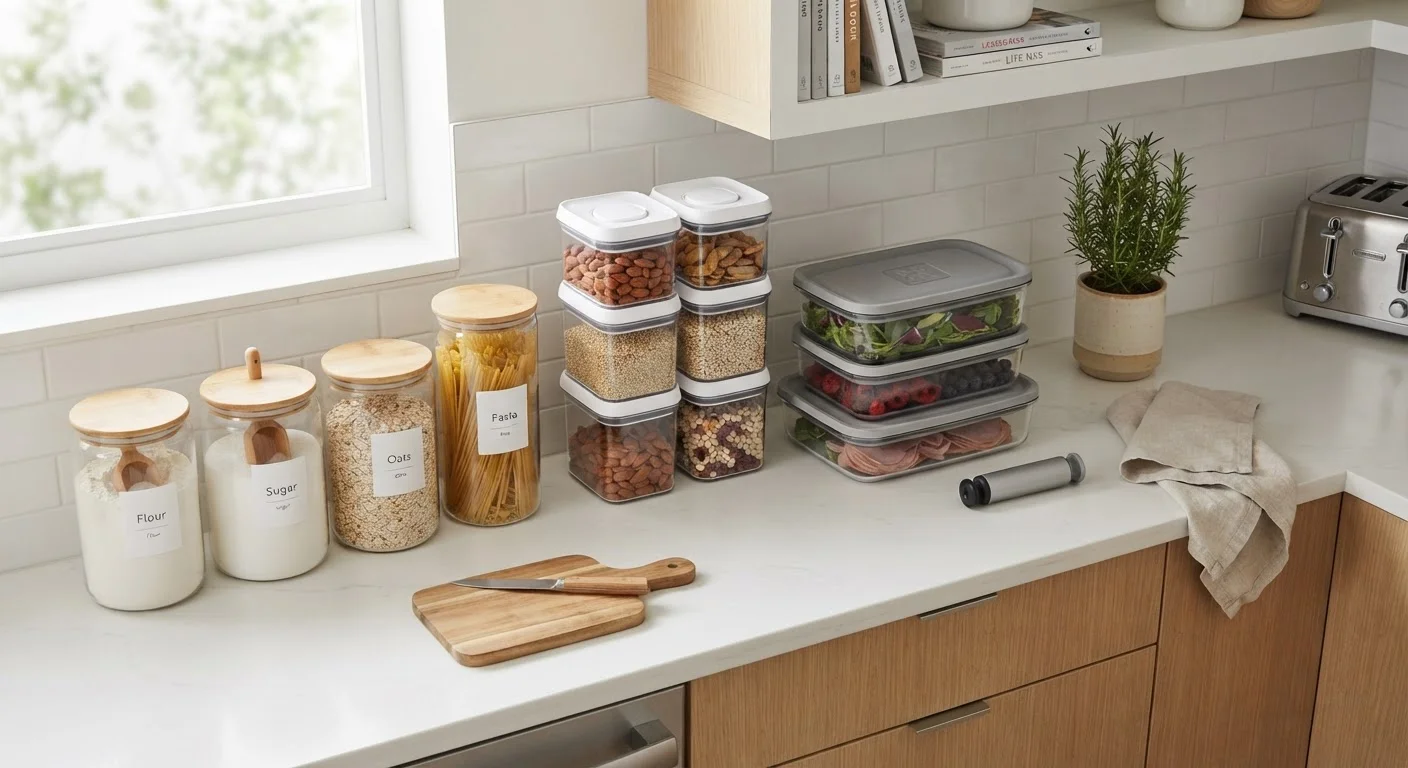
Glass is non-porous, meaning it won't absorb odors or stains and won't leach chemicals into food. It's oven-safe in most tempered forms, microwave-safe, and dishwasher-friendly. The tradeoff: weight and breakability. Glass works best for leftovers, meal prep, and anything you want to reheat directly in the container.
Plastic Containers
Plastic containers are lightweight, inexpensive, and widely available in sizes ranging from single-serving to family-size. Quality varies significantly — look for containers labeled BPA-free and check the resin code on the bottom. For a detailed breakdown of what those numbers mean, see our reference on plastic resin codes and everyday use. Plastic is prone to staining and absorbing odors over time, so it's better suited for dry goods and short-term food storage than for tomato-based sauces or strong-smelling foods.
Vacuum-Seal Containers
These use a pump or press mechanism to remove air from the container before sealing. Less oxygen generally means slower oxidation and reduced mold growth, which can extend the usable life of dry pantry staples like coffee, nuts, flour, and cereal. They tend to be bulkier and cost more upfront, but can reduce food waste if you regularly deal with ingredients that go stale quickly.
Stackable Containers
Stackability is a design feature, not a material type — you'll find it in both glass and plastic lines. Flat lids and uniform footprints let containers nest vertically, which is valuable when cabinet height is your main constraint. Consistent sizing within a set is key; mixed brands rarely stack reliably.
Canisters and Airtight Jars
Wide-mouth canisters and mason-style jars with clamping lids create an airtight seal using a rubber gasket. They're a practical choice for pantry staples — sugar, pasta, lentils, spices — where moisture and pests are the main threats. Clear options make it easy to gauge quantity at a glance, which pairs well with a simple labelling system to keep things identifiable.
Collapsible Containers
Made from food-grade silicone, collapsible containers compress flat when empty, reclaiming drawer or cabinet space. They're useful for lunches or leftovers but typically aren't oven-safe and may not seal as reliably as rigid options. Best for scenarios where portability and compact storage matter more than long-term sealing performance.
BPA-free
Indicates a plastic product does not contain bisphenol A (BPA), a chemical historically used in some polycarbonate plastics. Many manufacturers now use BPA-free formulations as a precaution, though other compounds may still be present.
Resin code
The number inside the recycling symbol on plastic containers, ranging from 1 to 7. Each code identifies the plastic polymer used, which affects recyclability, heat resistance, and general suitability for food contact.
Tempered glass
Glass that has been heat-treated to increase strength and make it more resistant to thermal shock. Tempered glass containers are generally safe for oven, microwave, and dishwasher use, but always verify the manufacturer's guidelines.
Vacuum-seal
A sealing method that removes air from inside the container before closing, reducing oxidation. Commonly used to extend the shelf life of dry pantry goods like coffee, nuts, and flour.
Gasket seal
A rubber or silicone ring built into a lid that compresses when closed to create an airtight barrier. Gasket seals are common in canning jars, canisters, and snap-lock containers.
Food-grade silicone
A synthetic rubber material approved for contact with food. It is flexible, heat-resistant, and non-reactive, making it suitable for collapsible containers, lids, and baking molds.
Matching Containers to Common Kitchen Needs
Here's a practical breakdown by use case:
- Refrigerator leftovers: Tempered glass or BPA-free plastic with a tight-fitting lid. Glass is preferable if you plan to reheat in the container.
- Dry pantry goods: Airtight canisters or vacuum-seal containers. Uniform sizing makes shelving more efficient.
- Freezer storage: Containers explicitly labeled freezer-safe. Glass can crack if filled too full and frozen, so leave headspace or use rigid freezer-rated plastic.
- On-the-go meals: Lightweight, leak-resistant plastic or collapsible silicone. Confirm the lid locks securely before trusting it in a bag.
- Bulk ingredients: Large canisters with wide openings that allow a measuring cup to fit inside — a small detail that makes daily cooking noticeably smoother.
Knowing where food belongs before you store it also matters. Our guide on where food actually belongs covers which ingredients thrive in which environment, which directly affects which container type makes sense.
For organizing the rest of your kitchen around these containers, the article on drawer dividers, bins, and trays offers a complementary look at non-container storage solutions.