
Storage Container Plastics: Understanding Resin Codes and What They Mean for Everyday Use

Key Takeaways
- Resin codes 1 through 7 describe the plastic type, not how safe or recyclable it is.
- Codes #1 (PET) and #2 (HDPE) are the most widely accepted by curbside recycling programs.
- Not all plastics are food-safe for repeated use or high-heat applications — check manufacturer guidance.
- The absence of BPA does not automatically mean a container is free of all plasticizer concerns.
- Discoloration, warping, or persistent odor in a plastic container are signs it should be replaced.
- Decoding labels is a transferable skill — similar logic applies to <a href="/beauty-and-wellness/hair-body-care/ingredients-worth-knowing-in-hair-and-body-care-labels">reading product ingredient labels</a> in other categories.
Plastic Resin Identification Code
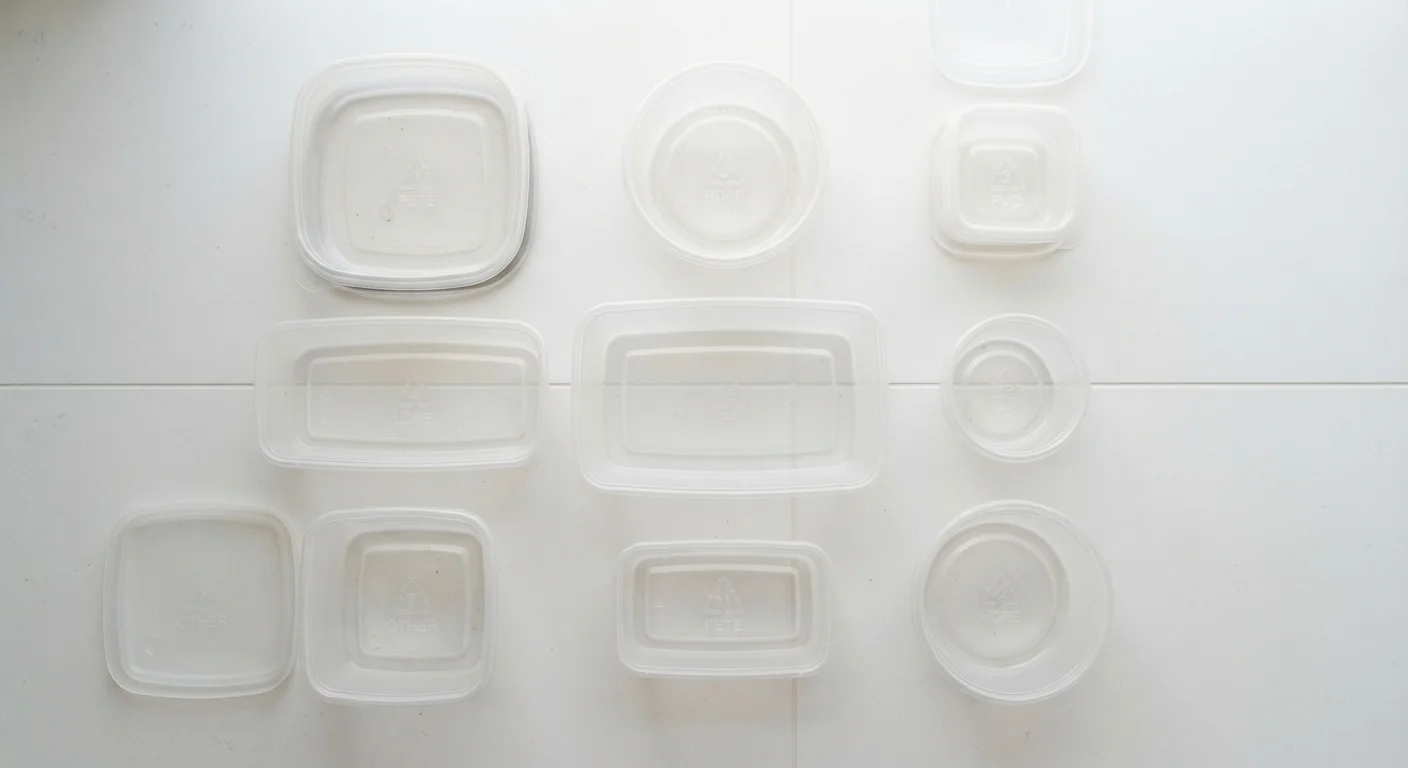
A resin identification code (RIC) is the number — 1 through 7 — printed inside the chasing-arrows symbol on plastic products. It identifies the specific type of plastic polymer used to make the container. The code was introduced by the plastics industry to help sorting facilities separate materials, not to guide consumers on safety or recyclability.
The system was standardized by ASTM International (formerly the Society of the Plastics Industry) in 1988. In 2013, ASTM updated the surrounding symbol from chasing arrows to a solid triangle to reduce recycling confusion, though the arrow version is still widely seen.
Why Those Little Numbers Exist
Turn over almost any plastic container and you'll spot a small number — typically 1 through 7 — stamped inside a triangle of arrows. Many people assume it means the item is recyclable. In practice, the symbol is a resin identification code, a labeling system created in 1988 to help waste-sorting facilities quickly identify plastic types. Recyclers need to separate materials because mixing incompatible polymers during processing degrades the quality of the recycled output.
The codes were never designed as a consumer safety guide, and they don't guarantee curbside recyclability. Understanding what each number actually represents helps you make more informed decisions about how you store food, which containers you reuse, and what you put in your recycling bin.
If decoding product labels in general interests you, the same type of analytical thinking applies when reading ingredient lists on hair and body care products.
A Plain-Language Guide to Codes 1 Through 7
Here's what each resin code identifies and where you're most likely to encounter it:
- #1 — PET (Polyethylene terephthalate): Used in single-use beverage bottles and some food jars. Widely recycled. Not designed for repeated use or high-heat applications.
- #2 — HDPE (High-density polyethylene): Found in milk jugs, cereal box liners, and many rigid food storage containers. Durable, widely recycled, and resistant to moisture.
- #3 — PVC (Polyvinyl chloride): Used in some food wraps and plumbing pipes. Rarely accepted for curbside recycling. Not commonly recommended for direct food contact.
- #4 — LDPE (Low-density polyethylene): Common in squeezable bottles, bread bags, and produce bags. Softer and more flexible than HDPE. Some programs accept it; many do not.
- #5 — PP (Polypropylene): Found in yogurt containers, deli tubs, bottle caps, and many reusable food containers. Generally heat-tolerant; often labeled microwave-safe when tested for that purpose.
- #6 — PS (Polystyrene): Includes foam cups and rigid clear plastic cutlery. Rarely recycled curbside. Foam polystyrene (often called by the trade name Styrofoam) is especially difficult to process.
- #7 — Other: A catch-all for plastics that don't fit the above, including polycarbonate, nylon, and newer plant-based bioplastics. Performance and recyclability vary widely by specific material.
#1 & #2
Most widely recycled plastic codes in US programs
According to the Recycling Partnership and EPA data, PET (#1) and HDPE (#2) have the broadest acceptance across US municipal recycling programs.
~9%
Share of all plastic ever produced that has been recycled
A widely cited estimate from a 2017 study published in Science Advances found that only around 9% of plastic waste generated globally had been recycled as of the study date.
1988
Year the resin identification code system was introduced
The Society of the Plastics Industry introduced the RIC system in 1988 to facilitate plastics sorting at recycling facilities.
What the Codes Don't Tell You
Resin codes describe chemistry, not quality or safety. A few important distinctions:
Recyclability isn't guaranteed by the code. What your local program accepts depends on its equipment and end-market contracts. Always verify with your municipality. Codes #1 and #2 are most broadly accepted across US programs; others are accepted far less consistently.
Food safety depends on use conditions. A container that's food-grade under normal conditions may behave differently when exposed to high heat, acidic foods, or extended UV light. Manufacturers specify use conditions for a reason — microwaving a container not rated for it is where problems tend to arise.
BPA-free is a partial label. Concerns about bisphenol A (BPA) in polycarbonate (#7) containers led many manufacturers to eliminate it. However, some replacements — such as bisphenol S (BPS) — are also under ongoing scientific review. The absence of one compound doesn't confirm the absence of all concerns.
“Consumers often assume the recycling symbol means a product is recyclable, but the symbol was really designed for material identification by sorting facilities — not as a consumer-facing guarantee.”
— Darby Hoover, Senior Resource Specialist, Natural Resources Defense Council
For a broader look at how container types compare in kitchen use, see our container types reference guide.
Practical Guidance for Everyday Storage Decisions
You don't need a chemistry background to use this information sensibly. A few grounded habits go a long way:
- Match the container to the task. Single-use containers (#1, some #6) aren't designed for dishwasher cycles or repeated heating. Reusable food storage containers (#2, #5) are built for more demanding use.
- Look for use-specific labeling. Symbols for microwave-safe, dishwasher-safe, and freezer-safe appear separately from the resin code. A code alone won't tell you whether repeated high heat is appropriate.
- Replace worn containers. Scratched, cloudy, or warped plastic can indicate material degradation. If a container retains odors even after washing, that's a signal it may be absorbing food compounds — a sign it's time to retire it.
- Check local recycling rules before sorting. A well-meaning recycling mistake — putting unaccepted plastics in the bin — can contaminate entire batches of recyclable material at processing facilities.
This article is for general informational purposes. For concerns about specific chemicals in food contact materials, consult current guidance from regulatory agencies such as the FDA or EPA, or speak with a relevant specialist.