

Key Takeaways
- Mise en place means having every ingredient prepped and within reach before heat goes on.
- The sequence in which you prep ingredients directly affects how smoothly a recipe comes together.
- Starting with long-cook items and ending with delicate garnishes saves real time and prevents mistakes.
- Even five minutes of organized prep reduces mid-cook scrambling and wasted food.
- Grouping tasks — such as all chopping before all measuring — is more efficient than prep by ingredient.
What Mise en Place Actually Means for Home Cooks
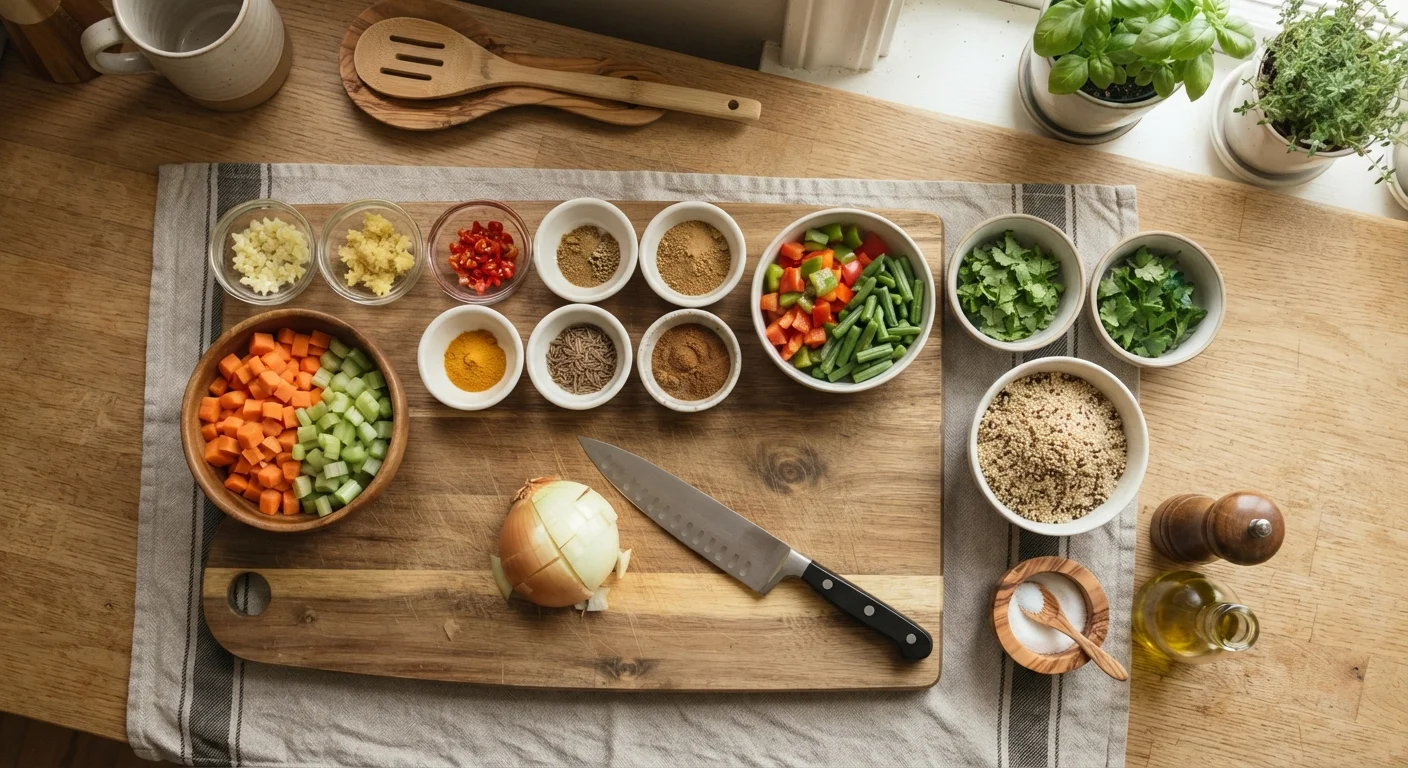
Mise en place is a French culinary term meaning "everything in its place." In professional kitchens, it describes the practice of prepping and organizing all ingredients, tools, and equipment before cooking begins. For home cooks, the concept is equally practical — and arguably more necessary, since home kitchens rarely have a prep team standing by.
The real value isn't just having things ready. It's deciding when to prepare each component. Prep order matters because cooking has a timing logic: some ingredients need to hit the pan at precise moments, and if you're still chopping onions when the garlic is about to burn, the whole dish suffers. Understanding that sequence before you turn on the stove is what transforms a stressful dinner rush into something close to enjoyable.
For a deeper look at the foundational habit itself, see how mise en place changes how you cook.
The Right Prep Sequence: Where Most Cooks Go Wrong
Most home cooks prep ingredients as they appear in the recipe — garlic first because it's listed first, then onion, then everything else. This ingredient-by-ingredient approach creates constant context-switching and usually means something gets rushed. A smarter approach groups tasks by type and prioritizes by cook time.
Start with the ingredient that needs the most time — not the one listed first.
Long-cook items like grains, roasted vegetables, or braised proteins set the pace of the entire meal. Beginning with them means everything else fits around a fixed timeline rather than competing with it.
Group all cutting tasks together before moving to measuring or mixing.
Switching between chopping, measuring, and rinsing repeatedly creates mental overhead and forces you to clean the cutting board multiple times. Batching knife work first keeps the board in use and clears your counter sooner.
Pre-measure spices and aromatics into a single small bowl when they go in together.
During active cooking, fumbling with multiple spice jars while monitoring heat is a common source of overcooking and missed additions. Combining them in advance means one confident pour at the right moment.
Prep delicate or quick-cook ingredients last, just before they're needed.
Fresh herbs wilt, sliced avocado browns, and citrus juice loses brightness quickly. Prepping these items too early wastes effort and degrades flavor in the final dish.
Read the full recipe once before touching any ingredient.
A single read-through reveals timing dependencies — steps that must happen simultaneously, ingredients that need advance prep, or equipment that must preheat. Without it, surprises mid-cook are almost guaranteed.
If knife skills slow down your prep sequence, foundational knife techniques can make a measurable difference in how quickly you move through a cutting board.
Quick Wins: Start Using Prep Order Today
You don't need to overhaul your entire cooking routine to benefit from better prep sequencing. A few targeted adjustments during the first five minutes before you cook will have a compounding effect on every meal that follows.
~30%
Estimated time saved with organized prep
Culinary educators commonly observe that structured mise en place can reduce active cooking time by roughly a quarter to a third compared to unorganized prep.
5 min
Average pre-cook prep planning time needed
Professional kitchen trainers suggest that as few as five focused minutes of prep planning before cooking begins measurably reduces errors and re-do steps.
Building Mise en Place Into Your Weekly Rhythm
The prep-order principle scales beyond individual meals. When you understand which tasks take longest and which ingredients hold well after cutting, you can front-load prep work during less stressful moments — Sunday afternoon, early evening before hunger peaks, or while other tasks are running hands-free.
Proteins often need the most lead time: marinating, thawing properly in the refrigerator, or reaching room temperature before searing. Dry goods like grains or dried beans need soaking or longer cook windows. Identifying these anchor points first lets you build the rest of the meal prep around them.
For a structured approach to pre-cook preparation, the pre-cook checklist walks through each step before a single burner is lit. And if you're weighing whether batch cooking fits your schedule, batch cooking vs. cooking fresh each night offers a practical comparison worth reading.
Your physical workspace also shapes how smoothly prep flows. Organizing your kitchen into activity-based areas — one zone for chopping, one for assembly — reduces the unnecessary movement that adds minutes to every meal. The kitchen zones method is a practical starting point for that kind of setup.
“The art of cooking is mostly in the preparation. Once you have everything ready, the actual cooking takes care of itself.”
— Jacques Pépin, French-American chef and culinary educator