

Key Takeaways
- Mise en place means prepping and organizing all ingredients before you start cooking.
- The habit reduces mid-recipe scrambles, burnt garlic, and forgotten steps.
- It works for any skill level and scales from a simple weeknight dish to a complex meal.
- Consistent prep practice builds faster, calmer, and more reliable cooking over time.
- Small bowls, a clear counter, and a read-through of the recipe are all you need to start.
Mise en Place
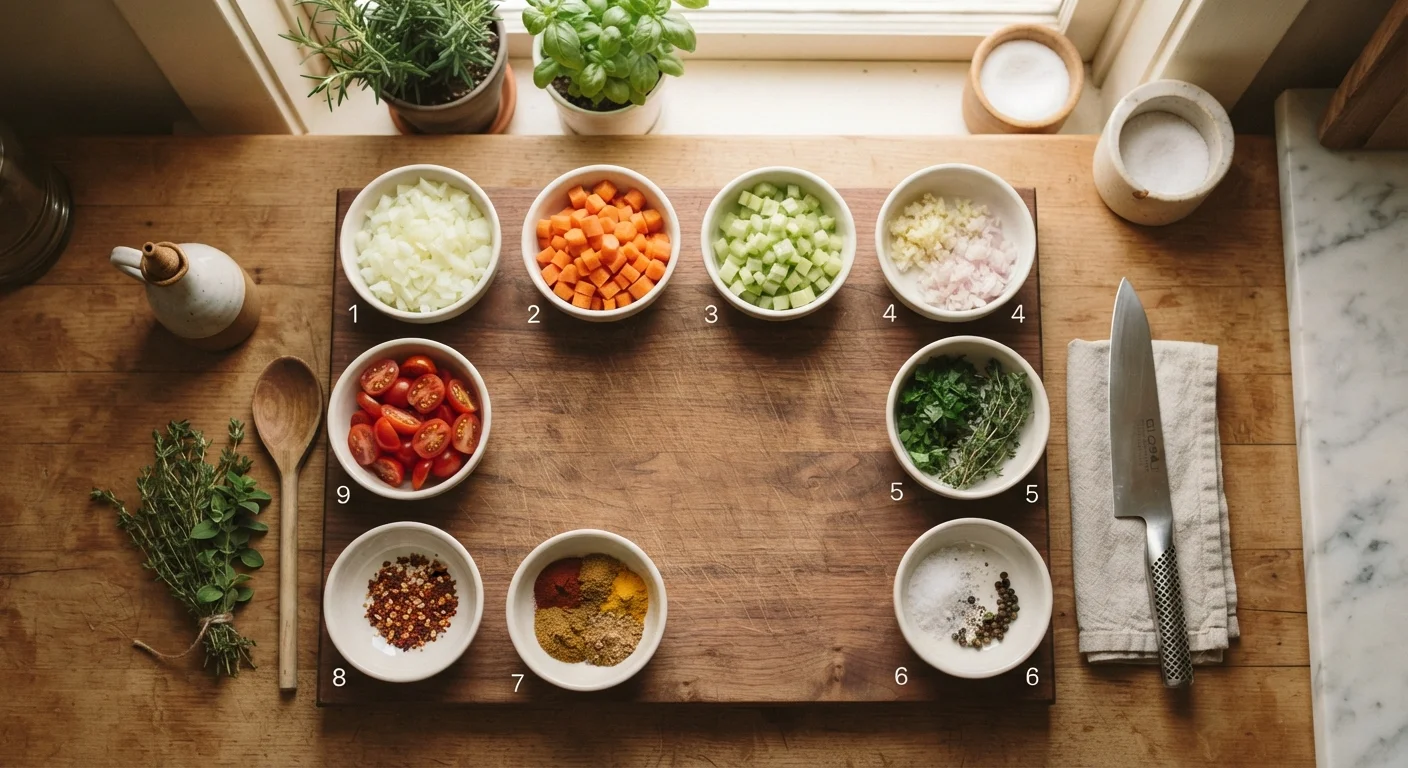
Mise en place (pronounced "meez ahn plahs") is a French culinary phrase meaning "everything in its place." It refers to the practice of measuring, chopping, and organizing all your ingredients and tools before you begin cooking. Rather than scrambling mid-recipe, you work from a set of ready components that keeps your focus on the cooking itself.
In professional kitchens, mise en place extends beyond prep to include station setup, portioned sauces, and pre-heated equipment — but the home version centers on ingredient readiness before the stove is turned on.
What Mise en Place Actually Means in a Home Kitchen
Mise en place is the practice of getting everything ready before you cook — not partway through, not while the onions are already in the pan. Every ingredient is measured, every vegetable chopped, every spice pulled from the cabinet and placed within reach. Only then does the heat go on.
In a restaurant, this is non-negotiable. A line cook who hasn't prepped their station before service doesn't last long. At home, most of us cook the opposite way: we read a line of the recipe, chop something, stir something, read the next line, realize we forgot to mince the garlic, and end up burning the onions in the meantime.
Mise en place fixes that pattern. It shifts the mental load to before cooking starts, when you have time and attention to spare. See our guide to reading a recipe like a cook to understand how prep and recipe comprehension work together.
Mise en Place Scales With the Recipe
For a simple scrambled egg, mise en place might just mean cracking eggs into a bowl and setting the butter on the counter before the pan heats. For a complex braise, it involves hours of prep. The principle is the same regardless of scale: everything ready before the heat goes on.
Why the Habit Changes How Cooking Feels
Cooking without mise en place is reactive. You're constantly catching up to the recipe, making decisions under time pressure, and dividing attention between the stove and the cutting board. The result isn't just slower — it's more stressful and more error-prone.
With mise en place in place, cooking becomes sequential and calm. You move through steps instead of juggling them. This is especially important for dishes with short timing windows — a stir-fry, a pan sauce, or anything sautéed over high heat where twenty seconds can make the difference between golden and burnt.
“Mise en place teaches you to cook with your brain before your hands. Once that becomes a habit, everything else in the kitchen gets easier.”
— Jacques Pépin, Chef, culinary educator, and author of foundational French cooking technique books
The prep habit also has a compounding effect on skill. When you're not scrambling, you notice more: how the onions smell as they soften, how a sauce changes consistency, when something needs more salt. That attention is how cooks improve. Explore the home cooking tips hub for more foundational techniques that build on this mindset.
How to Apply It Practically
You don't need to overhaul your kitchen to practice mise en place. Start with three steps before any recipe:
- Read the full recipe first. Not just the ingredient list — the method too. This tells you what order things happen in and which steps require the most prep time. The full guide to reading recipes strategically covers this in depth.
- Prep in order of time. Items that take longest — reducing a broth, soaking dried ingredients, marinating protein — come first. Then move to chopping and measuring. See our article on prep order for a breakdown of how to sequence this.
- Stage ingredients in small bowls or groups. They don't need to be fancy. Ramekins, small cups, or even little piles on a plate work fine. What matters is that each ingredient is ready, in the amount needed, before you start cooking.
Sharp knife skills make this process faster. If prep feels slow or frustrating, improving your basic knife technique is often the fastest way to fix it.
Building It Into Your Routine
Like any habit, mise en place gets easier the more consistently you do it. At first it may feel like extra work — but most home cooks report that within a few weeks, starting to cook without prepping first feels noticeably wrong.
A practical starting point: pick one recipe per week where you commit to full mise en place before touching the stove. Track how the cook feels compared to your usual approach. Most people notice a real difference in their first session.
You can also use a pre-cook checklist to make the habit more structured until it becomes automatic. And if your kitchen organization makes prep harder than it should be, the kitchen organization hub has strategies to create a workspace that supports efficient cooking.
Mise en place isn't about perfection or professional technique. It's about giving yourself the conditions to cook well — and that's something any home cook can do, starting tonight.
~70%
Of cooking errors happen before heat is applied
Culinary educators commonly note that most recipe failures — wrong quantities, missed steps, forgotten ingredients — originate in the prep phase rather than during active cooking.
3–5 min
Typical upfront mise en place time for a weeknight meal
Most straightforward weeknight recipes require only a few minutes of organized pre-prep, which typically offsets and often reduces total time spent in the kitchen.