

Key Takeaways
- Always read a recipe from start to finish before touching any ingredient or equipment.
- Pay close attention to how ingredients are listed — preparation instructions hidden in the list often get overlooked.
- Identify active cook time versus passive time like marinating or resting before you begin.
- Flag unfamiliar techniques or equipment before starting so nothing catches you mid-cook.
- Understanding the recipe's structure helps you adapt confidently when things don't go exactly to plan.
What you will need
Why Most Kitchen Mistakes Start Before Cooking Does
The most common cooking frustrations — burnt garlic, curdled sauces, underprepared proteins — rarely happen because someone lacks skill. They happen because the cook was reacting to steps as they appeared rather than anticipating what was coming. A recipe is a compressed set of instructions written by someone who already knew the whole plan. Your job as the reader is to reconstruct that plan in your head before you act on it.
Think of reading a recipe like reading a map before a road trip. You don't wait until a turn appears to figure out which direction you're heading. You understand the route, note where it gets complicated, and spot anything you'll need to prepare in advance. The same logic applies in the kitchen.
The steps below build a reading habit that works for any recipe — from a weeknight stir-fry to a more ambitious weekend project. Once the habit is in place, it becomes second nature.
What you will need
How to Read a Recipe Like a Cook
Follow these steps every time you pick up a new recipe. They take only a few minutes and will save significantly more time — and stress — during the actual cook.
Read the entire recipe once without doing anything
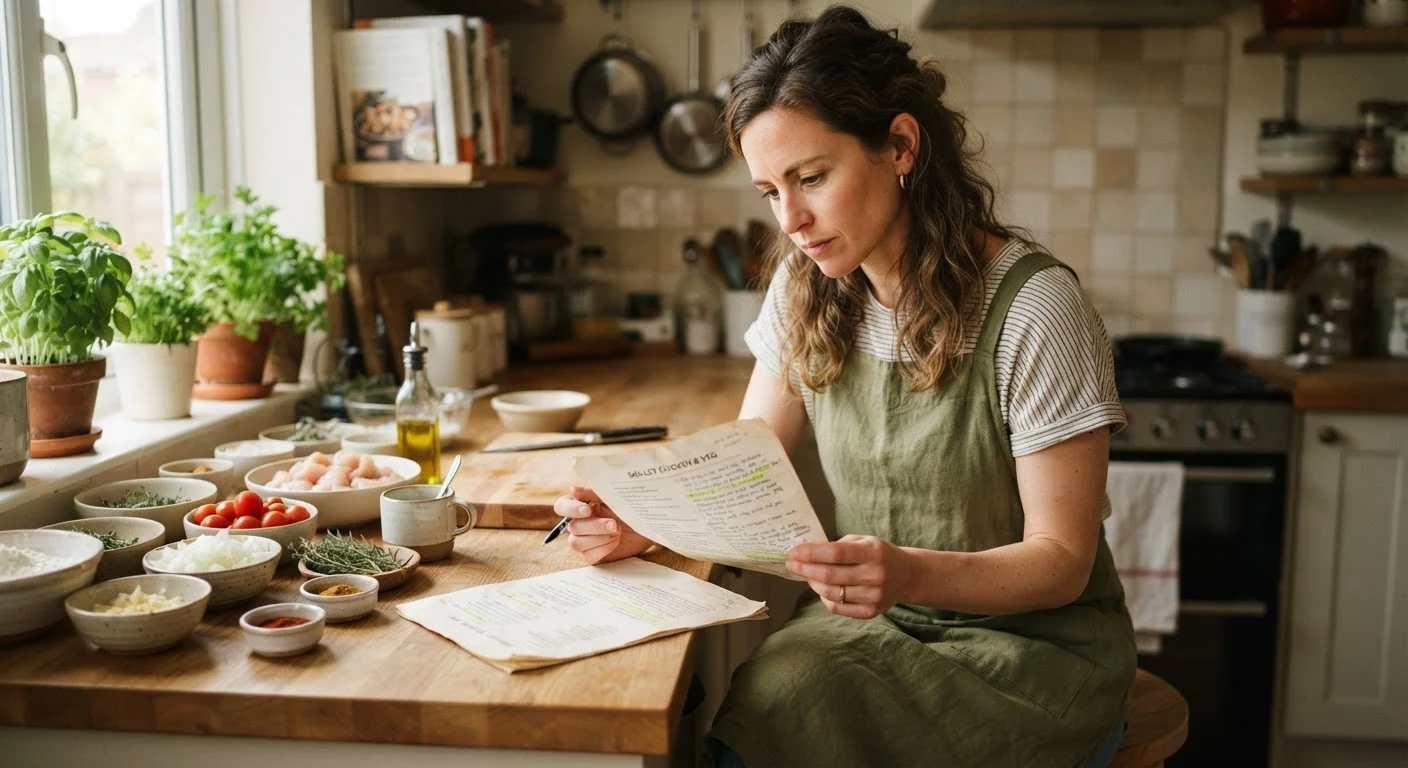
Before chopping, measuring, or preheating anything, sit down and read the recipe all the way through from the title to the final instruction. This single habit separates confident cooks from reactive ones. You're building a mental map of the whole process — not just the next step.
Decode the ingredient list fully
Go back through the ingredient list and read it as a set of instructions, not just a shopping list. Note every prep qualifier: "finely diced," "at room temperature," "divided." The word divided means that ingredient gets used in more than one step — missing it is a frequent source of confusion mid-cook.
Map out the timeline including passive time
Identify every step that requires waiting rather than doing: marinating, proofing, resting, chilling, soaking. These don't appear in the cook time on most recipe headers but are part of your real commitment. Mentally walk through the sequence and estimate your actual start-to-table time so you can plan accordingly.
Flag unfamiliar terms or techniques before you start
Circle or note any technique you don't immediately understand — "beurre blanc," "fold until just combined," "bloom the spices." Look these up before you begin rather than scrambling to understand them in the middle of a timed step. A quick search takes sixty seconds; confusion mid-cook can derail a whole dish. For a deeper dive into vague phrasing, this guide to confusing recipe language is worth reading.
Check equipment and ingredient availability
Confirm you have every piece of equipment the recipe calls for — the right pan size, a thermometer if needed, a specific attachment. Also verify ingredients: a recipe that calls for "one 14-oz can of whole tomatoes" can't be swapped for diced without affecting texture. Catching gaps now means a quick grocery run, not a mid-cook crisis.
Prepare your ingredients before turning on the heat
Once you've fully understood the recipe, set up your mise en place — the French kitchen term for having everything measured, prepped, and in place before you begin cooking. Chop vegetables, measure spices, and portion liquids into small bowls. Active cooking moves fast, and having everything ready means you're guiding the food rather than racing to catch up. For more on this approach, the pre-cook checklist for smoother meals walks through the full setup process.
Ingredient Prep Notes Are Easy to Miss
Recipe ingredient lists often hide critical instructions inside them — "2 cups spinach, roughly chopped" or "3 garlic cloves, minced" tell you what to do before cooking begins. Skipping these during your first read means discovering mid-step that you haven't prepared what you need. Read every word of the ingredient list, not just the quantities.
Don't Confuse Cook Time With Total Time
Many recipes list a short cook time without making clear that marinating, chilling, or resting can add an hour or more. Always check for any passive steps before deciding whether a recipe fits your schedule. Finding out a braise needs three hours after you've already started is a common and avoidable frustration.
Building the Habit Over Time
The goal isn't to memorize recipes before you cook them — it's to remove surprises. Each time you take five minutes to genuinely read a recipe through this lens, you build a clearer internal model of how dishes are structured. You start to recognize patterns: most braises follow the same arc, most vinaigrettes work the same way, most baked goods need the same sequencing logic.
That recognition is what allows experienced cooks to adapt when something goes off-script. They're not guessing — they understand the purpose of each step well enough to problem-solve in real time. Tasting as you cook is a companion skill that works best when you already understand what you're cooking toward. And if you want to challenge assumptions you've carried from recipe to recipe, common kitchen myths worth questioning is a useful next read.
Annotate Before You Cook
Keep a pencil or sticky notes near your recipe. Mark steps that require timing precision, note any substitutions you're planning, and cross off ingredients as you measure. This simple habit dramatically reduces mid-cook errors and makes the process feel more controlled.