

Key Takeaways
- Grouping kitchen items by task — not by category — reduces the number of steps you take during cooking.
- Most kitchens can be divided into five core zones: prep, cooking, cleaning, storage, and a specialty station.
- You don't need a large or remodeled kitchen to apply zones — the method works in apartments and small galley kitchens too.
- Zone-based organization tends to be more durable than generic tidying because it's built around how you actually cook.
- Shared kitchens benefit especially from clearly defined zones since they reduce confusion between multiple users.
Kitchen Zones Method
The Kitchen Zones Method is a way of organizing your kitchen by grouping items and surfaces according to the tasks you perform in them — cooking, prepping, cleaning, and so on. Instead of storing things wherever there's space, you assign each area of your kitchen a specific job. This makes it faster to find what you need and easier to put things back where they belong.
Also called activity-based or task-based kitchen organization, this approach draws from workflow design principles used in professional kitchens and is easily adapted for residential spaces of any size.
What the Zones Method Actually Means
Most kitchen clutter isn't caused by too much stuff — it's caused by stuff in the wrong place. When your vegetable peeler lives three drawers away from your cutting board, or your dish soap is on the opposite side of the sink from the sponge holder, every cooking task requires extra steps you don't think about consciously but feel as friction.
The Kitchen Zones Method fixes this by organizing your kitchen around what you do rather than vague categories like "utensils" or "miscellaneous." Each zone is a defined area tied to a specific activity, and everything in that zone supports exactly that activity — nothing more.
This isn't a trend or a styling approach. It's a functional framework used by professional cooks and adapted for home kitchens of all sizes. You don't need a pantry, an island, or a renovated layout to use it. You need to be honest about how you actually move through your kitchen when you cook.
For a broader foundation before you start, this beginner's kitchen organization guide walks through every drawer and shelf category in a logical sequence.
The Five Core Zones and What Goes in Each
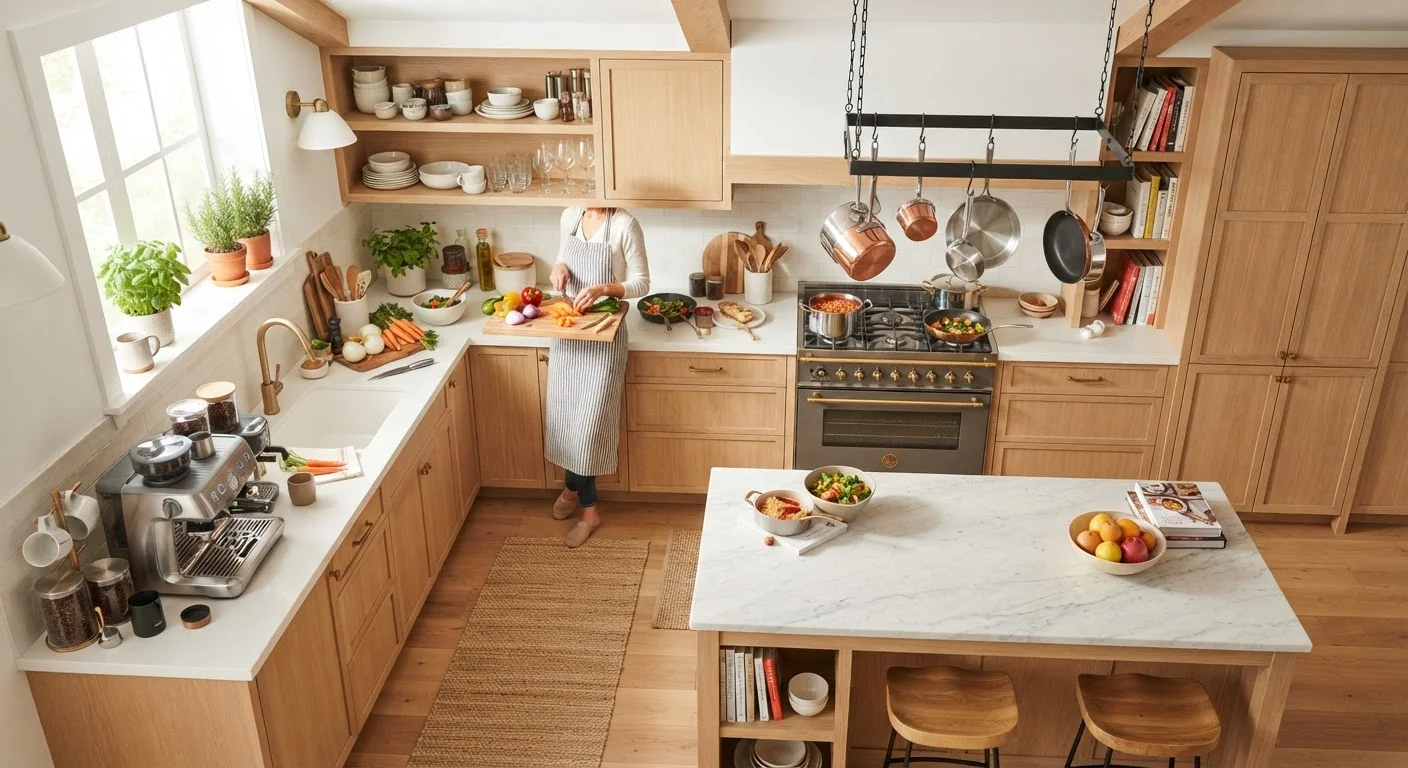
While every kitchen is different, most home cooking workflows break down into five activity areas:
- Prep Zone: This is your primary work surface — wherever you chop, slice, and measure. It should hold cutting boards, knives, a peeler, measuring cups and spoons, and a trash or compost receptacle within reach. Ideally it sits near the refrigerator so you can pull ingredients directly to this area.
- Cooking Zone: Centered on your stove or cooktop. Store pots, pans, wooden spoons, spatulas, tongs, and pot holders here. Oils, salts, and frequently used spices belong in this zone too — not in a pantry across the room.
- Cleaning Zone: Everything related to washing up lives at or near the sink: dish soap, scrub brushes, a drying rack, and dish towels. Keep cleaning sprays under the sink if possible rather than scattered across counters.
- Food Storage Zone: Your pantry shelves, cabinet staples, and the refrigerator form this zone. Organize it by how often you use items — everyday staples at eye level, specialty items higher or lower.
- Specialty Station (optional): If you make coffee every morning, bake regularly, or do a lot of meal prep, a dedicated station for that activity prevents those tools from invading other zones. A coffee station might hold the machine, filters, mugs, and beans in one compact corner.
~30%
Reduction in kitchen trip frequency
Ergonomic kitchen design research generally suggests that task-based tool placement can meaningfully reduce unnecessary movement during food preparation, though exact figures vary by study and kitchen layout.
5
Core zones in most home kitchens
Kitchen workflow frameworks commonly identify five activity-based areas — prep, cooking, cleaning, storage, and specialty — as the foundation of an efficient home kitchen layout.
1 afternoon
Time to implement basic zones
Most homeowners can remap their kitchen into functional zones in a single session, with refinements made over the following weeks of regular cooking.
Mapping your zones doesn't require labeling every drawer immediately. Start by identifying where each zone naturally wants to live based on your kitchen's layout, then move items to match.
Why This Works Better Than Conventional Organizing
Traditional kitchen organization groups items by type: all knives together, all plastic containers together, all baking supplies in one cabinet. The problem is that type-based organization doesn't reflect how you actually cook. You rarely need "all knives" — you need your chef's knife at the cutting board.
Task-based zoning puts tools where they get used, which means you spend less time searching and walking. It also makes cleanup more intuitive: when you're done cooking, every item returns to its zone rather than to wherever there's room.
“A place for everything and everything in its place — the principle sounds simple, but in a kitchen it only holds if that 'place' is defined by use, not by habit or leftover space.”
— Home & Kitchen Editorial Team, Kitchen organization writers and researchers
This durability is a key advantage. Generic tidying fades because there's no logical system holding it in place. Zones create that logic. When a household member puts the wooden spoon back near the stove rather than in a random drawer, it's because the zone makes that feel obvious.
Pairing zones with a prep routine amplifies the effect. The restaurant concept of mise en place — having everything in its place before you start cooking — works naturally alongside kitchen zones. Mise en place for everyday cooks explains how to apply this principle at home without professional training.
Getting Started Without Overhauling Everything
You don't need to empty every cabinet on day one. A phased approach is easier to sustain:
- Identify your natural zones first. Walk through a recent cooking session mentally and note where you actually stood for each task. That's where each zone should anchor.
- Audit one zone at a time. Start with prep or cooking — the two areas that affect meal speed most directly. Move items that belong there and relocate anything that doesn't.
- Remove what you don't use before you reorganize. Zoning works best when you're not organizing around clutter. A kitchen decluttering checklist can help you decide what stays before you settle items into zones.
- Test it for two weeks. Cook normally and notice what still feels inefficient. Adjust zone boundaries based on real use, not theory.
Start With the Stove Zone First
If you're only going to reorganize one area, make it the cooking zone around your stove. Moving oils, salts, and your most-used utensils within arm's reach of the burners has an immediate impact on how smoothly dinner comes together. This one change often motivates the rest of the zone-setup process.
If your kitchen serves multiple cooks, consider strategies for shared kitchen organization alongside your zone setup. Clear zones reduce the friction that comes from different people having different storage habits.
For a step-by-step workflow view, this efficient kitchen workflow checklist ties zone setup to cooking sequence so your organization actually matches how meals come together.