

Key Takeaways
- Organising your kitchen into activity-based zones reduces wasted movement and prep time.
- Reading a recipe fully before starting prevents mid-cook scrambles and mistakes.
- Keeping tools and ingredients within arm's reach of where you use them is the single biggest workflow upgrade.
- A consistent clean-as-you-go habit makes cooking less chaotic and easier to sustain.
- Good workflow is built gradually through repeated small habits, not a single overhaul.
Summary
22 items · 20–45 minutes
Why Kitchen Workflow Actually Matters
Most cooking frustration doesn't come from a lack of skill — it comes from a disorganised setup. Hunting for a lid while something burns, running out of counter space mid-chop, or realising halfway through a recipe that you're missing an ingredient: these are workflow problems, not skill problems.
A kitchen that's set up with intention lets you focus on the actual cooking rather than fighting the environment around you. Whether you're a weeknight-meal veteran or still building confidence at the stove, a structured workflow makes every session calmer and more efficient.
This checklist covers four core areas: how your kitchen is physically arranged, how you prepare before you cook, what you do while cooking, and how you close out the session. Work through it once as an audit of your current setup, then revisit individual sections as habits you want to build.
For a deeper look at how to divide your kitchen into functional areas, see The Kitchen Zones Method — it pairs directly with the layout steps below.
Kitchen Layout and Zone Setup
Pre-Cook Preparation
During Cooking
Post-Cook Reset
Tools and Resources to Support Your Workflow
You don't need an expensive or fully equipped kitchen to cook efficiently. The tools below represent a practical baseline — most are items you likely already own. If you're uncertain about what's worth mastering versus what's worth buying, Kitchen Equipment Worth Learning Properly Before Buying More offers a grounded perspective.
Chef's knife (8-inch)
The single most versatile prep tool — used for chopping, slicing, and mincing across virtually every recipe.
Cutting board (large, non-slip)
Provides a stable, spacious prep surface that keeps workflow contained and surfaces protected.
Nesting prep bowls (set of 4–6)
Used to hold pre-measured and pre-chopped ingredients in the mise en place method before cooking begins.
Kitchen timer (or phone timer)
Keeps every timed cooking step accurate without relying on memory during a busy session.
Bench scraper
Moves chopped ingredients from board to pan efficiently and cleans up countertop debris in one swipe.
Measuring cups and spoons
Enables accurate pre-portioning of ingredients before cooking begins, reducing mid-cook guesswork.
Splatter screen or lid set
Reduces mess on the stove and surrounding surfaces, cutting down post-cook cleaning time.
Common Pitfalls That Disrupt Good Workflow
Even with the right setup, a few ingrained habits can quietly undermine efficiency. The most common is skipping the recipe read-through — starting without knowing what's ahead leads to timing errors and last-minute substitutions. For a practical habit to build around this, Before You Start Cooking walks through exactly what to check before the first burner goes on.
Another frequent issue is an overcrowded counter. Surfaces fill up with appliances, mail, and miscellaneous items until there's no actual workspace left. If that sounds familiar, Decluttering Your Kitchen can help you reclaim usable space systematically.
A Cluttered Counter Is a Workflow Bottleneck
Counter space is the most finite resource in most home kitchens. When surfaces are occupied by appliances, mail, or non-kitchen items, there's nowhere to spread out a cutting board or stage plated dishes. Before adopting any new workflow habits, clear your primary prep surface first — it makes every other step in this checklist easier to execute.
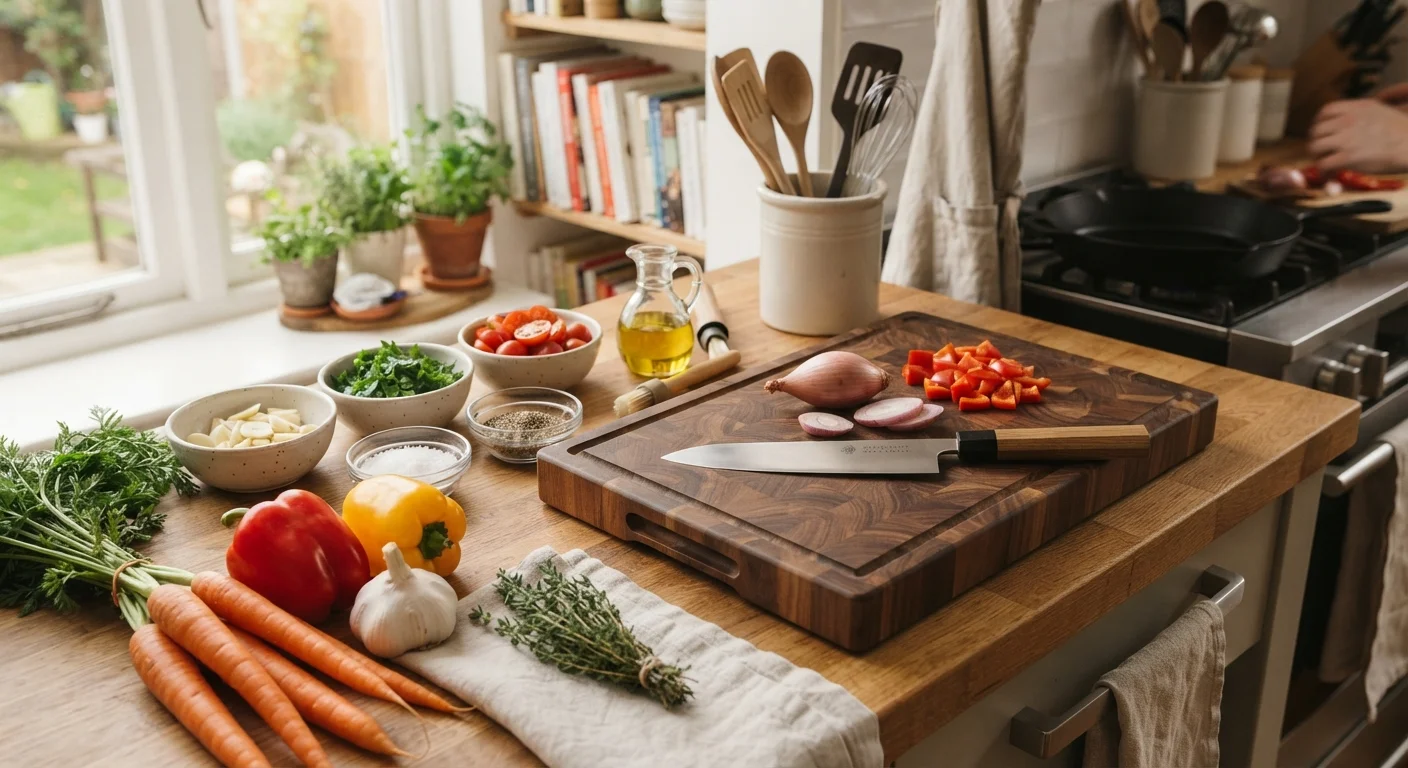
Finally, prep order matters more than most home cooks realise. The restaurant concept of mise en place — having everything measured, chopped, and ready before cooking begins — translates directly to home kitchens. Mise en Place for Everyday Cooks explains how to adapt the method without making it feel like extra work.
Never Skip the Full Recipe Read-Through
Starting a recipe without reading it completely is the most common cause of timing errors, missing ingredients, and preventable mistakes. Some steps — like marinating, chilling, or resting — cannot be rushed or improvised mid-cook. Give yourself at least five minutes before every session to read the recipe from start to finish, including any notes at the bottom.