

Key Takeaways
- Pre-packaged spice blends often cost three to five times more than mixing individual spices yourself.
- Buying perishable staples in bulk without a clear use plan leads to spoilage and wasted spending.
- Single-serve packaging carries a significant per-unit price premium compared to standard sizes.
- Ignoring unit pricing on shelf labels makes it easy to overpay without realizing it.
- Duplicate pantry purchases happen when you shop without auditing what you already own.
Why Pantry Habits Hit Your Budget Harder Than You Think
Most grocery budget leaks don't come from splurges — they come from the mundane, repetitive purchases that feel automatic. Pantry staples are bought on autopilot, restocked out of habit, and rarely scrutinized. That's exactly what makes them expensive over time.
The good news: small adjustments to how you buy, store, and use everyday staples can compound into real savings over a year. This isn't about switching to a restrictive diet or hunting coupons — it's about noticing where routine is quietly costing you. For a broader picture of household savings, see this end-to-end household budget guide.
Buying pre-mixed spice blends instead of individual spices.
Why it happens: Spice blends feel convenient and save a step in the kitchen. Shoppers rarely check what's inside — often just two or three spices plus fillers like salt or starch.
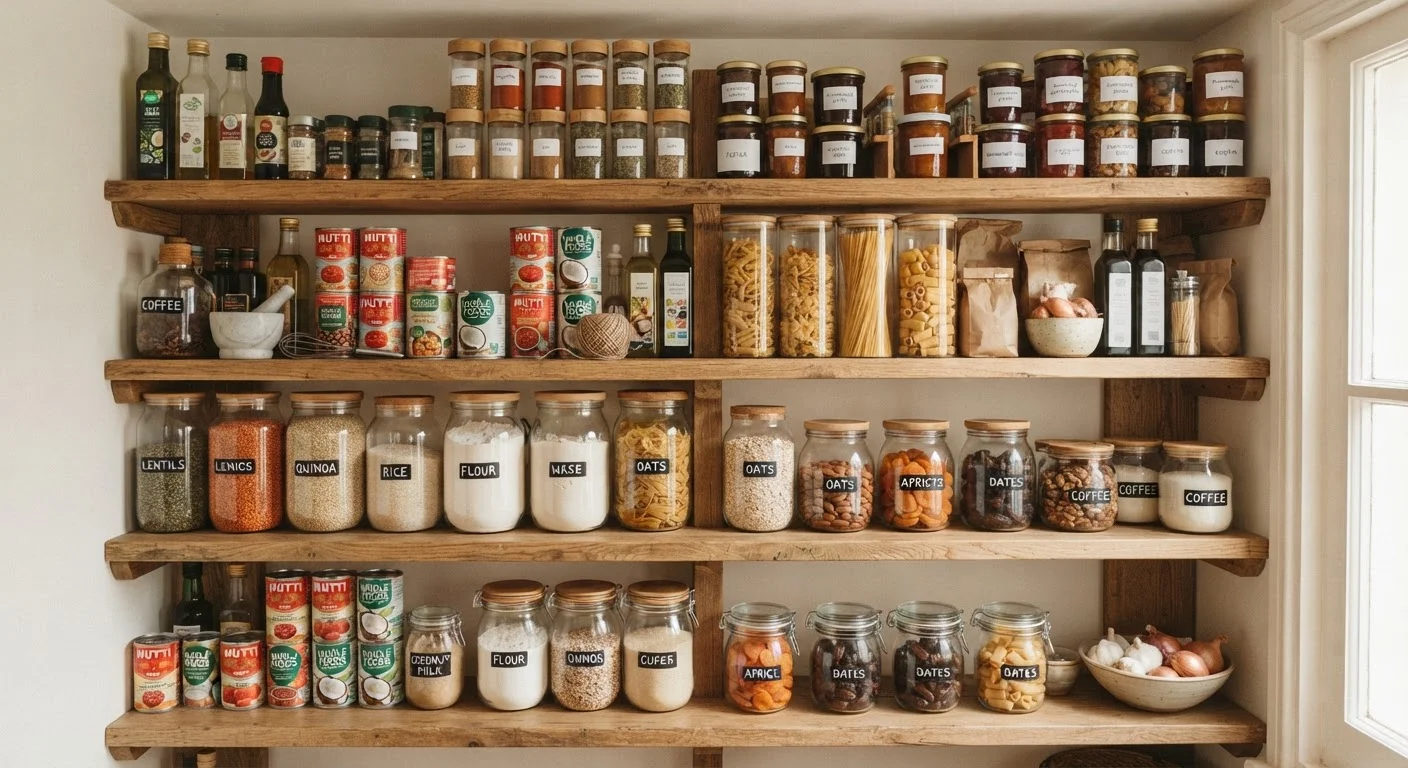
Restocking pantry items without checking what's already there.
Why it happens: It's easier to add something to the cart than to stop and check at home. Over time, this creates duplicates, crowded shelves, and expired goods that get thrown out.
Defaulting to name-brand pantry staples without comparing alternatives.
Why it happens: Brand familiarity breeds trust. Many shoppers assume higher price signals higher quality, especially for basics like canned tomatoes, olive oil, or flour.
Buying bulk perishables without a concrete plan to use them.
Why it happens: Bulk pricing looks compelling, and it often is — but only when the item actually gets used. Oils go rancid, nuts lose freshness, and whole grains can attract pests if stored poorly.
Buying single-serve or individually wrapped pantry items regularly.
Why it happens: Single-serve formats are marketed as portion control aids or lunchbox conveniences. The per-unit cost premium rarely registers because the individual price looks small.
The Pantry Mistakes Draining Real Dollars
Each of the mistakes below is common, understandable, and fixable. The key is knowing what to look for before you shop — not after you unpack.
30–100%
Single-serve packaging price premium
Consumer research consistently shows individually portioned pantry items carry a significant per-unit markup over standard-size equivalents.
~40%
Household food that goes to waste
The USDA estimates that roughly 30–40% of the U.S. food supply is wasted, much of it at the consumer level, including expired pantry items.
Before your next grocery run, it's worth doing a quick audit of what's already in your pantry. A pre-shop pantry audit checklist can prevent duplicate purchases and reveal ingredients you've forgotten you own.
Also consider whether convenience packaging is eating into your budget. The real cost of convenience foods breaks down exactly how much you pay for pre-cut, pre-portioned, and single-serve formats. And if you want to go deeper on unit pricing — the single most useful number on any shelf label — this guide to unit pricing explains how to use it every time you shop.
Expiration Dates on Spices Are Often Misleading
Spices don't spoil the way perishables do, but they do lose potency over time. Buying large quantities of infrequently used spices often means they're flavorless long before they're empty. Buy smaller quantities of specialty spices and store all spices away from heat and light to maximize shelf life.
Reducing pantry waste is also directly connected to reducing food waste overall. Small shifts in how you store and use food can meaningfully lower your weekly bill without changing much about how you cook.