

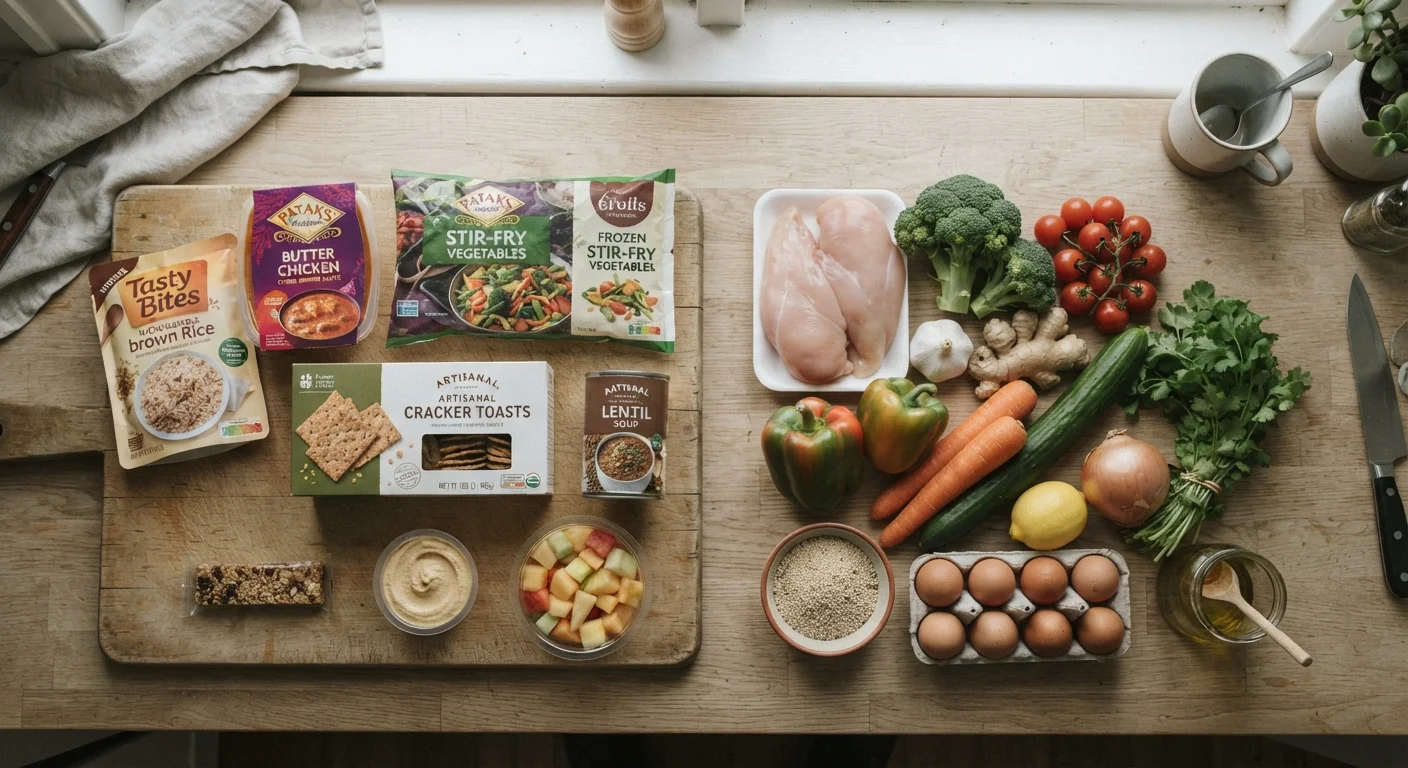
Key Takeaways
- Pre-cut produce typically costs 30–100% more per pound than whole versions of the same vegetable.
- Single-serve packaging inflates per-unit costs significantly compared to larger format equivalents.
- Ready meals often cost 3–5 times more per serving than cooking the same dish from scratch.
- Calculating cost per usable serving — not sticker price — reveals the true expense of convenience.
- Some convenience foods offer genuine value when they reduce food waste or replace a restaurant meal.
Convenience Food Premium
The convenience food premium is the extra amount you pay when a food product has been pre-processed, portioned, or packaged for ease. This includes pre-cut vegetables, pre-marinated meats, single-serve snack packs, and ready-to-heat meals. You're not just buying food — you're paying for someone else's labor, specialized packaging, and faster spoilage management.
The premium is best measured by comparing cost per usable ounce or serving between a whole ingredient and its processed equivalent, accounting for trim loss in whole versions.
What You're Actually Paying For
When you pick up a bag of pre-washed, pre-cut butternut squash, you're not just buying squash. You're paying for the kitchen labor that peeled and diced it, the modified-atmosphere packaging that slows browning, the cold chain logistics that keeps it shelf-stable longer, and the retail markup layered on top. Every step between a whole vegetable and a ready-to-cook cube adds cost — and that cost lands on you.
This is the convenience food premium in action. It's not a hidden fee or a corporate conspiracy; it's a straightforward economic exchange. Someone did work you would otherwise do yourself, and they charged for it. The real question isn't whether the premium exists — it always does — but whether it's worth it in a given situation.
Understanding the premium starts with a simple habit: reading price per unit, not just sticker price. Most grocery stores display price per pound or per ounce on the shelf label. Compare that figure between the whole ingredient and its convenience version, and the markup becomes immediately visible. See our guide to pantry staples that inflate your grocery bill for more examples of where per-unit thinking changes the math.
How to Calculate the Real Cost Per Serving
Sticker price comparisons can be misleading on their own. A whole head of broccoli may appear cheaper than a bag of florets until you account for the stem, leaves, and any trimming you discard. Calculating cost per usable serving levels the playing field.
Here's a straightforward method:
- Weigh the whole ingredient after trimming, or estimate yield (most vegetables retain 70–85% of their weight after prep).
- Divide the purchase price by the number of servings that usable weight produces.
- Do the same calculation for the convenience version using the stated weight on the package.
- Compare the two figures. The difference is your convenience premium per serving.
Apply this logic to ready meals and you'll often find the gap is dramatic. A frozen entrée serving one adult may run $4–$7. A comparable homemade portion — even accounting for your time — frequently costs $1.50–$2.50 in ingredients. That gap compounds significantly when you're feeding a household regularly.
~200%
Typical markup on pre-cut vs. whole produce
Industry observers and consumer advocates frequently cite markups of 50–200% per pound on pre-cut vegetables compared to whole equivalents at the same retailer.
3–5×
Cost of ready meals vs. scratch cooking per serving
Home economists estimate that from-scratch meal preparation commonly costs one-third to one-fifth the per-serving price of a comparable ready meal or frozen entrée.
~40%
Per-ounce premium on single-serve snack packs
Consumer price comparisons routinely find single-serve snack formats priced 30–80% higher per ounce than standard-size packages of the same product.
When the Premium Is Actually Justified
Not every convenience purchase is a financial mistake. Context matters. A few situations where paying the premium makes practical sense:
- Small-household produce: If a whole cabbage would go half-wasted before you finish it, a smaller pre-cut portion might cost more per pound but less overall.
- Replacing restaurant meals: A $6 rotisserie chicken is expensive compared to raw chicken thighs, but it's a fraction of what a restaurant serving costs. In that frame, it's a genuine value.
- Time with real monetary value: If a $2 markup on pre-cut stir-fry vegetables means you cook at home instead of ordering delivery, the math works in your favor.
The mistake most households make isn't buying any convenience food — it's buying it habitually without ever running the numbers. Practical saving strategies often come down to this kind of deliberate trade-off thinking rather than blanket rules.
Run the numbers before buying
Before reaching for a convenience item, flip it over and find the weight. Then find the whole equivalent on the shelf and compare price per ounce. You don't need to do this for every item every trip — just once per category is enough to build a reliable mental benchmark you'll use automatically.
Where the Biggest Premiums Hide
Some convenience markups are predictable; others catch shoppers off guard. The categories where premiums tend to run highest include:
- Single-serve snack packaging
- Per-ounce prices on 100-calorie snack packs often run 40–80% higher than the same product in a standard bag. Portioning at home takes less than two minutes.
- Pre-marinated proteins
- Marinating chicken or pork adds roughly $0.50–$1.00 worth of ingredients. Pre-marinated versions can add $2–$4 per pound.
- Washed and bagged salad greens
- Convenient, yes — but the markup over a whole head of lettuce can exceed 200% per serving. For households that regularly discard unused bagged greens, the waste erases any time savings.
- Microwaveable grains and rice pouches
- A pouch of pre-cooked brown rice that serves one can cost more than a pound of dry rice that serves eight. Cooking grains in batches and refrigerating them achieves the same end result for a fraction of the price.
For a broader look at where grocery spending quietly accumulates, pantry staples that quietly drain your grocery budget is worth reviewing alongside this framework.