

Key Takeaways
- The first month shapes your pet's long-term behavior more than almost any other period.
- Decompression before training gives a new pet time to feel safe and reduces stress-related setbacks.
- Positive reinforcement — rewarding desired behaviors — is the most widely supported training approach.
- Short, consistent daily sessions outperform occasional long ones for building lasting habits.
- A predictable routine for feeding, play, and rest is one of the most effective training tools available.
- Most behavior problems that emerge in the first month are normal and addressable with patience.
Start here
Why the First 30 Days Matter Most
Next
Week One: Safety, Space, and Settling In
Build on it
Weeks Two and Three: Building the Foundation
Finishing strong
Week Four: Solidifying Routines and Good Habits
Going forward
Core Principles to Carry Beyond Day 30
Why the First 30 Days Matter Most
Bringing a new pet home is exciting — and consequential. The habits, associations, and boundaries established in the first month tend to stick. Animals are constantly reading their environment, and the patterns you set early become the baseline your pet expects going forward.
This isn't cause for anxiety; it's an opportunity. A thoughtful, consistent first 30 days makes everything that follows easier. Before diving into technique, it helps to understand a few foundational concepts. See the pet training glossary for plain-language definitions of terms you'll encounter throughout this guide.
Positive reinforcement
Adding something the animal likes — a treat, praise, or play — immediately after a desired behavior, making that behavior more likely to happen again.
Decompression period
The adjustment window after a pet arrives in a new home, during which it needs calm, low-pressure time to feel safe before structured learning can begin.
Cue
A word, hand signal, or sound that has been paired with a specific behavior through training — for example, saying "sit" to prompt a dog to sit.
Generalization
The process of helping a pet perform a learned behavior reliably in different locations, with different people, and in the presence of various distractions.
Enrichment
Activities, objects, or experiences that give a pet mental and physical stimulation — such as puzzle feeders, foraging opportunities, or interactive play.
Baseline behavior
Your pet's typical, everyday behavior under normal conditions — useful as a reference point for identifying stress, illness, or changes in temperament.
Week One: Safety, Space, and Settling In
Resist the urge to start training on day one. New pets — especially rescues — need time to decompress before they can absorb anything new. A stressed animal is not a learning animal.
- Create a home base. Designate a quiet, comfortable area with bedding, water, and access to food. This gives your pet a retreat it can trust.
- Limit visitors. Keep the household calm during the first week. Overwhelming a new pet with new faces can slow trust-building significantly.
- Establish feeding and potty schedules immediately. Predictable timing for meals and bathroom breaks is one of the fastest ways to reduce anxiety and set behavioral expectations.
- Observe before correcting. Watch how your pet moves, rests, and reacts. This baseline knowledge will help you distinguish normal adjustment behavior from genuine concerns.
Health is inseparable from behavior during this period. A first-week vet visit is strongly recommended to rule out any underlying conditions that might affect your pet's temperament or energy level.
Use Mealtime as a Training Opportunity
Instead of placing your pet's full meal in a bowl, use a portion of their daily food as training rewards during week one. This builds a positive association with you, costs nothing extra, and keeps treat calories in check. Always account for training treats within your pet's total daily food intake.
Weeks Two and Three: Building the Foundation
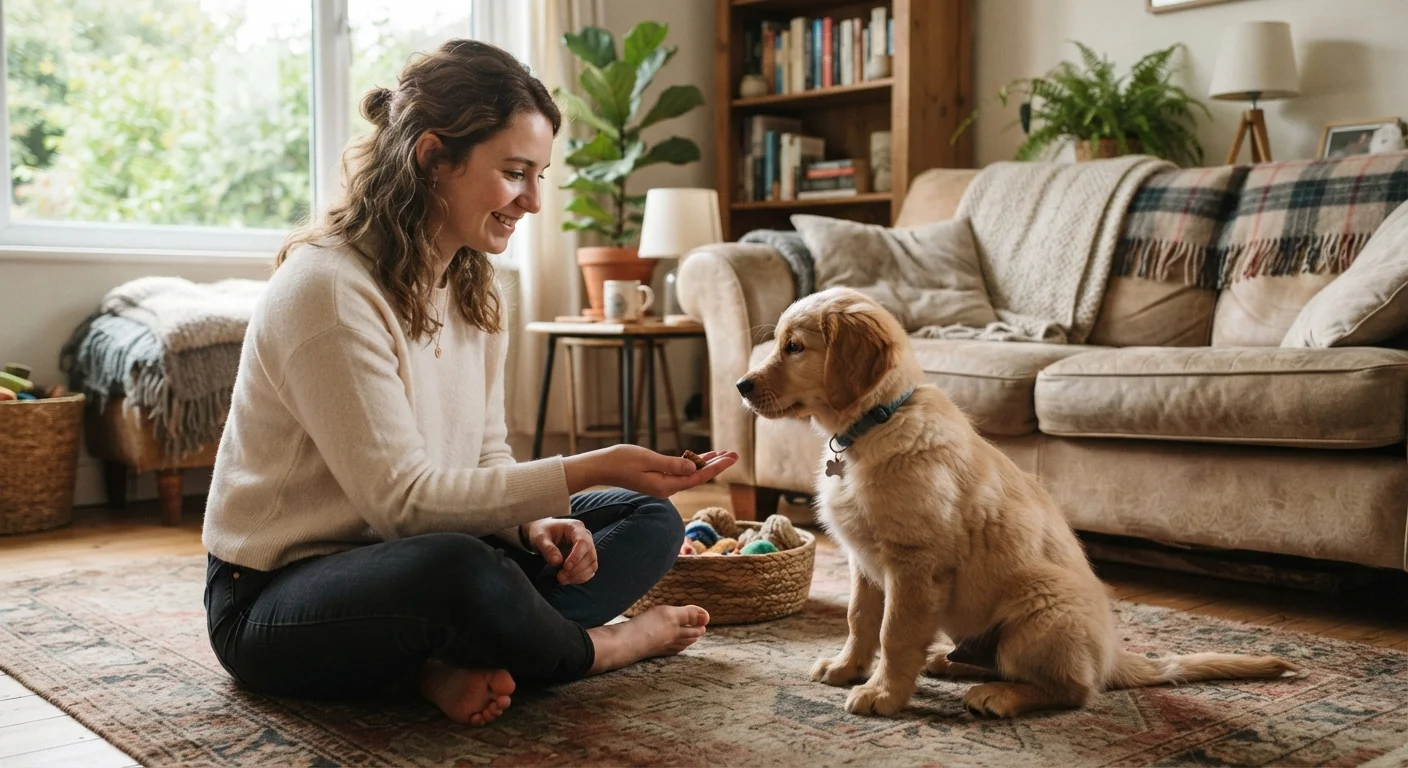
Once your pet is eating, sleeping, and exploring comfortably, it's time to introduce structured learning. The cornerstone of evidence-based pet training is positive reinforcement: rewarding the behavior you want immediately after it happens, so the animal learns to repeat it.
Practical steps for weeks two and three:
- Teach name recognition first. Say your pet's name in a cheerful tone; the moment it looks at you, reward with a treat or praise. Repeat in short bursts throughout the day.
- Introduce one cue at a time. For dogs, "sit" is a natural starting point. For cats, coming when called is achievable and useful. Add new cues only once the previous one is reliable in a quiet setting.
- Keep sessions to 3–5 minutes. Short, frequent sessions are more effective than long ones. End every session on a success — even a small one.
- Ignore, don't punish, unwanted behavior where safe to do so. Redirect your pet to an acceptable alternative, then reward that choice. This approach is supported by veterinary behavioral science as more effective than correction-based methods.
For dogs, a structured home training plan can help you sequence skills logically. Cat owners should also challenge the assumption that felines can't be trained — common myths about cat training may be holding you back more than your cat's personality is.
Week Four: Solidifying Routines and Good Habits
By week four, most pets have a clearer sense of the household rhythm. This is the time to strengthen what's working and gently address what isn't.
Don't Rush the Adolescent Phase
Many pet owners notice a dip in reliable behavior around adolescence — typically between 6 and 18 months for dogs, varying by species. This is developmentally normal and not a sign that earlier training failed. Avoid escalating to harsher methods during this phase; consistent positive reinforcement and patience remain the most effective tools.
- Practice cues in new contexts. A dog that sits reliably in the kitchen needs practice sitting near the front door, in the yard, and eventually on walks. Generalizing behavior across environments is a distinct skill for animals.
- Introduce low-level distractions gradually. Train with the TV on, then with another person in the room, working up to busier environments slowly.
- Evaluate your reward strategy. If your pet isn't responding, the reward may not be motivating enough. Most pets have a hierarchy of what they value — discover yours through observation.
- Establish a bathroom routine you can maintain long-term. Consistency here prevents the majority of house-training setbacks.
Nutrition plays a direct role in trainability and focus. A pet that is properly nourished is more alert and motivated. Understanding your pet's nutritional needs is a natural next step after the first month.
Core Principles to Carry Beyond Day 30
The first 30 days are a foundation, not a finish line. Training is an ongoing conversation between you and your pet. A few principles make that conversation productive long-term:
- Consistency beats intensity.
- A few minutes of practice every day outperforms an exhaustive weekend session. Habits are built through repetition over time.
- Your pet's behavior reflects the environment you've created.
- When something goes wrong, ask what changed in the routine or environment before assuming the animal is being stubborn.
- Progress is not linear.
- Regression during adolescence, seasonal changes, or household disruptions is normal. Return to basics without frustration.
- Enrichment is not optional.
- Mental stimulation — puzzle feeders, exploration opportunities, play — reduces the boredom-driven behavior problems that owners often misidentify as defiance.
If you have a small pet such as a rabbit, guinea pig, or bird, the same positive-reinforcement logic applies. See what training looks like for small pets for species-specific guidance.
This article provides general educational information for pet owners and is not a substitute for guidance from a licensed veterinarian or certified animal behaviorist. If your pet displays persistent fear, aggression, or health-related behavioral changes, consult a qualified professional promptly.