

Key Takeaways
- A dripping tap is almost always caused by a worn internal seal, washer, or cartridge.
- Water pressure continues to act on the damaged component every second the tap is left, accelerating wear.
- Even a slow drip can waste thousands of gallons of water per year.
- Mineral deposits from hard water compound the damage over time, making repairs more complex.
- Most tap repairs are DIY-friendly and require only basic tools and inexpensive replacement parts.
- Ignoring a drip long enough can damage the valve seat itself, turning a simple fix into a costly one.
Dripping Tap (Faucet Leak)
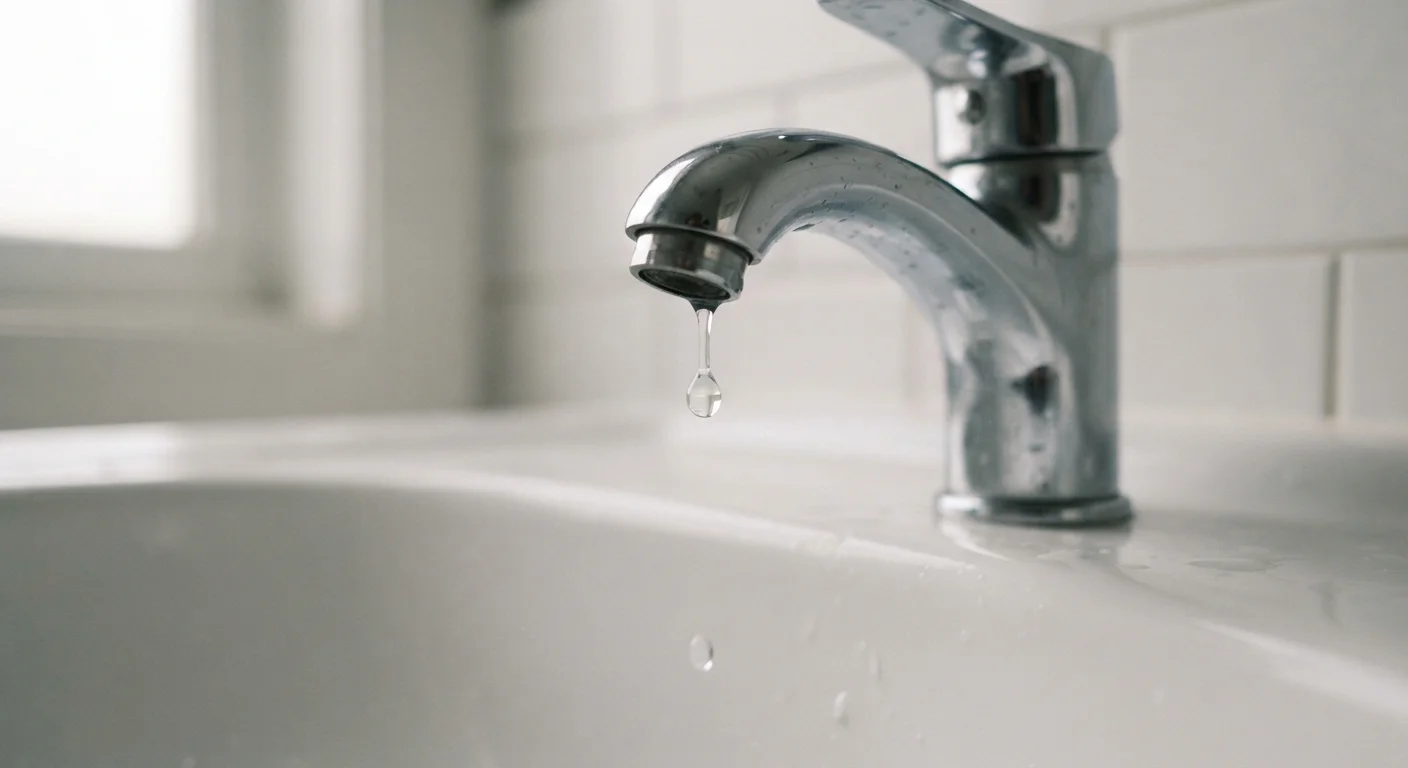
A dripping tap is a faucet that releases water continuously, even when fully turned off. It's almost always caused by a worn or damaged internal component — typically a washer, O-ring, or cartridge — that can no longer form a watertight seal. What starts as an occasional drip tends to escalate as the faulty part degrades further under continued water pressure.
In compression-style faucets, the rubber washer pressed against a brass valve seat wears down with each use; in cartridge or ceramic disc faucets, mineral deposits or cracked seals are the usual culprits.
What's Actually Happening Inside a Dripping Tap
A faucet stops the flow of water by pressing a soft component — usually a rubber washer or a ceramic disc — firmly against a machined seat inside the valve body. When you turn the handle, you're either pressing that washer down or lifting it away. The watertight seal depends entirely on the condition of that soft component and the surface it presses against.
When the washer or seal begins to wear, it can no longer cover every microscopic irregularity in the valve seat. Water pressure — which is present in your supply lines at all times — finds any gap it can and forces its way through. That's your drip. The critical point is that water pressure doesn't take a break. Every minute the tap sits leaking, pressure continues to work against the already-compromised seal, gradually widening the path water travels through.
Compression vs. Cartridge Faucets
Older faucets in many US homes use a compression mechanism where a rubber washer is pressed against a valve seat. Newer faucets often use a cartridge or ceramic disc instead. The repair approach differs between these types, so identifying which style you have before purchasing parts will save you a return trip to the hardware store.
In cartridge and ceramic disc faucets, the mechanism differs slightly from a traditional compression tap, but the core problem is the same: a seal that can no longer hold back line pressure. The principles below apply across faucet types.
Why the Problem Compounds Over Time
The progression from a manageable drip to a genuine plumbing problem follows a predictable path. As the washer or cartridge degrades, the drip rate tends to increase. More water moving through a narrowing, irregular gap erodes both the soft component and — over time — the brass or metal valve seat beneath it.
Once the valve seat itself becomes pitted or scored, replacing just the washer may not be enough to restore a proper seal. You'd then need to resurface or replace the seat — a repair that's more involved and, if done incorrectly, can worsen damage further. For a broader look at how small neglected issues snowball, see why skipping routine maintenance tends to get expensive.
Hard water adds another layer of complexity. Mineral deposits — primarily calcium and magnesium — accumulate around a leaking seal, hardening into scale that holds components in misaligned positions or roughens the seating surface. This makes the seal less effective even after you've replaced the soft parts.
3,000+
Gallons wasted per year by a dripping tap
The U.S. Environmental Protection Agency estimates a faucet dripping once per second loses over 3,000 gallons of water annually.
10%
Of homes have leaks wasting 90+ gallons daily
According to the EPA's WaterSense program, about 1 in 10 U.S. homes has leaks that waste 90 gallons or more of water every day.
The Ripple Effects You Might Not Notice
Beyond the visible drip, a neglected tap creates secondary problems. Constant moisture around the faucet base can degrade caulk and grout, allow mold to establish itself under sink cabinets, and gradually stain porcelain or stone surfaces in ways that are difficult to reverse. Water sitting on metal hardware promotes corrosion that makes future disassembly harder — overtightened or corroded packing nuts are a common frustration when a tap that's been dripping for years finally gets attention.
For homes on metered water supply, the waste is also measurable. The EPA estimates that a faucet dripping at one drop per second loses more than 3,000 gallons annually — enough to fill a small swimming pool. Faster drips scale that figure up quickly.
It's worth noting that a dripping tap and a running toilet are distinct problems, but both are classic cases of a fixable fault that costs money every day it goes unaddressed. Our guide on fixing a running toilet without calling a plumber walks through a similar DIY diagnostic approach.
Tackling the Repair: What to Expect
For most homeowners with basic tool skills, a dripping tap is a manageable DIY repair. The general process involves shutting off the water supply to that fixture (via the isolation valve under the sink or the mains stopcock), disassembling the faucet handle, and identifying the worn component. In a compression faucet, that's usually a rubber washer held by a single brass screw. In a cartridge faucet, you'll replace the entire cartridge unit.
Replacement washers and cartridges are widely available at hardware stores and are generally low-cost. Matching the exact size and type is important — bring the old part with you or note the faucet manufacturer and model. One common misstep is over-tightening the new washer during reassembly, which accelerates wear all over again. For more on avoiding DIY errors that turn simple jobs complex, see the household repairs most DIYers get wrong.
If disassembly reveals a scored valve seat, corroded internal threads, or damage you're not comfortable addressing, that's a reasonable point to consult a licensed plumber. Knowing when to call in a professional is part of smart home maintenance — not a concession of defeat.