

Key Takeaways
- Hairline cracks under 1/16 inch wide are almost always cosmetic and safe to patch yourself.
- Diagonal cracks near door and window corners often signal foundation settling or soil movement.
- Horizontal cracks in basement or exterior walls can indicate serious lateral pressure and need professional review.
- A crack that reappears after patching, or that widens over time, is a warning sign worth investigating further.
- Stair-step cracks in brick or block walls typically follow mortar joints and may indicate foundation issues.
- Width, direction, location, and change over time are the four key factors for assessing any wall crack.
Wall Crack Severity
Wall cracks vary widely in what they indicate about your home's condition. Some are purely cosmetic — caused by paint drying or seasonal humidity changes — while others point to movement in your home's structure or foundation. Learning to read the shape, direction, and width of a crack helps you decide whether to grab some filler or call a professional.
In structural engineering terms, cracks wider than 1/4 inch or those accompanied by horizontal displacement (the two sides of the crack sitting at different heights) are generally considered indicators of significant structural movement requiring professional evaluation.
Why Wall Cracks Are Not All the Same
Walls crack for many reasons — and the vast majority of those reasons are not emergencies. Paint shrinks as it cures. Drywall joints move as your home's framing absorbs and releases moisture with the seasons. Plaster ages and loses flexibility. All of these processes leave marks, and in most cases those marks are nothing more than minor cosmetic issues.
The challenge is that a handful of crack types do signal something more serious: foundation movement, lateral soil pressure, water intrusion behind walls, or structural fatigue. Telling the two groups apart comes down to four factors — width, direction, location, and change over time. Before you reach for the spackling compound, spend a few minutes reading what your wall is actually telling you. Just as warning signs across your home's systems often point to deeper issues, wall cracks are best understood as symptoms first.
A Field Guide to Common Crack Types
Hairline Cracks
These fine, surface-level cracks — typically under 1/16 inch wide — are the most common type in any home. They almost always result from paint or plaster drying and shrinking, or from minor seasonal movement in the wall substrate. They pose no structural risk and can be filled with a lightweight spackling compound, sanded, and painted over.
Vertical Cracks
Vertical cracks run straight up and down and are common in drywall along taped joints. When narrow and stable, they are generally cosmetic. Wider vertical cracks — especially in a concrete or block foundation wall — can indicate the foundation settling unevenly and deserve closer attention.
Diagonal Cracks
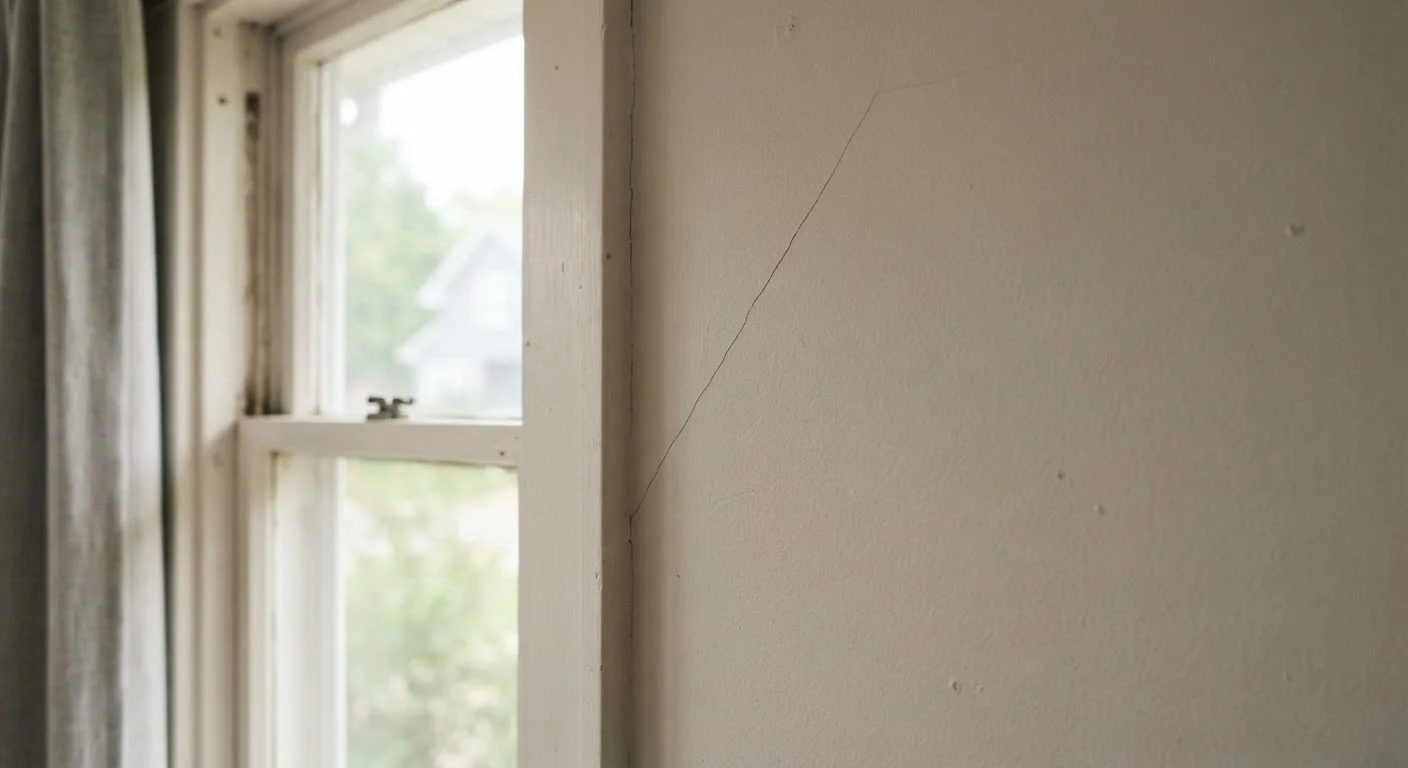
Diagonal cracks, particularly those fanning out from the corners of doors and windows at roughly 45 degrees, are a classic sign of differential foundation settling. One section of the foundation has moved slightly more than the surrounding area, putting the wall under stress at its weakest points. Narrow, stable diagonal cracks in older homes are often historic and inactive. If they are widening or if the surrounding door or window has begun to stick, have a licensed contractor or structural engineer evaluate the situation.
1/4 inch
Crack width commonly flagged for professional review
Structural engineering guidelines generally treat cracks at or wider than 1/4 inch as a threshold requiring professional assessment, particularly when accompanied by displacement.
4–8 weeks
Recommended monitoring period before patching uncertain cracks
Home maintenance professionals typically advise observing a crack over at least one monthly cycle to determine whether it is active or stable before applying any filler.
Horizontal Cracks
Horizontal cracks — especially in basement or exterior foundation walls — are the type that warrants the most caution. They typically indicate lateral pressure from soil or water pushing against the wall from outside. This is not a crack to fill and forget; a qualified structural professional should assess it.
Stair-Step Cracks in Masonry
In brick or concrete block walls, cracks often travel in a stair-step pattern along the mortar joints. This usually signals foundation movement or settlement. Minor stair-step cracking in older masonry can be stable, but significant displacement or a pattern of widening requires professional evaluation.
How to Monitor a Crack Before Acting
Before patching any crack you are uncertain about, monitor it for four to eight weeks. Use a pencil to mark the endpoints of the crack and note the date. Take a photograph for reference. Check back every two weeks — if the crack has extended beyond your marks, widened noticeably, or developed a vertical step (where one side of the crack sits higher than the other), the wall is still moving and DIY filler is not the right next step.
Simple Way to Track a Crack's Progress
Draw a short pencil line across each end of the crack and write the date beside it. Take a close-up photo on the same day. Revisit every two to three weeks and compare. If the crack has extended past your marks or visibly widened, you have evidence of active movement — information a contractor will find very useful.
Cracks that remain stable over that monitoring period and stay under about 1/8 inch wide are generally safe to address yourself. Cracks that change, or that fall into the horizontal or wide diagonal category, call for a professional opinion before any cosmetic repair.
Also pay attention to context: a crack near a window corner combined with a door that has started to bind is more informative than either observation alone. Your home's systems interact — water pressure problems, for example, can affect soil moisture around a foundation. Seeing the full picture, as described in our guide on reading your home's water pressure, can help you connect patterns rather than treating each symptom in isolation.
Patching Cosmetic Cracks Safely
Once you have confirmed a crack is stable, cosmetic, and under about 1/8 inch wide, patching it is a straightforward DIY task. Clean out any loose material with a stiff brush or putty knife. For drywall, apply a thin coat of lightweight spackling compound with a flexible putty knife, allow it to dry fully (check the product directions for drying time), sand lightly with fine-grit sandpaper, and repaint to match.
For cracks near windows and doors where draughts may also be an issue, patching is only part of the solution. Our guide on filling gaps around doors and windows covers how to seal those openings properly so you address both the appearance and the energy impact.
One important caution: if a crack reappears after patching, that is a strong signal that the underlying movement has not stopped. Re-patching repeatedly without understanding why the crack keeps returning can mask a problem that worsens over time. In that scenario, consulting a licensed contractor is the more practical and cost-effective approach.