

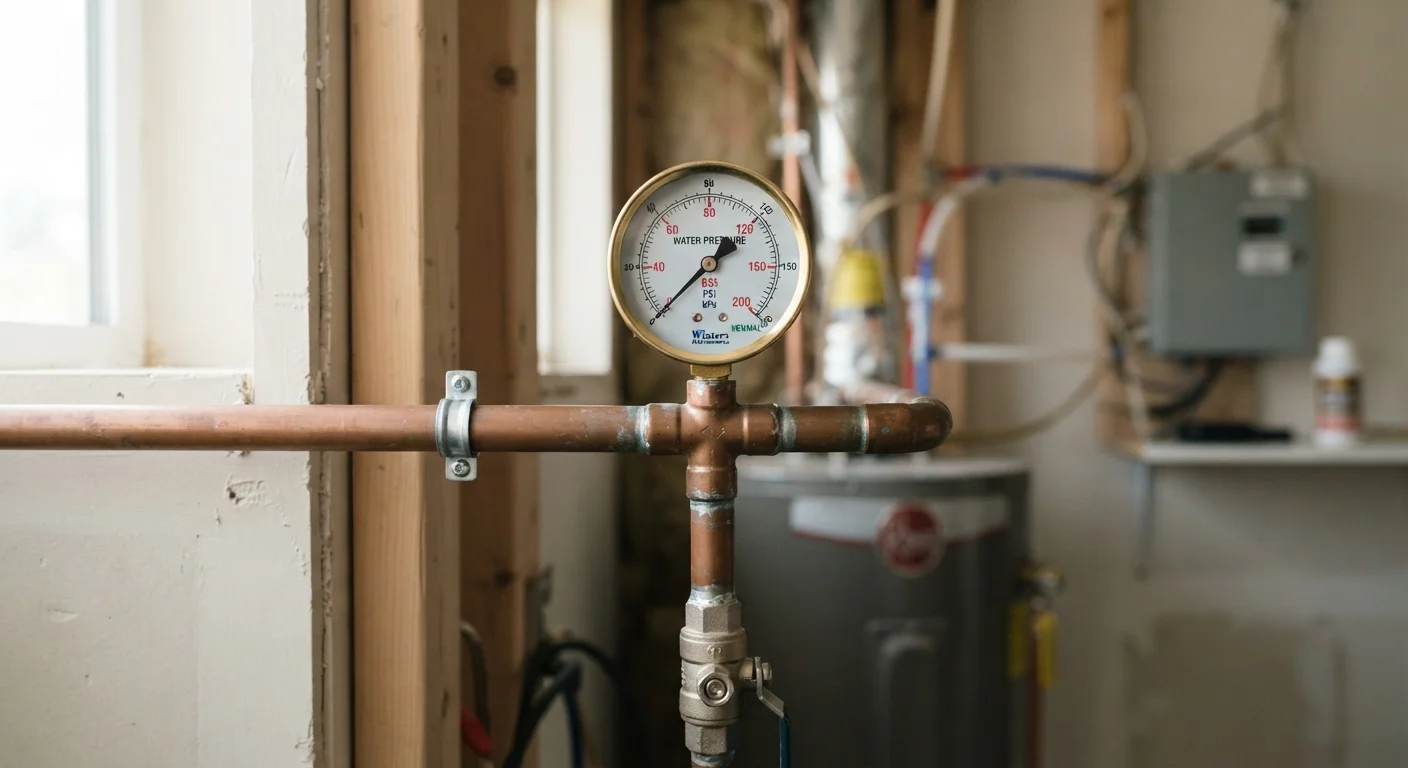
Key Takeaways
- Normal residential water pressure falls between 40 and 80 PSI, with 60 PSI considered a comfortable midpoint.
- Pressure below 40 PSI can make everyday tasks frustrating and may signal a supply or regulator issue.
- Pressure consistently above 80 PSI accelerates wear on pipes, appliances, and fixtures.
- A simple screw-on pressure gauge available at hardware stores lets any homeowner test their own water pressure.
- Persistent high or low pressure often points to a failing PRV, which a licensed plumber can replace.
- Both extremes of water pressure can contribute to leaks — a risk worth catching early.
Residential Water Pressure
Water pressure is the force that pushes water through your home's pipes and out of fixtures like faucets, showers, and appliances. It is measured in pounds per square inch (PSI). The pressure your home receives is set partly by your municipal water supplier and partly by equipment inside your home, such as a pressure-reducing valve (PRV).
A PRV, sometimes called a pressure regulator, is a bell-shaped fitting typically found where the main water line enters the home. It reduces incoming street pressure to a safer level for residential plumbing.
Why Water Pressure Matters to Every Homeowner
Water pressure quietly shapes every interaction you have with your home's plumbing — from the force of your morning shower to how quickly your dishwasher fills. Yet most homeowners only notice it when something feels wrong: a weak trickle from the tap or a jolt of water that rattles the pipes when a faucet closes.
Understanding pressure means understanding one of the most fundamental forces in your home's infrastructure. To get grounded in how your overall plumbing is structured, see our guide to the anatomy of a home plumbing system. Knowing where pressure fits in that picture helps you troubleshoot with confidence rather than guesswork.
40–80 PSI
Normal residential water pressure range
This range is widely cited by plumbing industry standards and home inspection guidelines as the safe operating window for residential systems.
80+ PSI
Pressure level that accelerates pipe and fixture wear
Plumbing professionals generally consider pressure above 80 PSI a risk factor for premature wear on supply lines, appliance hoses, and fixture valves.
60 PSI
Commonly recommended target pressure
Many licensed plumbers cite 60 PSI as a practical target that balances good flow with reduced stress on residential plumbing components.
The Normal Range — and Why It Has Boundaries
Residential water pressure is measured in pounds per square inch (PSI). The broadly accepted normal range for a home is 40–80 PSI, with many plumbers and home inspectors citing 60 PSI as an ideal target.
The lower boundary exists for function: below 40 PSI, showers feel weak, upper-floor fixtures may not fill properly, and some appliances — particularly dishwashers and washing machines — may not operate efficiently. The upper boundary exists for protection: above 80 PSI, fittings, supply hose connections, and appliance inlet valves experience elevated stress that shortens their lifespan.
Pressure is not static throughout the day. It naturally dips during peak demand hours (early morning, evening) when many households draw water simultaneously from the municipal supply. A pressure reading taken at 6 a.m. on a weekday will likely differ from one taken at noon.
How to Check Your Home's Water Pressure
Testing your pressure requires only a threaded pressure gauge, a small tool available at most hardware stores. Here is the process:
- Choose an outdoor hose bib (spigot) or a laundry room faucet with a standard threaded connection.
- Make sure no other water is running in the home — dishwasher off, no showers, no irrigation running.
- Screw the gauge onto the faucet by hand until snug.
- Open the faucet fully and read the dial. This is your static pressure.
- Note the reading, then close the faucet and remove the gauge.
If the reading falls outside the 40–80 PSI window on multiple tests at different times of day, that pattern is worth acting on. Isolated low readings during peak demand hours are normal and less concerning than consistently out-of-range numbers.
Test Pressure at Different Times of Day
A single reading can be misleading. Test your pressure in the early morning before household activity begins, again mid-morning, and once in the evening. Comparing these three readings gives you a much clearer picture of whether a pressure issue is constant or tied to municipal demand cycles.
Warning Signs: What Low and High Pressure Are Telling You
Consistently low pressure (below 40 PSI) can signal several underlying issues:
- A partially closed main shutoff valve — easily fixed by opening it fully
- A failing or miscalibrated PRV — may need professional adjustment or replacement
- Corroded or mineral-scaled pipes restricting flow, common in older homes with galvanized steel plumbing
- A drop in municipal supply pressure, which your water utility can confirm
Consistently high pressure (above 80 PSI) is often more damaging because it operates silently. Warning signs include:
- Banging or thumping sounds when faucets or appliances shut off (called water hammer)
- Pinhole leaks appearing in copper pipes
- Appliance supply hoses failing prematurely
- Faucets that drip shortly after repairs
High pressure is also one of the hidden causes behind small leaks that homeowners underestimate. Our article on what homeowners get wrong when a pipe starts leaking explains why those leaks deserve prompt attention. Similarly, warning signs your home's systems send covers how pressure problems fit into a broader pattern of home system stress.
What You Can Do — and When to Call a Plumber
Several pressure-related fixes are safely within a homeowner's reach:
- Clean fixture aerators and showerheads: Mineral buildup in these small screens reduces flow at the fixture without affecting whole-home pressure. Unscrew, soak in white vinegar, rinse, and reinstall.
- Confirm the main shutoff is fully open: A valve that was partially closed during a past repair and never fully reopened is a surprisingly common cause of whole-home low pressure.
- Check the PRV adjustment screw: Some PRVs have an external adjustment screw. Consult the manufacturer's documentation before making any changes, and only make small incremental turns.
For anything beyond these basics — replacing a PRV, addressing scaled pipes, or investigating municipal supply issues — a licensed plumber is the right call. Pressure regulation work involves your main supply line, and improper adjustments can make the problem worse or create new ones. Avoid the plumbing myths that lead to costly decisions that tempt homeowners into DIY fixes better left to professionals.