
Seasonal HVAC Maintenance That Keeps Small Problems from Becoming Expensive Ones

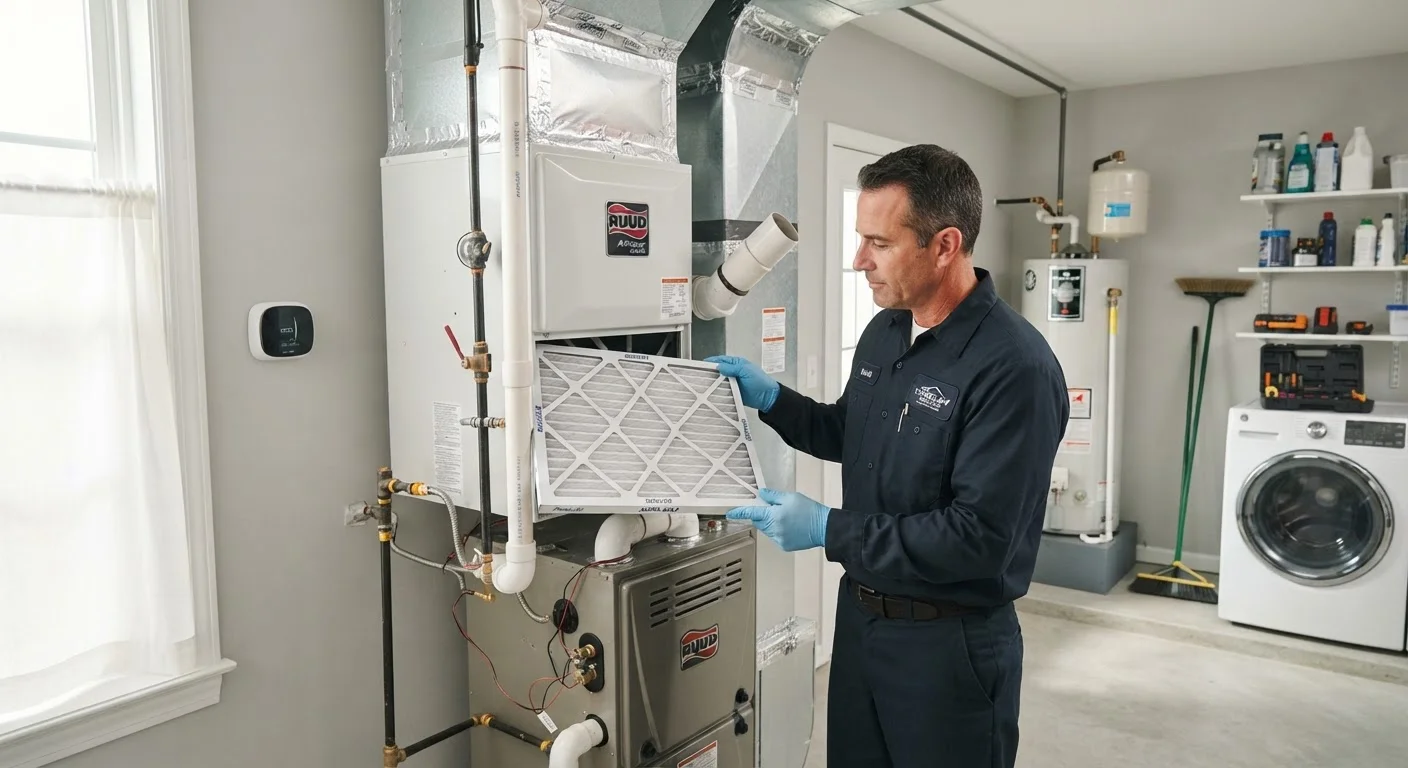
Key Takeaways
- Replacing air filters every 1–3 months is the single highest-impact HVAC maintenance task most homeowners can do themselves.
- Seasonal checks—spring for cooling, fall for heating—catch small issues before they cause system failures during peak demand.
- Blocked condensate drains, dirty coils, and obstructed outdoor units are leading causes of preventable HVAC breakdowns.
- Programmable or smart thermostats help reduce energy waste and extend equipment lifespan when calibrated correctly.
- Some HVAC tasks require a licensed technician—knowing which ones protects both your safety and your warranty.
Summary
22 items · 30–90 minutes per seasonal check
Why Seasonal HVAC Maintenance Pays for Itself
Your HVAC system works harder than almost any other system in your home. It runs year-round, cycling on and off hundreds of times a week, filtering air, moving moisture, and maintaining the indoor temperatures your household depends on. Like most mechanical systems, it rewards consistent attention and punishes neglect.
The good news is that the majority of common HVAC failures — clogged filters, backed-up condensate drains, dirty coils — are entirely preventable with routine seasonal checks. These tasks don't require specialized skills or expensive equipment. What they do require is showing up twice a year with a clear list and about an hour of time.
This checklist breaks that maintenance into logical categories so you can work through it methodically. For a broader look at how HVAC care fits into your overall home rhythm, see seasonal maintenance explained. If HVAC terminology is unfamiliar, this plain-language glossary covers the terms you're most likely to encounter.
Replacement air filters
Swap out clogged filters to maintain airflow and indoor air quality — have the correct size on hand before starting.
Garden hose
Used to gently rinse outdoor condenser coil fins clear of debris during the spring check.
White vinegar
Flushed through the condensate drain line to prevent algae growth and clogs.
Foil-backed HVAC tape
Seals minor gaps or leaks at accessible duct joints — holds up under temperature extremes unlike standard duct tape.
Flashlight
Helps inspect dark areas around the air handler, ductwork, and flue pipe for visible damage or obstructions.
Carbon monoxide detector
Essential safety device to test and confirm is operational before heating season begins.
The Full Seasonal HVAC Maintenance Checklist
Work through these groups in order. Complete the All Seasons tasks every time you do a check. Then focus on the Spring / Pre-Cooling group before warm weather arrives and the Fall / Pre-Heating group before temperatures drop. The remaining groups apply year-round whenever a relevant condition arises.
All Seasons — Every Check
Spring — Pre-Cooling Season
Fall — Pre-Heating Season
Ductwork and Airflow
Never Operate a Damaged Gas Furnace
If you notice rust, cracks, or separated joints in your furnace flue or heat exchanger during your fall check, do not run the system. A damaged heat exchanger can allow carbon monoxide — a colorless, odorless gas — to enter your living space. Turn the system off and contact a licensed HVAC technician before resuming operation. This is not a DIY repair.
What to Leave to a Licensed HVAC Technician
This checklist focuses on the tasks a motivated homeowner can safely handle. But some maintenance work genuinely requires a licensed professional — and attempting it yourself can void warranties, violate local codes, or create safety hazards.
Schedule a professional tune-up at least once a year (typically in spring for cooling systems or fall for heating). A technician will check refrigerant levels, test electrical connections, inspect heat exchangers for cracks, measure airflow, and calibrate controls — work that requires specialized tools and certifications.
Refrigerant Work Requires Certification
Handling, adding, or recovering refrigerant is regulated under federal law and requires EPA Section 608 certification. If your system is cooling poorly and you suspect a refrigerant issue, this is not a homeowner repair. Schedule a professional inspection rather than attempting to add refrigerant yourself — improper handling can damage the system and carries legal and health risks.
If your system is older than 15 years, behaves inconsistently, or produces unusual sounds or smells, a professional evaluation is the right next step rather than additional DIY troubleshooting. For help pacing these costs alongside other home priorities, see seasonal maintenance on a budget. You can also integrate HVAC scheduling into a full-home approach using the whole-house maintenance schedule.