
Salt at Every Stage: What Professional Kitchens Know That Home Cooks Often Miss

Key Takeaways
- Adding salt only at the end produces surface-level seasoning that rarely penetrates food fully.
- Professional cooks season incrementally — at the start, during cooking, and as a final adjustment.
- Different salts behave differently; knowing when to use each prevents over- or under-seasoning.
- Tasting at each stage is the only reliable way to know if your seasoning is on track.
- Pasta water, blanching water, and marinades are often the most under-salted steps in a home kitchen.
Why Seasoning 'At the End' Falls Short
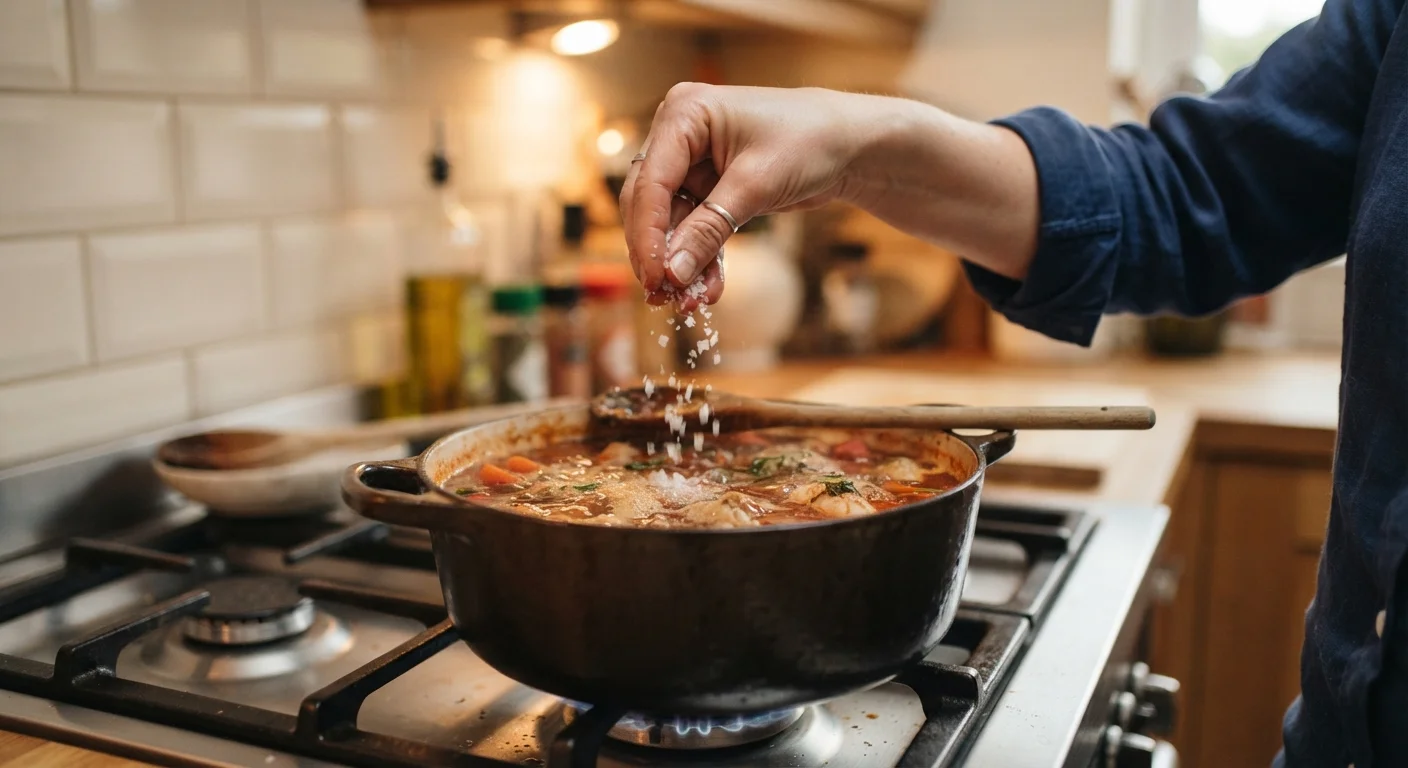
Most home cooks were taught to taste a dish, then add salt if something seems off. That instinct isn't wrong — but it addresses only the symptom, not the cause. Salt added at the end sits on the surface of food. It hits your tongue quickly and intensely, but it hasn't had time to penetrate, draw out moisture, or interact with proteins and starches the way early-stage salt does.
Professional kitchens treat seasoning as a continuous process, not a finishing gesture. Each cooking stage — raw prep, early heat, mid-cook, and final adjustment — creates a different opportunity for salt to do different work. Missing any of those windows is like painting one coat on a wall that needed three.
For a broader look at how this connects to reading and interpreting recipes effectively, see reading recipes like a cook. Many seasoning habits, good or bad, start before a single ingredient hits the pan.
The Stages Where Salt Actually Belongs
Breaking cooking into distinct phases makes it easier to understand where salt contributes most.
Salt also interacts directly with acid. If a dish tastes flat even after seasoning, the problem is sometimes a lack of brightness rather than a lack of salt. Acid in cooking — a squeeze of lemon or a splash of vinegar — can accomplish what more salt cannot. The two work together, not in competition.
Common Mistakes That Undermine Good Seasoning
Even cooks who understand the principle of staging salt often make a handful of consistent errors.
Using the wrong salt at the wrong time. Fine table salt dissolves fast and is easy to over-add. Coarse kosher salt is more forgiving for seasoning proteins and pasta water. Flaky finishing salt — added after cooking — provides bursts of texture and flavour that fine salt can't replicate. Using them interchangeably creates unpredictable results.
Under-salting water. Pasta water should taste noticeably salty — comparable to mildly seasoned broth. This is one of the most consistent gaps between home and professional cooking, and it's a near-zero-cost fix.
Skipping the taste. No amount of technique replaces the habit of tasting throughout. Tasting as you go is the actual skill — seasoning-by-stage just gives you more opportunities to use it.
For more on this and other habits that quietly undermine results, common kitchen myths covers what the evidence actually says about salting and other widely repeated cooking rules.
Building the Habit Into Your Everyday Cooking
Incremental seasoning sounds precise, but in practice it becomes second nature quickly. The goal isn't perfection on every dish — it's replacing a single end-of-cook adjustment with a light, consistent awareness throughout.
Once you start seasoning in stages, you'll notice that finished dishes need far less correction. Food tastes more cohesive, flavours seem more developed, and you'll reach for the salt shaker at the table far less often. That's not magic — it's the cumulative effect of salt doing its job at the right moments.
If budget is a consideration, note that better seasoning habits cost nothing. The same applies to aromatics: affordable herbs and spices can stretch further when the underlying seasoning is already solid. Good flavour isn't about expensive ingredients — it's about understanding when and how to use what you have.