

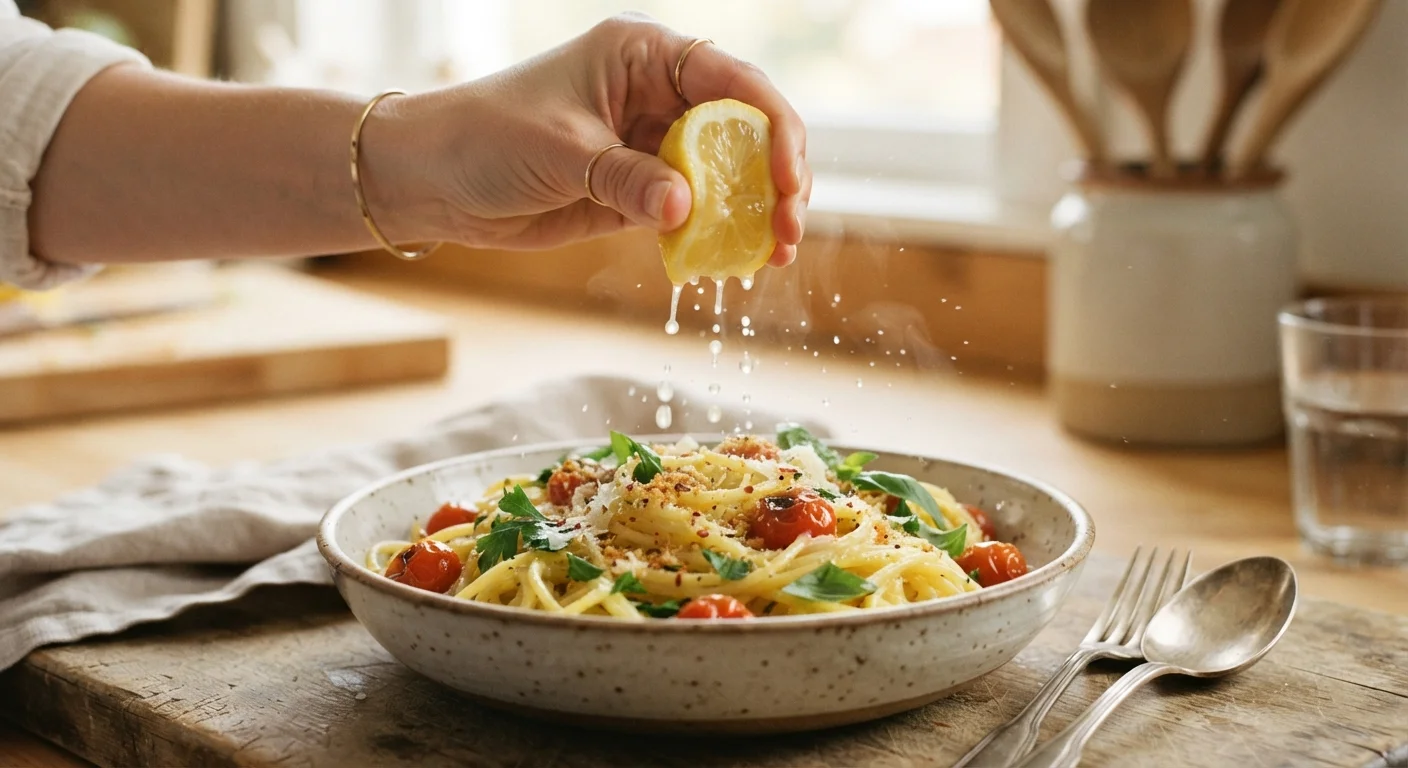
Key Takeaways
- Acid brightens flat-tasting dishes without making them taste sour.
- A small amount — often a teaspoon or less — is enough to transform a finished dish.
- Different acids suit different dishes: citrus for fresh food, vinegar for cooked, wine for braises.
- Acid and salt work together; if a dish needs salt, it may also need acid.
- Add most acids at the end of cooking to preserve their brightness and punch.
Acid in Cooking
Acid in cooking refers to ingredients — like lemon juice, vinegar, wine, or yogurt — that lower the pH of a dish and brighten its overall flavor. Acid doesn't just add sourness; it balances richness, sharpens dull flavors, and makes other ingredients taste more like themselves. Think of it as a volume knob for everything already in the pan.
Common culinary acids include acetic acid (vinegar), citric acid (citrus), lactic acid (yogurt, buttermilk), and tartaric acid (wine). Each has a slightly different flavor profile beyond its acidity.
Why Acid Is the Missing Piece in Most Home Kitchens
Ask most home cooks what to do when a dish tastes flat, and the answer is almost always "add salt." Salt is essential — no argument there — but it isn't always the fix. Sometimes what a dish is missing is acid: that invisible lift that makes food taste more vivid, more complete, and more like itself.
Professional cooks reach for acid instinctively. A squeeze of lemon before plating pasta, a splash of sherry vinegar into a pan sauce, a spoonful of yogurt stirred into a curry — these aren't afterthoughts. They're deliberate flavor tools. Most home cooks, however, treat acid as optional or reserve it only for salad dressing. That's a significant gap. See how salt and acid work as a team rather than substitutes for each other.
Learning to use acid well is one of the fastest ways to close the gap between restaurant food and what comes out of your own kitchen — and it costs almost nothing to start.
5
Basic tastes the human palate detects
Sweet, salty, sour, bitter, and umami are the five recognized basic tastes; sourness is the direct perception of acidity, according to established sensory science.
~2–4
pH range of common culinary acids
Lemon juice sits around pH 2–2.5, while wine vinegar is typically pH 2.5–3.5, making both strongly acidic compared to neutral water at pH 7.
1 tsp
Typical finishing dose for most dishes
Culinary educators commonly suggest starting with as little as half to one teaspoon of lemon juice or vinegar when finishing a dish, then tasting before adding more.
What Acid Actually Does to Flavor
Acid doesn't just add sourness. In the right quantity, it does several useful things at once:
- Balances richness: Fat coats the palate. A small amount of acid cuts through it, making rich dishes — cream sauces, roast meats, cheesy casseroles — feel lighter and more balanced.
- Amplifies other flavors: Acid enhances your perception of other taste compounds already in the dish. Herbs taste fresher, garlic more aromatic, spices more distinct.
- Adds brightness: A flat, muddy dish often lacks contrast. Acid introduces a high note that pulls all the other flavors into focus.
- Signals freshness: Citrus in particular reads as "fresh" to the palate, which is why a squeeze of lemon over roasted vegetables or grilled fish immediately makes them taste more vibrant.
The goal is never a sour dish. If you taste the acid, you've added too much. The right amount is subtler — you notice it only in the way the rest of the dish comes alive. If you're learning to read recipes like a cook, you'll start spotting where acid is built in and where it's conspicuously absent.
The taste-acid-taste method
Before adding acid, taste your dish. Then add a small amount — start with half a teaspoon — stir, wait 15 seconds, and taste again. You're not looking for sourness; you're listening for whether the other flavors suddenly seem louder and more distinct. If yes, you've hit the mark. If not, add a little more and repeat.
Which Acids to Use and When
Different acidic ingredients suit different cooking contexts. Here's a practical breakdown:
- Lemon or lime juice
- Best for fresh, bright contexts: salads, fish, vegetables, grain bowls, and finishing pasta. Add at the very end of cooking. Zest adds aromatic oil without additional liquid.
- White or red wine vinegar
- Sharper and more assertive than citrus. Excellent in pan sauces, braised dishes, and vinaigrettes. A small amount goes a long way.
- Apple cider vinegar
- Milder and slightly sweet. Works well in slaws, braises with pork, and bean dishes.
- Wine (white or red)
- Added early and cooked down, wine contributes acidity and complexity to braises, risottos, and sauces. The alcohol cooks off; the acid stays.
- Yogurt, buttermilk, or sour cream
- Dairy-based acids add richness alongside acidity. Useful in marinades, dips, and finishing soups or curries.
- Tomatoes
- Often overlooked as an acid source. Canned or fresh tomatoes bring significant acidity to sauces and stews — which is why a pinch of sugar is sometimes added to counterbalance them.
Understanding this range also helps when diagnosing sauce problems — a muddy or flat sauce often just needs the right acid at the right moment.
Practical Ways to Start Using Acid Today
You don't need to overhaul your cooking to get the benefits of acid. A few straightforward habits make the difference:
- Taste before plating, then try acid. If a dish tastes flat even after seasoning with salt, add a small squeeze of lemon or a few drops of vinegar and taste again. You'll often notice an immediate improvement.
- Keep a bottle of white wine vinegar on the counter. It's inexpensive, versatile, and works in nearly every savory context. Reach for it the way you reach for salt.
- Use lemon zest, not just juice. The zest carries aromatic oils that add brightness without liquid. It works especially well in pasta, risotto, and baked savory dishes.
- Deglaze with wine. After searing meat or vegetables, pour a splash of white or red wine into the hot pan. Scrape up the browned bits. You'll build a sauce base with built-in acidity and depth. See how a good sauce transforms simple ingredients using techniques like this.
- Add acid to marinades. Acid tenderizes protein and helps seasoning penetrate. A marinade with no acid often produces flat results, no matter how long the meat sits.