

Key Takeaways
- Searing meat creates flavor through browning, but it does not seal in moisture or juices.
- Adding oil to pasta water does not prevent sticking — draining and saucing promptly does.
- Low-quality cooking wine adds off-flavors; use wine you'd actually drink.
- Rinsing cooked pasta removes the starch that helps sauce cling to noodles.
- A sharp knife is safer than a dull one because it requires less force to use.
- Cooking chicken to a safe internal temperature matters more than checking color alone.
Why Kitchen Myths Are So Hard to Shake
Kitchen myths persist for a simple reason: they're often passed down by confident, experienced cooks who swear by them. When your grandmother insists that searing locks in juices, and the roast comes out well, it seems true. But correlation isn't causation — the roast was good despite the myth, not because of it.
Understanding what's actually happening in the pan — chemically and physically — makes you a more adaptable cook. You stop following rituals blindly and start making decisions based on what the food actually needs. For a deeper look at how to read recipes with this mindset, see Reading a Recipe Like a Cook, Not Just a Reader.
Myth
Searing meat seals in the juices, keeping it moist.
Fact
Searing creates flavor through the Maillard reaction but has no sealing effect on moisture.
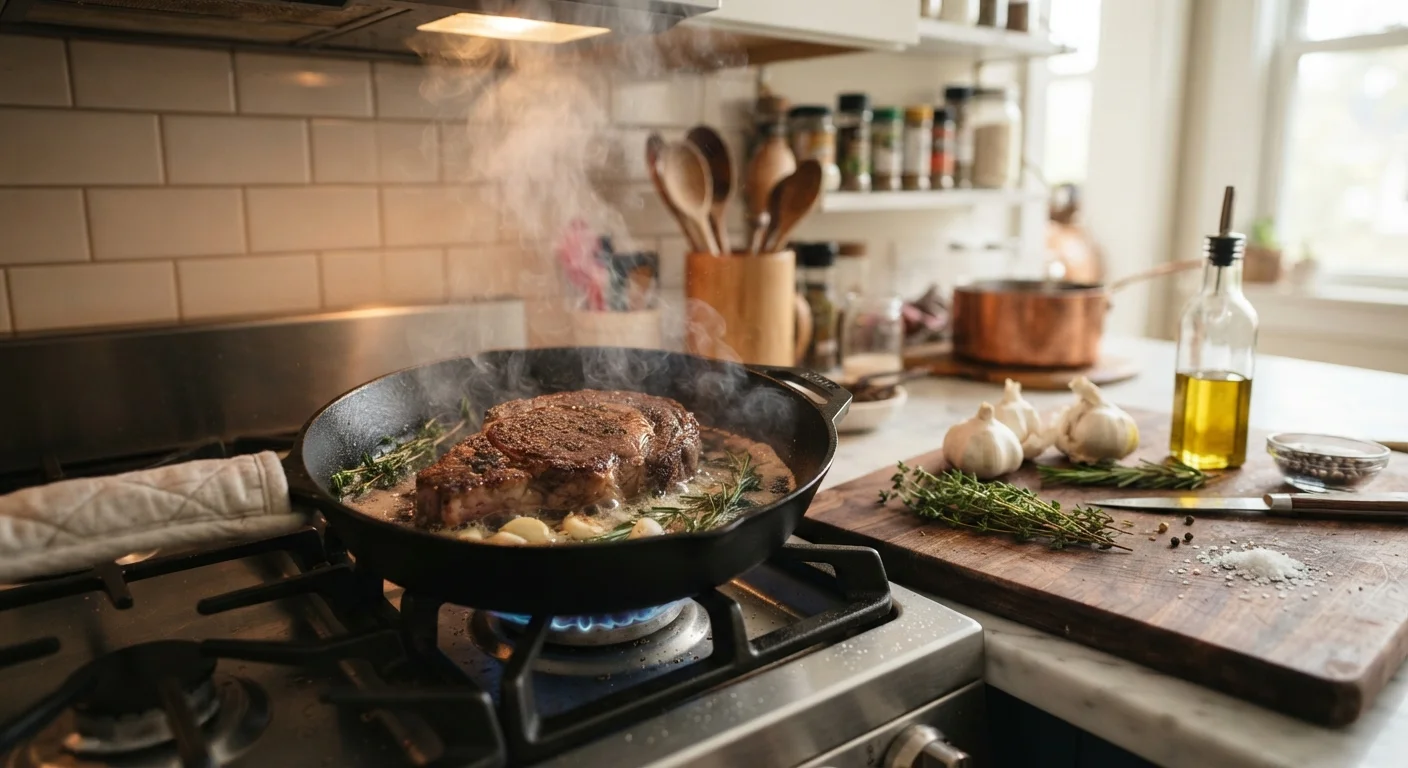
This is one of the most repeated myths in home cooking. The Maillard reaction — the browning that occurs when proteins and sugars are exposed to high heat — produces hundreds of flavor compounds that make seared meat taste richer and more complex. That's genuinely valuable. But research has consistently shown that seared cuts lose just as much moisture as unseared ones. The crust is porous, not sealed. Sear for flavor; manage moisture through resting time and not overcooking.
Myth
Adding oil to pasta water prevents the pasta from sticking together.
Fact
Oil floats on water and coats pasta after draining, which actually prevents sauce from adhering.
Oil and water don't mix, so the oil sits on the surface of the boiling water and coats the pasta only after you drain it. This creates a slippery surface that makes it harder for sauce to cling. The real fix for pasta sticking is simple: use enough water, stir in the first two minutes of cooking, and sauce the pasta promptly after draining. Starchy pasta cooking water — not oil — is the emulsifying tool worth saving. See how pasta water works for practical technique.
Myth
Cooking wine is fine to cook with — the alcohol cooks off so quality doesn't matter.
Fact
Low-quality wine concentrates its flaws during cooking, contributing off-flavors to the finished dish.
When wine reduces in a pan, water and alcohol evaporate but most flavor compounds remain and intensify. A wine with sharp acidity, chemical preservatives, or an unpleasant aftertaste will contribute those characteristics to your sauce or braise. The general guideline among culinary professionals: if you wouldn't drink it, don't cook with it. You don't need to use an expensive bottle, but it should be a wine you'd enjoy in a glass.
Myth
Rinsing pasta after cooking removes excess starch and improves texture.
Fact
Rinsing washes off the surface starch that helps sauce bind to pasta, and also cools it down unnecessarily.
The light starchiness on the surface of cooked pasta is exactly what makes sauce stick. Rinsing removes it. There are narrow exceptions — cold pasta salads benefit from rinsing because you want the pasta to stop cooking and cool quickly without clumping — but for any hot pasta dish, drain and sauce immediately without rinsing. If clumping is a concern, toss with a small amount of olive oil only as a last resort, and sauce quickly.
Myth
A dull knife is safer than a sharp one because it won't cut as deeply.
Fact
Dull knives require more force, which makes them more likely to slip — a leading cause of kitchen cuts.
This myth has a certain intuitive logic, but it works backward in practice. A sharp knife cuts with light, controlled pressure and stays on course. A dull knife demands you push or saw, which dramatically increases the chance of the blade slipping off the food and onto your fingers. Professional kitchens prioritize knife sharpness not just for efficiency but for safety. A honing steel used regularly and occasional professional sharpening will keep your knives performing as intended.
Myth
Chicken is safe to eat when the juices run clear.
Fact
Juice color is not a reliable indicator of food safety — internal temperature is the only dependable measure.
Juice clarity depends on factors like the age and preparation of the bird, not just its internal temperature. Poultry can reach a safe internal temperature while still showing slightly pink juices, and conversely, juices can run clear before the meat is fully safe. The USDA recommends cooking whole cuts of chicken to an internal temperature of 165°F (74°C), measured with a meat thermometer at the thickest part, away from bone. A reliable instant-read thermometer removes the guesswork entirely.
The Myths That Most Affect Everyday Results
Some myths are harmless quirks. Others quietly sabotage your cooking every time. The ones below fall into that second category — they're repeated constantly, and they lead to real, preventable problems at the stove.
165°F
Safe internal temperature for cooked poultry
According to USDA food safety guidelines, this is the minimum internal temperature required to safely consume chicken and other poultry.
~30%
Moisture loss: seared vs. unseared cuts
Controlled cooking studies have found that seared and unseared cuts of the same meat lose comparable amounts of moisture, undermining the 'sealing' claim.
Knife safety is a good example of where a myth causes direct harm. Many home cooks continue using dull knives because they seem safer. In practice, a dull blade requires significantly more downward pressure, which makes slipping far more likely. This is one of several reasons that mastering what you already own often matters more than acquiring new tools.
Sauce myths deserve special attention too. If you've ever wondered why your sauce doesn't cling to pasta the way it does in a restaurant, pasta cooking water is likely part of the answer — and rinsing your pasta is part of the problem. For more on what goes wrong with sauces, where home cooks lose control of their sauces covers the most common pitfalls.
Temperature, Not Color, Determines Chicken Safety
Relying on juice color or firmness to judge whether chicken is cooked through is genuinely risky. The only reliable method is using a calibrated meat thermometer to verify an internal temperature of 165°F (74°C) at the thickest point. This is not a matter of preference — it's a food safety standard. If you cook poultry regularly, a good instant-read thermometer is one of the most useful tools you can have in the kitchen.